Waste and circular economyEvent
The new EU action plan for a circular economy: half as much residual waste
Communication COM(2020) 98 announces 35 initiatives, including waste reduction, halving the amount of residual municipal waste by 2030, and nutrient management.
Other language versions: polski.
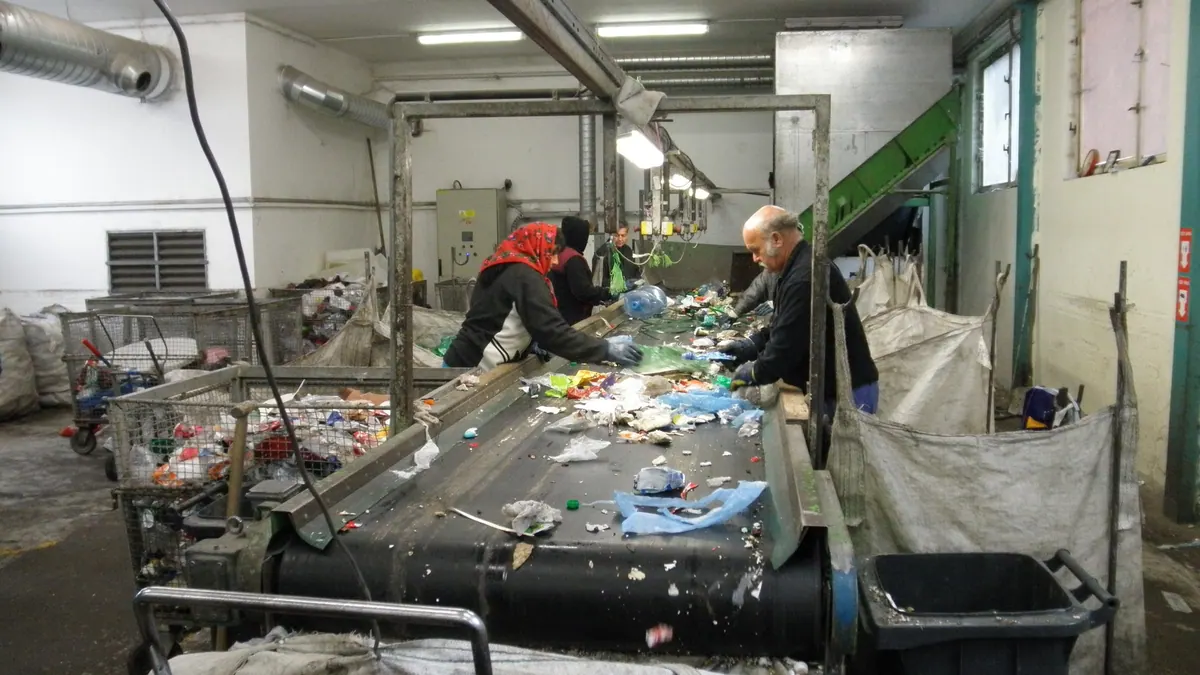

On 11 March 2020 the European Commission presented a new action plan for the circular economy (COM(2020) 98) — one of the main initiatives of the European Green Deal. The plan contains 35 actions aimed at reducing the amount of waste, extending product lifetimes and increasing the share of secondary raw materials. In particular, it announces halving the amount of residual (not recycled) municipal waste by 2030.
The most important elements of the plan
The plan focuses on the whole life cycle of a product, from design to waste management. The key directions included:
- product policy — extending the ecodesign rules beyond energy-related products, increasing durability and repairability, limiting single-use products;
- priority sectors — electronics and ICT, batteries and vehicles, packaging, plastics, textiles, construction, food, and water and nutrients;
- quantitative targets — a significant reduction in the total amount of waste generated and halving the amount of residual municipal waste by 2030;
- the secondary raw materials market — support for the use of recycled materials in new products;
- waste shipments — an announced review of the rules, so as to limit the export of waste outside the EU and illegal trade.
Significance for biowaste and digestate
For the biogas industry the most important thread is food and nutrients. The plan announces action to reduce food waste and integrated nutrient management, as well as support for the market in bio-based fertilisers. The Fertilising Products Regulation (EU) 2019/1009, which is to apply from July 2022, had already opened the way for digestate and compost as components of CE-marked products. The new plan reinforced this direction.
It is equally important to recall that, under the Waste Framework Directive, Member States must ensure separate collection of biowaste by the end of 2023 at the latest. For digestion plants this means a growing stream of feedstock, but also requirements concerning the cleanliness and quality of biowaste.
For local governments and municipalities
Reducing residual waste requires the expansion of separate collection and of infrastructure for processing the organic fraction. For Polish municipalities the plan announced the need to prepare new installations or modernise existing ones. The goal of halving residual waste meant in practice that in waste policy the landfilling and incineration of mixed waste would play a smaller and smaller role, and recycling and biological treatment a larger one.
What next
The plan was the beginning of a series of legislative proposals spread over the following years. The individual initiatives — from product policy to waste shipments — were to go to the Parliament and the Council gradually. For the biogas and biowaste sector, the key was to follow how the plan would translate into requirements for separate collection and digestate quality.
What the plan did not settle
The communication is a programmatic document — it sets directions, but specific obligations arise only from later regulations and directives. At the time of publication it was not yet known what the requirements for individual waste streams would look like or to what extent the recycling targets would be adjusted. Caution is therefore advisable when planning investments based solely on announcements.
Sources
Related articles