Guidehouse report: Europe could produce 111 billion m³ of biomethane in 2040
The report "Biogases towards 2040 and beyond" estimates the biomethane potential of the EU and of the United Kingdom, Norway and Switzerland at 111 billion m³ per year in 2040, including 74 billion m³ from anaerobic digestion.
Other language versions: polski.
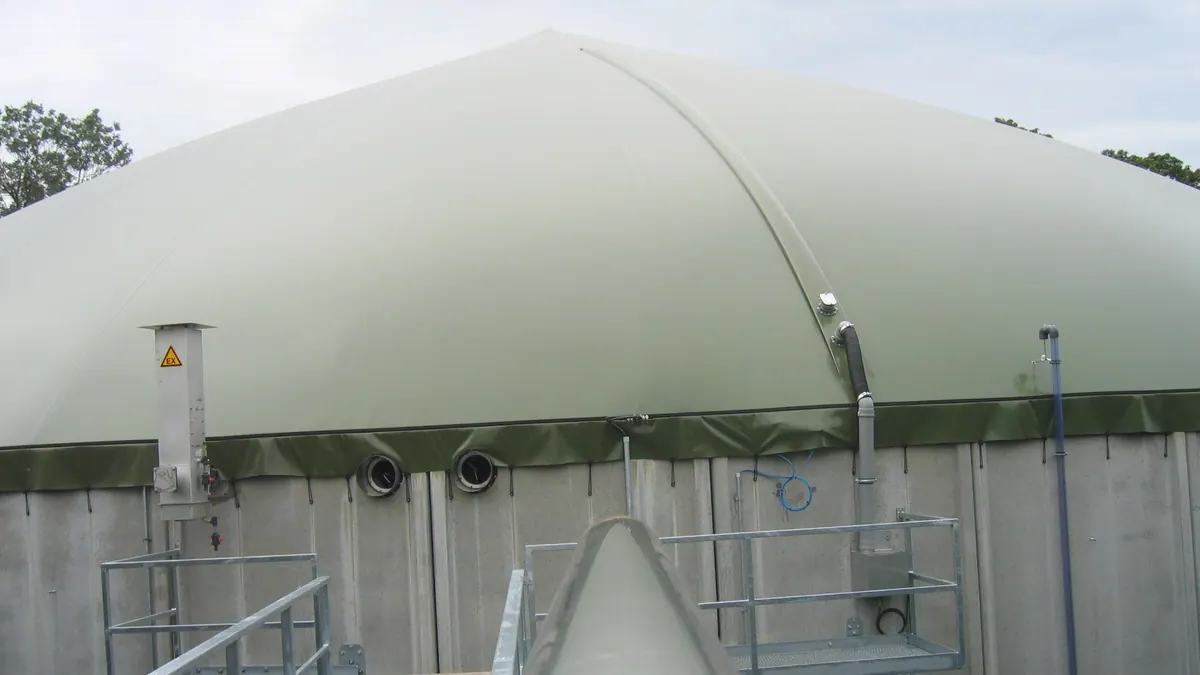

The European Biogas Association (EBA) presented on 16 April 2024 the Guidehouse report "Biogases towards 2040 and beyond", which shows that Europe could produce about 111 billion m³ of biomethane per year in 2040. The result shows how much importance is attributed to waste feedstocks and gasification.
What the report shows
The figure of 111 billion m³ covers the EU-27 and the United Kingdom, Norway and Switzerland; the EU-27 alone accounts for about 101 billion m³. According to the report, about 74 billion m³ (67% of the total) would come from anaerobic digestion, that is, from biogas plants using agricultural residues, waste and sludge, and about 37 billion m³ (33%) from thermal gasification of biomass. The potential in 2040 was set against more than 30% of EU gas consumption in 2022. For comparison, an earlier Gas for Climate study from 2022 estimated the potential at about 44–45 billion m³ in 2030 and about 165 billion m³ in 2050.
An important distinction: potential means the quantity that can be produced with available feedstocks while meeting sustainability criteria, not a forecast of how much will actually be produced. The authors assume that waste and residues will be used, not crops competing with food.
Why the report appeared then
Two months earlier the Commission had recommended a 90% emissions reduction target for 2040. The EBA criticised the fact that in its scenarios biogases play a secondary role, and sought to have the 2040 target include a specific figure for biogases. The report was to provide data for this discussion before the European Parliament elections in June 2024.
Significance for the industry in Poland
Poland has large agricultural and waste resources, but in 2024 it did not yet produce biomethane on an industrial scale. The report is a reminder that the potential is above all an organisational problem: it requires building supply chains for slurry, straw, food processing waste and municipal biowaste, obtaining permits and connections to the gas grid. The Polish Biomethane Organisation (Polska Organizacja Biometanu) pointed out at the time that the lack of a support system and of a biomethane strategy in national planning documents limits investor interest.
For technology companies, it is also relevant that the projected share of gasification (about one third of the potential) opens a market for technologies that in Poland are still at the pilot stage.
What next
Data from potential reports serve as a reference point for national plans and for justifying targets. It is worth following subsequent editions and comparing their assumptions, however: the pace of plant construction, regulatory barriers and feedstock availability can significantly change the assessment of how much of the potential will be realised. For market analysts, multi-year series and breakdowns by country and technology are more useful than a single figure.
Sources
Related articles