BiomethaneGuide
How to choose a biogas upgrading technology: a decision matrix for the investor
The choice of upgrading technology depends on a dozen or so criteria: scale, heat, the CO₂ market, methane losses, local conditions. We propose a matrix with weights and a scoring example for your own use.
Other language versions: polski.
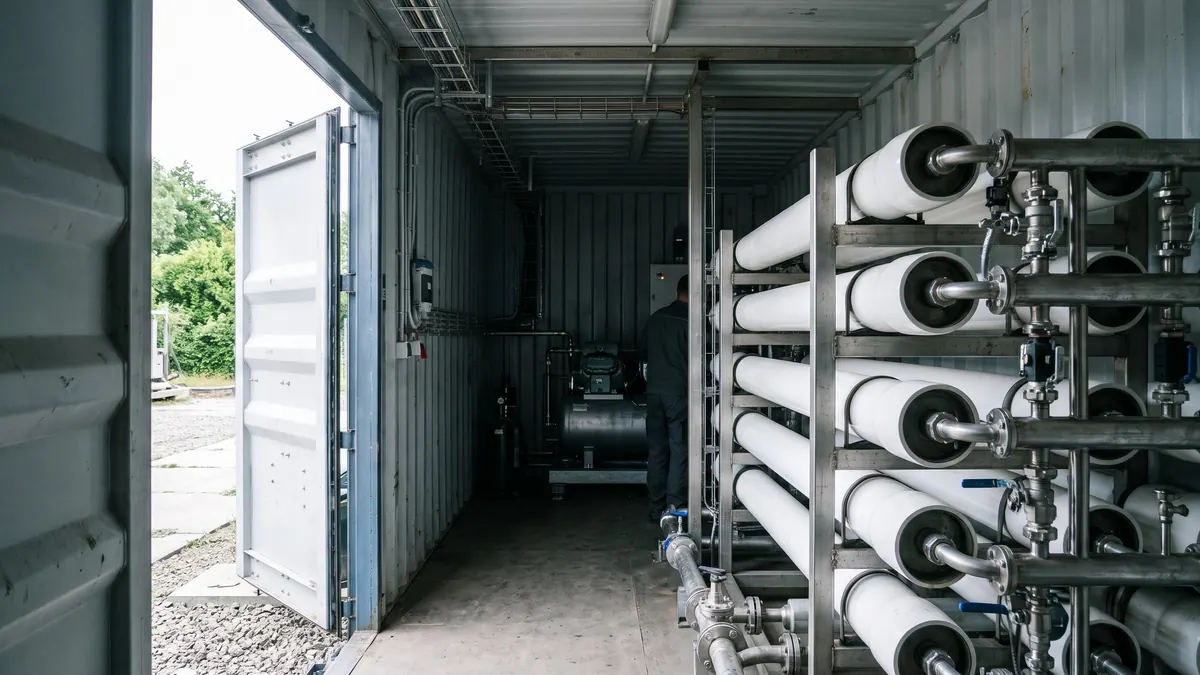
The choice of upgrading technology is best based on a decision matrix: a table in which criteria (cost, methane losses, energy consumption, heat requirements, CO₂ purity, reliability, service and others) are assigned weights, and each technology or offer receives points. This makes the decision transparent, defensible before the bank and the investment team, and forces the collection of comparable data. The example in this article is an illustration of the method; each investor will set the weights and points on the basis of their own priorities and offers.
Step 1: set the criteria
The set of criteria for most projects includes:
- Total cost (CAPEX + OPEX per m³ of biomethane) over the whole analysis period.
- Methane losses and their guarantee.
- Electricity consumption and heat.
- Availability of waste heat at the site.
- CO₂ offtaker and the required purity.
- Requirements for the inlet gas (H₂S, VOC, siloxanes).
- Load flexibility and availability.
- Scale and modularity (the possibility of expansion).
- Service and availability of parts in the country.
- Technology risk (references, experience).
- Environmental requirements (odour emissions, wastewater, amines).
- Footprint and installation time.
Step 2: assign weights
The weights add up to 100%. An example for an agricultural biomethane plant project where heat is expensive and CO₂ has no offtaker: total cost 25%, methane losses 15%, electricity 10%, heat 10%, gas requirements 10%, service 10%, risk 10%, flexibility 5%, CO₂ offtake 5%.
Step 3: score the offers
Scoring on a scale of 1–5 (5 = best). Scoring is best based on numerical data from offers and references, not on opinions.
| Criterion (weight) | Offer A (membranes) | Offer B (water scrubber) | Offer C (amine scrubber) |
|---|---|---|---|
| Total cost (25%) | 4 | 3 | 3 |
| Methane losses (15%) | 3 | 3 | 5 |
| Electricity (10%) | 3 | 3 | 5 |
| Heat (10%) | 5 | 5 | 1 |
| Gas requirements (10%) | 3 | 5 | 3 |
| Service (10%) | 4 | 4 | 3 |
| Risk (10%) | 4 | 5 | 4 |
| Flexibility (5%) | 3 | 4 | 3 |
| CO₂ offtake (5%) | 2 | 2 | 5 |
Weighted score: A = 0.25·4 + 0.15·3 + 0.10·3 + 0.10·5 + 0.10·3 + 0.10·4 + 0.10·4 + 0.05·3 + 0.05·2 = 1.00 + 0.45 + 0.30 + 0.50 + 0.30 + 0.40 + 0.40 + 0.15 + 0.10 = 3.60. B = 0.75 + 0.45 + 0.30 + 0.50 + 0.50 + 0.40 + 0.50 + 0.20 + 0.10 = 3.70. C = 0.75 + 0.75 + 0.50 + 0.10 + 0.30 + 0.30 + 0.40 + 0.15 + 0.25 = 3.50. The results are close, so the choice will be decided by sensitivity analysis and the terms of the offers. If waste heat were available cheaply, the heat score in offer C would rise (e.g. from 1 to 4), and its result would rise to 3.80 and exceed offer B (3.70).
Step 4: sensitivity and risks
Vary the weights by ±5 percentage points and check whether the ranking changes. If one technology wins regardless of the weights, the decision is stable. If the ranking is sensitive, it is worth carrying out a more detailed economic calculation (LCOE) and negotiating guarantees.
Key provisions in the offer
- Delivery boundaries (whether the offer includes pre-treatment, compression to the grid, off-gas afterburning, automation, commissioning).
- Guaranteed capacity, methane slip, energy consumption, availability.
- Warranty period and the cost of service over 10–15 years.
- Terms of replacement of consumables.
- Training plan and access to spare parts.
Pitfalls
- Comparing offers with different delivery boundaries. A cheap offer without pre-treatment is in reality more expensive.
- Guarantees without penalties. A methane loss guarantee without a compensation mechanism is merely a declaration.
- Overly optimistic assumptions about waste heat (its availability in the season and its price).
- Omitting the costs of disposal of used materials (carbon, sorbent, amines).
- Choosing the cheapest supplier without service in the country.
How to use the result
Treat the result of the matrix as a starting point for negotiations, not a verdict. If two offers are close, ask both suppliers for final guarantees and compare them again. It is also worth making a reference visit to an installation of a similar scale and substrates, talking to the operator about availability, service costs and actual methane losses. Information from users is sometimes more valuable than brochures, because it shows how the technology behaves after several years of operation.
Summary
A decision matrix does not replace an economic calculation, but it organises the discussion. Well prepared, it reveals which criteria really decide the choice and helps negotiate better guarantee terms.
Sources
Related articles