BiomethaneEvent
Ireland publishes its National Biomethane Strategy with a target of 5.7 TWh by 2030
On 28 May 2024 the Irish government adopted the National Biomethane Strategy. It envisages up to 5.7 TWh of biomethane in 2030, about 10% of national gas demand.
Other language versions: polski.
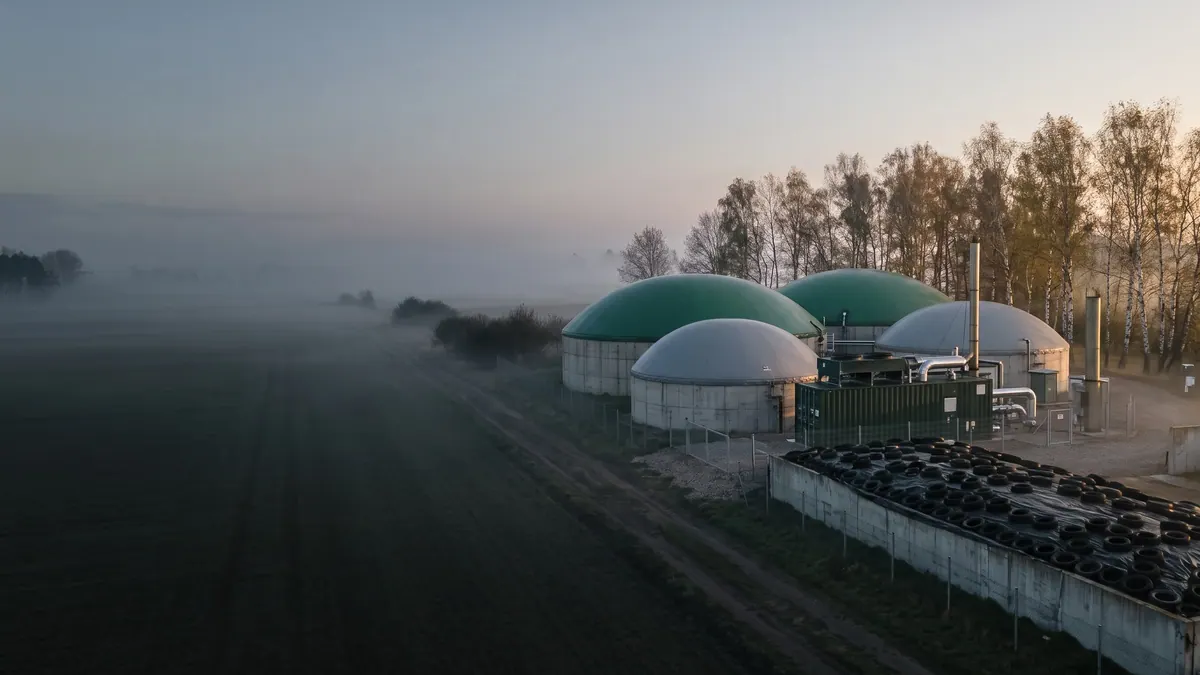
On 28 May 2024 the Irish government published the National Biomethane Strategy, setting out a pathway to 5.7 TWh of domestic biomethane in 2030. That is roughly one tenth of the country's annual gas demand. The document was presented jointly by the ministers for the environment and for agriculture, which underlines the link between biomethane and the farming sector.
Starting point and targets
At the time of publication Ireland had just two installations injecting biomethane into the grid, producing about 75 GWh a year, a fraction of a per cent of gas consumption. The strategy is based on the target in the Climate Action Plan (5.7 TWh by 2030) and on the assumption that the key feedstocks will be agricultural residues – slurry, grass and others – and biowaste. Estimates of the number of installations differ by source: from 140–200 up to as many as 250 biogas plants.
Instruments
The strategy rests on three pillars:
- investment grants for biomethane installations,
- a Renewable Heat Obligation, which is meant to create demand – according to legal commentary it was to be introduced by the end of 2024,
- a framework for grid connection and certification, including guarantees of origin.
The industry (IrBEA) welcomed the document, but pointed out that the market needs greater certainty about demand-side support.
Significance for the industry in Poland
Ireland is a good comparator for Poland: both countries have a strong agricultural sector and a large number of livestock farms, and biomethane is starting from a small base. In Poland in 2024 there was likewise no biomethane plant connected to the grid, and plans concerned several dozen to over a hundred installations. Lessons from the Irish example: support for investment without guaranteed demand may fail; mechanisms of mandatory purchases or long-term contracts are needed; integration with the farming sector requires solutions for digestate to be taken into account.
What next
The strategy will be implemented in stages: the key elements are launching demand support (the renewable heat obligation), the connection and certification framework, and investment grants. Experience from other countries shows that several years usually pass between announcing a strategy and actual production, and success depends on three elements coming together: feedstock, demand and infrastructure. The Irish industry announced further talks on certainty of demand-side support.
What to look out for
The Irish strategy illustrates a problem typical of young markets: the simultaneous need to expand production capacity, connection infrastructure and the market of buyers. Countries that tackle these three elements in parallel achieve a faster pace than those relying only on investment grants. For farmers, the rules on digestate management and nitrate requirements are also important, as they determine whether a farm can take digestate back.