Law and regulationGuide
Entry in the KOWR register of agricultural biogas producers: application, conditions, reports
How to enter an agricultural biogas plant in the KOWR register: who must register, what the application contains, what conditions must be met and what reports to submit after registration.
Other language versions: polski.
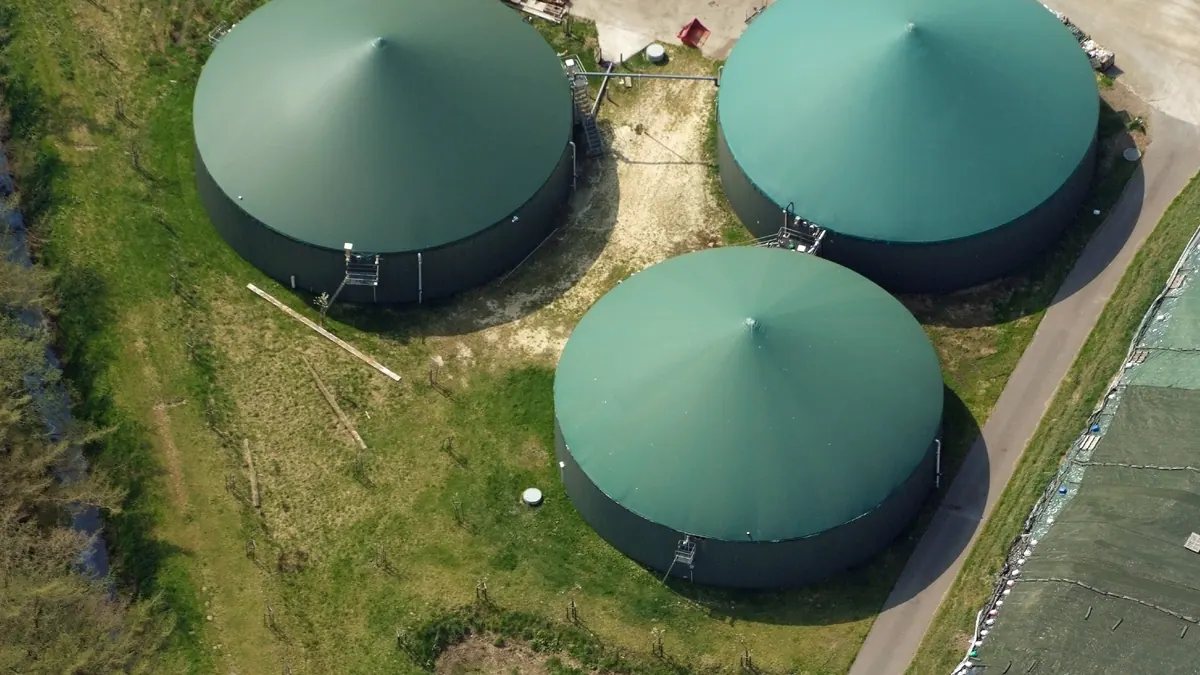

Entry in the register of agricultural biogas producers kept by the Director General of KOWR is a condition of lawfully operating an agricultural biogas plant other than a micro-installation: generating agricultural biogas and electricity from agricultural biogas in such installations is a regulated activity within the meaning of the Entrepreneurs' Law. Below we describe what the procedure looks like and what obligations begin once the entry has been obtained.
Who must register
The obligation applies to producers who, in RES installations other than agricultural biogas micro-installations:
- generate agricultural biogas, or
- generate electricity from agricultural biogas in installations other than a micro-installation.
Producers of energy from agricultural biogas do not register in the URE register of small installations — their only route is the KOWR register. The register is public.
Conditions to be met
Under the Act on Renewable Energy Sources, the producer is required to:
- hold a document confirming legal title to the buildings in which the activity will be carried on,
- have at its disposal facilities and installations meeting the requirements of the regulations on fire protection, sanitary and environmental requirements (together with documents confirming this),
- use only the substrates listed in Article 2(2) to generate agricultural biogas,
- keep documentation of the quantities and types of all substrates, of the agricultural biogas produced (divided into that used to produce electricity, that sold and that used otherwise), of electricity (sold, used for production needs and used otherwise), of the by-product (digestate) and of agricultural biogas purchased,
- hold documentation confirming the date of the first generation of energy or biogas and the date of completion of any modernisation.
The application step by step
- Prepare the producer's details. Name, registered office, address and tax identification number (NIP).
- Describe the activity. The type and scope, the place of operation and the annual capacity of the installation in m³ of biogas per year or the total installed electrical capacity.
- Attach the declarations. Of no arrears in taxes, fees and social insurance contributions and of the truthfulness of the data and knowledge of the conditions in Article 25 — made under pain of criminal liability for a false declaration.
- Submit the application to the Director General of KOWR. Preferably on the current templates from the KOWR website.
- Remedy deficiencies. If the application is incomplete, KOWR calls for it to be completed within 7 days; failure to complete it means the application is left unprocessed.
- Collect the certificate. KOWR issues it ex officio after making the entry.
Obligations after registration
- Quarterly reports. The Director General of KOWR receives them within 45 days of the end of the quarter; the scope corresponds to the documentation in point 4 above.
- Changes in data. A change in the data entered in the register and the termination or suspension of activity must be notified to KOWR in writing within 14 days.
- Inspections. KOWR may inspect the conduct of the activity; authorised employees have the right to enter the premises and to demand explanations and documents.
What the penalties for breaches are
The Director General of KOWR issues a decision prohibiting the activity when, among other things, a declaration proves inconsistent with the facts, the producer uses false documents, fails to remedy breaches of the conditions within the set time limit, or breaches the obligation to use only substrates from Article 2(2). The result is removal from the register, and re-entry is possible no earlier than after three years. In the case of a breach of the rules on substrates, the installation itself may also return to this activity only after three years.
Typical mistakes
- Entering in the application a lower or higher capacity than results from the design — it is difficult to "change" later without a formal change of the entry.
- Failure to update the entry within 14 days after a change in data (e.g. address or capacity).
- Late or incomplete quarterly reports; no record of substrates kept on an ongoing basis.
- Adding a raw material from outside the list in Article 2(2) "as a trial".
- Assuming that the KOWR entry replaces other consents (environmental, building, connection) — it does not.
What to collect on an ongoing basis
| Item | What to record | Why |
|---|---|---|
| Substrates | quantity and type of each delivery, supplier, waste code (if applicable) | quarterly report and KOWR inspection |
| Agricultural biogas | quantity produced, divided into that used for electricity, sold and used otherwise | quarterly report |
| Electricity | generated, sold, used for biogas production, used otherwise | quarterly report |
| By-product | quantity of digestate | quarterly report |
| Biogas purchase | quantity and seller's details | for purchases from other producers |
| Dates | first generation of biogas or energy, completion of modernisation | evidence of support periods and installation parameters |
It is worth keeping the documentation in one spreadsheet or system divided by month, so that the quarterly report is the sum of data from months that are already closed.
Changing the entry and suspending activity
A written notification to KOWR covers a change of data in the register (e.g. address, capacity, output) and the termination or suspension of activity, within 14 days. The entry is changed on the basis of this information, and KOWR passes changes in the register to the President of URE within 7 days. When the entrepreneur is struck off the CEIDG or KRS, KOWR removes it from the register; removal is also possible at the producer's request.
The KOWR register and other consents
An entry in the KOWR register does not replace the decision on connection conditions, the building permit or environmental consents. In a typical agricultural project, however, it exempts from the licence for electricity and from the URE register of small installations. In practice the investment schedule should provide for the entry before the installation is commissioned and for updating it when the capacity or the owner of the facility changes.
This text is for information purposes and does not constitute legal advice; before an investment or formal decision, check the current wording of the regulations and consult a lawyer or the competent authority.
Sources
Related articles