Emissions and climateExplainer
Emissions from manure: methane, N₂O and ammonia, and ways to reduce them
Slurry and solid manure emit methane during storage and N₂O and ammonia during storage and application. We explain the mechanisms, the influencing factors and mitigation measures, including digestion.
Other language versions: polski.
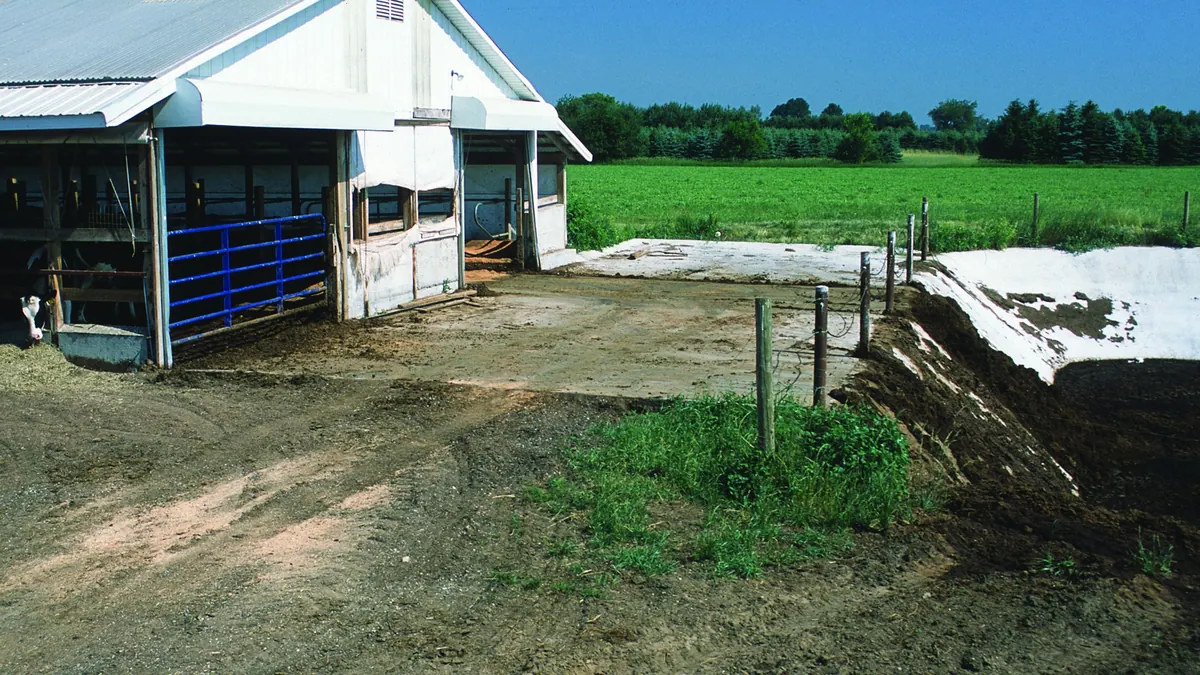

Livestock manures – slurry, liquid manure (urine) and solid manure – are a source of three gases relevant to the climate and the environment: methane (CH₄), nitrous oxide (N₂O) and ammonia (NH₃). Methane is formed mainly during storage under anaerobic conditions; N₂O results from nitrogen transformations (nitrification and denitrification) in stores, on heaps and in soil after application; and ammonia volatilises from the surfaces of tanks, fields and livestock buildings and indirectly contributes to N₂O emissions. The scale of emissions depends on temperature, storage time, feed composition and application technique, which is why the same animals can cause very different emissions on different farms.
Methane from storage
In tank or lagoon slurry, methanogenic bacteria break down readily available organic matter. The rate rises with temperature, so in summer emissions are several times higher than in winter. Long storage, large tanks and the absence of crust mixing favour methane formation. Solid manure in a heap contains less water and therefore produces less methane, but it has anaerobic zones deep inside the heap and emits N₂O if a crust forms or the heap is aerated.
N₂O and ammonia
Nitrogen in manures occurs in ammonium and organic forms. Ammonia volatilises when pH and temperature are high and the surface in contact with air is large (for example, splash-plate spreading of slurry). Lost nitrogen does not reach the plants and becomes a source of air pollution and, indirectly, of N₂O after deposition onto soil. Direct N₂O emissions arise in soil and in stores with a so-called natural crust.
In the IPCC guidelines (2006) for inventories, it is assumed by default that about 1% of nitrogen added to soil (from mineral and organic fertilisers) is emitted as N₂O-N; the guidelines refined in 2019 differentiate this factor according to climatic conditions and the type of fertiliser. National values may differ.
Worked example
Assumptions: a farm applies slurry containing 10,000 kg of N per year to its fields. Direct N₂O-N emissions with a factor of 1%: 100 kg N₂O-N. Conversion to N₂O: 100 × 44/28 ≈ 157 kg N₂O. With GWP₁₀₀ = 273 (AR6), this gives about 42.9 t CO₂e per year. Added to this are indirect emissions from ammonia and leaching, and methane emissions from storage. The example illustrates the scale; actual values depend on conditions and the calculation method.
The Nitrates Directive and farming practice
The Nitrates Directive (91/676/EEC) limits nitrogen doses from manures in especially vulnerable zones (up to 170 kg N/ha per year from livestock manure) and sets closed periods for application and requirements for storage capacity. These rules are implemented through national action programmes, which should be checked against the current legal situation. Good agricultural practices further reduce nitrogen losses.
How to reduce emissions
| Measure | Effect |
|---|---|
| Shorter storage time | less methane |
| Covering tanks (fixed or floating covers) | less ammonia and methane |
| Application with trailing hoses or by soil injection | lower NH₃ emissions |
| Prompt ploughing-in of solid manure | less NH₃ |
| Digestion in a biogas plant | methane capture, less methane from digestate |
| Slurry acidification | reduced NH₃ (used in some countries) |
| Appropriate animal feeding | less nitrogen in excreta |
The role of the biogas plant
Methane fermentation converts readily degradable matter into biogas, reducing the later potential for methane emissions from digestate, especially when the tank is closed. At the same time, part of the organic nitrogen is converted into the ammonium form, which makes digestate a good fertiliser but increases the risk of ammonia losses if it is applied improperly. For this reason the biogas plant must be part of a nutrient management system in which digestate is applied using modern techniques.
Treatment in inventories
National greenhouse gas inventories include separate categories: enteric fermentation, manure management and emissions from agricultural soils. For a farm or a biogas project, a specific balance must be calculated from its own data (number of animals, housing system, storage time, application techniques).
What a farmer can do
The cheapest measures are shortening storage time by applying at optimal times, using low-emission techniques (trailing hoses, injection) and keeping tanks in good condition. In the longer term, the options are covering tanks or delivering slurry to a biogas plant, which reduces emissions and returns digestate with more predictable fertiliser properties. It is worth keeping records of nitrogen doses and a nutrient balance, because this also makes it easier to meet the requirements of the Nitrates Directive.
Summary
Emissions from manures result from biology and weather, but farm management techniques can reduce them significantly. The biogas plant is one of the tools, but the best results come from combining it with prompt and precise application of digestate.
Sources
Related articles