Emissions and climateExplainer
Negative emissions from slurry: why biogas from manure earns a bonus in the GHG balance
Fermenting slurry prevents methane and N₂O emissions from its storage. That is why RED II gives a bonus of −45 gCO₂e/MJ of manure, which makes it possible to obtain a negative carbon footprint for biomethane.
Other language versions: polski.
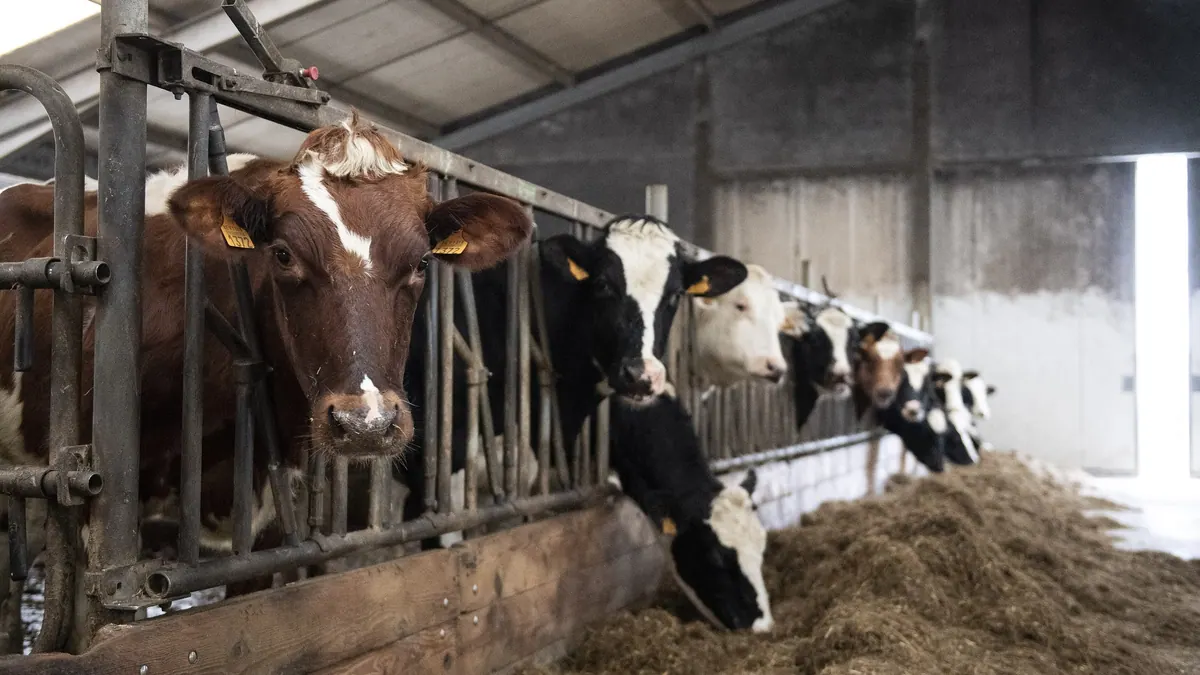

Biogas from slurry and manure can have a negative carbon footprint, because its production prevents emissions that would occur with ordinary storage of natural fertilisers. In stored slurry bacteria produce methane, and N₂O arises from the breakdown of nitrogen. When the same slurry goes into a digester, the methane is collected and used as fuel. The RED II methodology takes this into account in the form of a bonus equal to 45 gCO₂e per MJ of manure used as feedstock, which can bring the balance of the whole chain below zero.
Where emissions from natural fertilisers come from
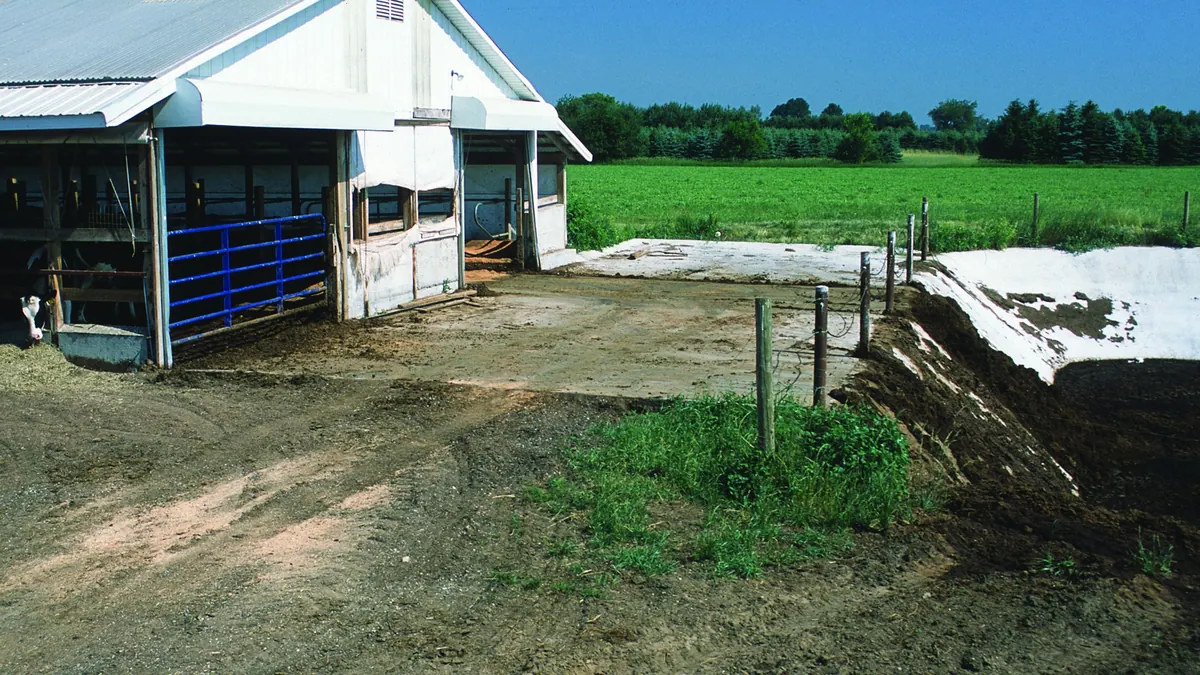
Slurry is a mixture of faeces, urine and water. Under anaerobic conditions (tanks, lagoons, deep litter) microorganisms break down organic matter, producing methane. The amount of emissions depends on temperature (higher in summer), storage time, feed composition and the way it is managed. Solid manure in a heap produces methane and N₂O depending on aeration and moisture. Ammonia emissions from natural fertilisers affect N₂O emissions indirectly.
How fermentation changes the balance
- Methane from slurry, instead of escaping in the tank, goes into biogas and is a fuel.
- Digestate in a closed tank emits less methane than unfermented slurry, because most of the easily degradable organic matter has been processed.
- Replacing a fossil fuel with biomethane avoids CO₂ emissions from natural gas.
As a result, the sum of avoided emissions from storage and fuel substitution can exceed the process emissions of the installation.
The bonus in RED II
For biogas from slurry the directive introduces a special component in the calculations – a credit for improved manure management – with a value of 45 gCO₂e per MJ of manure (biomass used as feedstock), which is subtracted from the sum of emissions. Because the energy in slurry is small, the bonus per MJ of biomethane depends on the share of slurry in the mixture and on the biogas yield. Mixtures with a large share of slurry therefore achieve a decidedly lower carbon footprint.
Worked example (illustrative)
Assumptions: an installation fed mainly with slurry; total process emissions (processing, transport, upgrading) E_gross = 25 gCO₂e/MJ of biomethane, and the slurry bonus after conversion to MJ of biomethane is 60 gCO₂e/MJ (the value depends on the share of slurry and its methane potential; adopted here for the exercise). Balance: E = 25 − 60 = −35 gCO₂e/MJ. The reduction relative to 94 gCO₂e/MJ is (94 − (−35))/94 ≈ 137%. Such a "reduction of over 100%" simply means that the chain has negative emissions in the sense of the methodology. These are example assumptions; the result of a real installation must be calculated on its own data.
Conditions for the bonus to be real
- Closed digestate tanks or recovery of biogas from the digestate store; an open tank can release significant amounts of methane.
- Low methane slip in upgrading and afterburning of the off-gas.
- Gas-tightness of the installation – regular inspections and leak measurements.
- Digestate management – precise application on fields, limiting N₂O and ammonia.
- Documented share of slurry in the substrates (mass balance).
The default values in the RED annexes distinguish between open and closed digestate stores, which shows that a difference in technical solutions can change the result by several dozen gCO₂e/MJ.
A critical view
The bonus is debated: on the one hand it reflects genuinely avoided emissions, on the other it raises questions about whether slurry would not be managed differently in the future and whether incentives do not promote maintaining large herds. For a biogas plant, however, it is a current element of the methodology, and for the climate – proof that projects based on natural fertilisers are among the most effective. We develop the discussion on agriculture and climate in other articles.
What about solid manure
Manure has a higher biogas potential than slurry per tonne of fresh matter (because it contains more dry matter), and it is also subject to anaerobic decomposition in heaps, especially compacted ones. Feeding it into fermentation reduces emissions, and it also contains bedding, which may need shredding so as not to disturb mixing. From a practical point of view both types of natural fertiliser are valuable substrates because of the GHG balance, and their availability near the biogas plant limits transport costs, which themselves contribute small emissions.
Summary
Negative emissions from slurry result from an avoidance calculation: instead of emitting methane and N₂O in a tank, the farmer produces fuel. For the balance to be genuinely negative, you need to ensure a closed digestate tank, low methane slip and gas-tightness of the whole installation.
Sources
Related articles