Digestate and fertilisersExplainer
China: animal manure as fertiliser and biogas feedstock. Targets of 80% in 2025 and 85% in 2030
China wants to raise its livestock manure utilisation rate to over 80% in 2025 and over 85% in 2030. How the indicator is calculated, where the 75% for 2020 comes from and what role biogas plays.
Other language versions: polski.
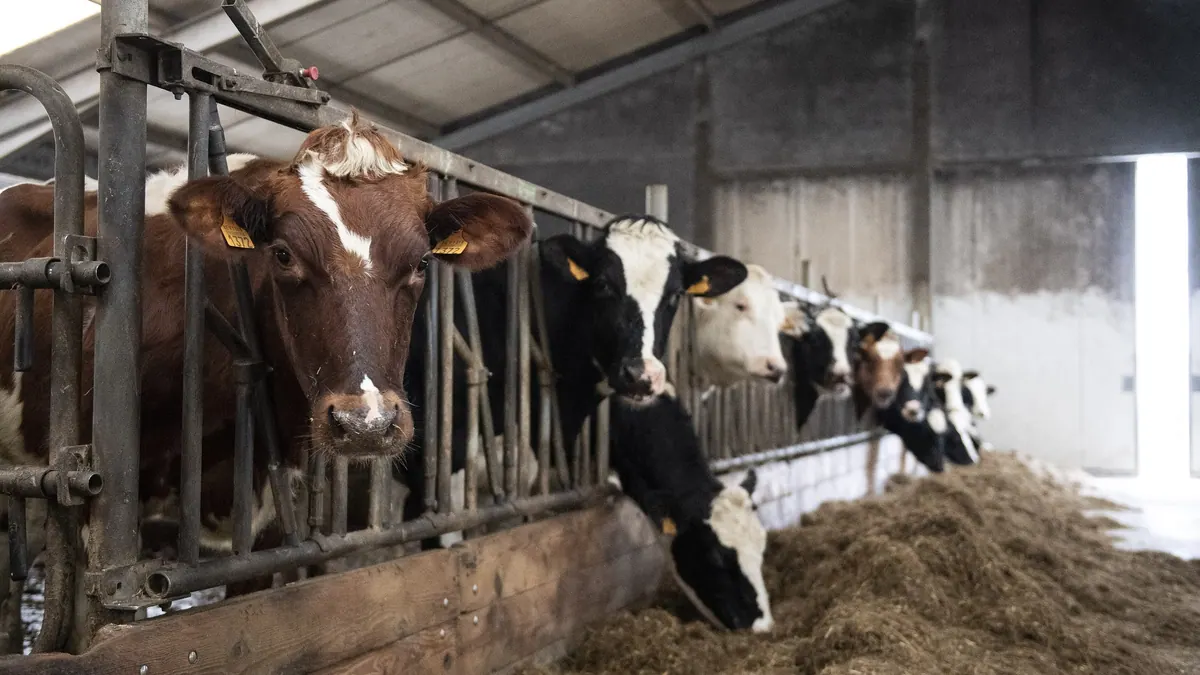

China is the world's largest pig producer and has one of the largest poultry and cattle sectors, so the quantity of animal manure there is counted in hundreds of millions of tonnes. The state uses an indicator of "comprehensive utilisation" of manure: according to the 2020 opinion of the General Office of the State Council on livestock development it is to exceed 80% in 2025 and 85% in 2030, and the methane action plan of November 2023 repeats these levels (over 80% in 2025 and over 85% in 2030).
What counts as "utilisation"
A review in Frontiers of Agricultural Science and Engineering (2024) explains that a "resource utilised" means the production of biogas, solid and liquid organic fertilisers, and bedding. Utilisation is therefore not the same as digestion: it can be composting or direct application on the field. Defined in this way, the indicator was 75% in 2020 according to the review (compared with 37% in 2010 and 60% in 2015). The agriculture ministry reported 78% in July 2023, which makes the 80% target for 2025 look undemanding — this is the assessment of the methane plan presented by the Dutch service Agroberichten Buitenland, which adds that most of the agricultural targets in the plan are general, without numerical reduction targets.
The role of biogas
The review notes that biogas use is low on small and medium-sized farms because of high investment costs, difficult operation and uncertain income from by-products, and that small installations have a high failure rate, low gas output and leaks. The methane plan announces the development of biogas in rural areas in line with local conditions, the construction of large biogas and biomethane plants where conditions allow, and incentives for using methane for heating and power generation. We have not verified nationwide data on the share of manure sent to biogas plants.
Pilot programmes
CGTN (29/01/2024) reported, citing the agriculture ministry, that in 299 pilot counties (a programme running since 2021, with over 7.4 billion yuan from the central budget) the average comprehensive utilisation rate of livestock manure "rose by five per cent"; the source does not specify whether this means percentage points. More than 100 million t of manure were collected and processed, of which more than 79 million t went to fields as fertiliser, replacing 320,000 t of mineral fertilisers.
Digestate: why it is key
Processing manure in a biogas plant produces digestate, which can return to the fields as fertiliser; the FASE review counts "solid and liquid organic fertiliser" among the forms of manure utilisation. The value of digestate depends on the market: if farmers do not trust its quality or the transport cost is too high, the plant bears additional costs. The sources we checked do not discuss digestate quality standards in China.
Impact on methane emissions
The 2023 methane plan announces encouragement for building digesters that capture methane from manure in rural areas, as well as incentives for using methane for heating and energy production (Xinhua, 10/11/2023). In this passage it gives no numerical emission reduction targets.
Limitations of the statistic
The utilisation rate depends on the definition adopted (biogas, solid and liquid fertilisers, bedding) and does not directly measure avoided methane emissions or fertiliser quality. Utilisation is not the same as digestion, so a percentage target does not replace emissions monitoring and a nutrient balance — this is our conclusion from the definition, not a claim made by the sources.
Nutrient balance
The pilots described by CGTN rely on linking livestock farming with crop production: manure returns to the fields as fertiliser and replaces part of the mineral fertilisers (320,000 t in the pilot counties). Doses of organic fertilisers must be matched to crop demand so that nutrients do not run off into waters; we did not check the details of the Chinese nutrient balancing rules.
Economic challenges
According to the FASE review, biogas on small and medium-sized farms is sometimes unprofitable because of high investment costs, difficult operation and uncertain income from by-products, so a high utilisation rate (78% in July 2023) can coexist with a low share of biogas. For China this is our conclusion from these data; we did not verify the share of manure sent to biogas plants.
What this means for Poland and Europe
A manure utilisation rate based on use as fertiliser does not in itself guarantee methane reduction; that requires closed storage tanks and digestion with the gas being used. It is also worth paying attention to differences in definitions in international statistics.
Sources
- Frontiers of Agricultural Science and Engineering 11(3), 367–380 (online 7.03.2024) — Low-carbon development policies and achievements in the context of the livestock sector in China
- CGTN — China sees progress on circular agriculture through pilot programs (29.01.2024)
- Agroberichten Buitenland — Methane emission in China: plans, goals and opportunities
- Rada Państwa ChRL / Xinhua — Chiny publikują plan działań w sprawie metanu (10.11.2023)
- Economic Daily / gov.cn (2.10.2020) — „求新求绿,畜牧业提升竞争力”: omówienie opinii Kancelarii Rady Państwa o rozwoju hodowli, cele na 2025 i 2030 r.
Related articles