BiomethaneExplainer
Methanation and power-to-gas with biogenic CO₂: the catalytic and biological methods
Methanation combines hydrogen from electrolysis with CO₂ from biogas to give synthetic methane. We compare the catalytic (Sabatier) and biological methods, the energy balance and the place of the process in a biomethane plant.
Other language versions: polski.
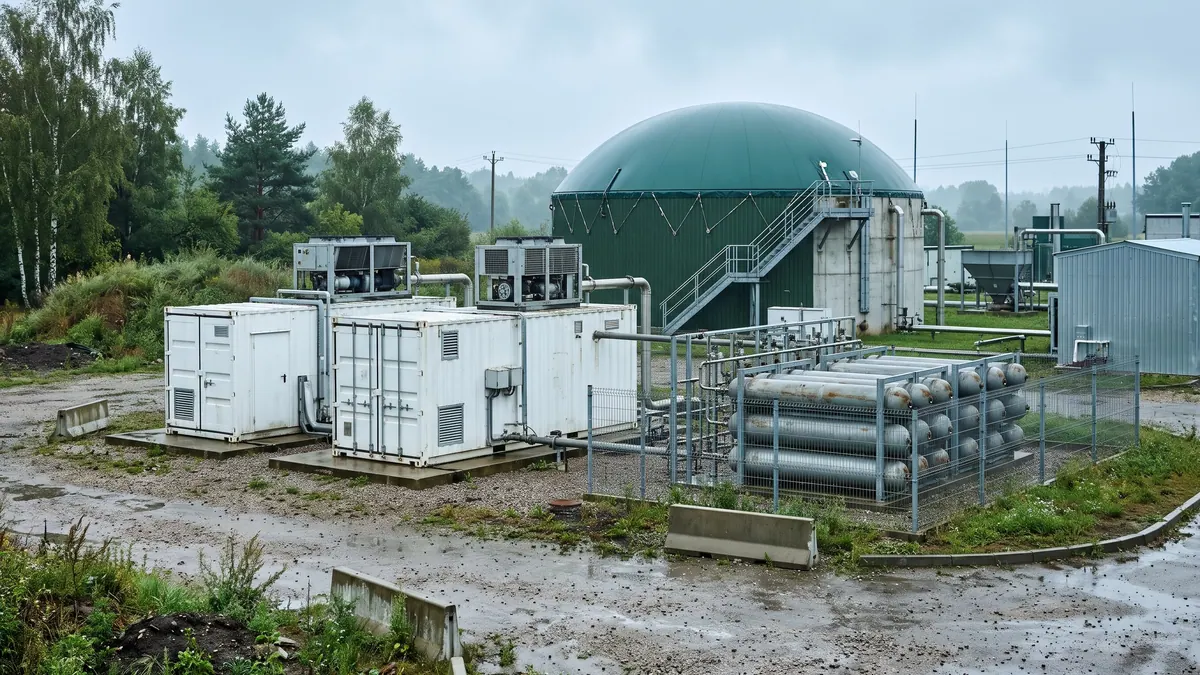
Methanation (power-to-methane) is a process in which hydrogen from electrolysis is combined with carbon dioxide to form methane: CO₂ + 4H₂ → CH₄ + 2H₂O. At a biomethane plant the natural source of CO₂ is the waste stream from biogas upgrading, so instead of releasing it into the atmosphere it can be used to produce additional methane. The process can proceed catalytically (the Sabatier method) or biologically with the involvement of archaea. The total energy efficiency from electricity to methane is indicatively in the range of about 45–55%, because the largest losses occur in electrolysis.
Catalytic method (Sabatier)
The reaction is exothermic (ΔH ≈ −165 kJ/mol CH₄), usually carried out at a temperature of about 250–400°C, at a pressure from atmospheric to over a dozen bar, on a nickel catalyst. Advantages: high rate, compactness, the possibility of using the reaction heat. Disadvantages: the catalyst's sensitivity to sulphur, the need to purify the CO₂, and more complex control with a variable hydrogen supply (e.g. from renewables).
Biological method
Methanogenic archaea (e.g. Methanothermobacter) convert H₂ and CO₂ into CH₄ at a temperature of about 55–65°C in a liquid reactor or in a digester. Advantages: tolerance of impurities (including hydrogen sulphide), flexibility with a variable hydrogen supply, lower pressures. Disadvantages: limitations on gas-to-liquid mass transfer, larger reactor volumes, lower waste heat temperatures.
Mass and energy balance
For 1 m³ of CH₄, 1 m³ of CO₂ and 4 m³ of H₂ are needed. Hydrogen has a calorific value of about 3.0 kWh/m³ (0.0899 kg/m³ × 33.3 kWh/kg), so 4 m³ of H₂ is about 12 kWh. From 1 m³ of CH₄ we obtain about 9.97 kWh. The efficiency of methanation alone (methane energy / hydrogen energy) is therefore about 83%, and the rest is reaction heat. Electrolysis consumes about 52 kWh/kg H₂: for 0.36 kg H₂ (4 m³) this is about 18.7 kWh of electricity. The efficiency from electricity to methane: 9.97/18.7 ≈ 53%, not taking into account the energy for compression and auxiliary equipment. The heat of reaction and of electrolysis, if used, raises the overall efficiency.
Example: a biomethane plant with methanation
Assumptions: a biomethane plant processes 500 m³/h of biogas with 55% CH₄ and 45% CO₂. The off-gas contains about 225 m³/h of CO₂. With full utilisation of the CO₂ with additional hydrogen, it is possible to produce 225 m³/h of additional CH₄, i.e. practically doubling production (275 + 225 = 500 m³/h CH₄). This requires 900 m³/h of hydrogen and about 4.2 MW of electrolysis capacity (900 m³/h × 0.0899 kg/m³ ≈ 81 kg/h × 52 kWh/kg ≈ 4.2 MW). At an electricity price of PLN 400/MWh, the energy cost per m³ CH₄ is about 18.7 kWh × PLN 0.4/kWh ≈ PLN 7.5/m³ – several times more than the cost of biomethane from fermentation. This illustrates why methanation requires very cheap electricity or added value (e.g. storage of renewable surpluses, the RFNBO requirement).
Applications
- Energy storage: surplus electricity converted into methane in the gas grid.
- E-methane as a renewable fuel (RFNBO), if the electricity meets the requirements.
- Increasing biomethane production at a biogas plant by using the CO₂.
- Decarbonisation of industry, in which hydrogen is harder to use than methane.
Demonstration installations
In Werlte in Germany, Audi launched in 2013 an e-gas installation with an electrical capacity of about 6 MW, using CO₂ from a biogas plant. In Avedøre in Denmark, the BioCat installation with biological methanation operates with a capacity in the order of 1 MW. These are pilot and demonstration projects; commercial scale remains limited by costs.
Regulatory conditions
For e-methane to be recognised as RFNBO, the electricity for electrolysis must meet the requirements of additionality, temporal and geographical correlation; the CO₂ should come from sources permitted by the regulations (including biogenic ones). The regulations provide for transitional periods and detailed rules, which must be read in the current acts. When the electricity comes from biogas, the status may be different.
Summary
Methanation makes it possible to make use of CO₂ from biogas plants and to link the electricity and gas sectors, but the economics depend on the price of electricity and regulatory requirements. In the coming years it is a demonstration and niche technology.
Sources
Related articles