BiohydrogenAnalysis
Hydrogen in the gas grid and biomethane: blending, limits and consequences for customers
Adding hydrogen to the gas grid lowers energy density and affects appliances. We calculate the effect of 20% H₂ by volume, discuss limits and compare with biomethane, which requires no infrastructure changes.
Other language versions: polski.
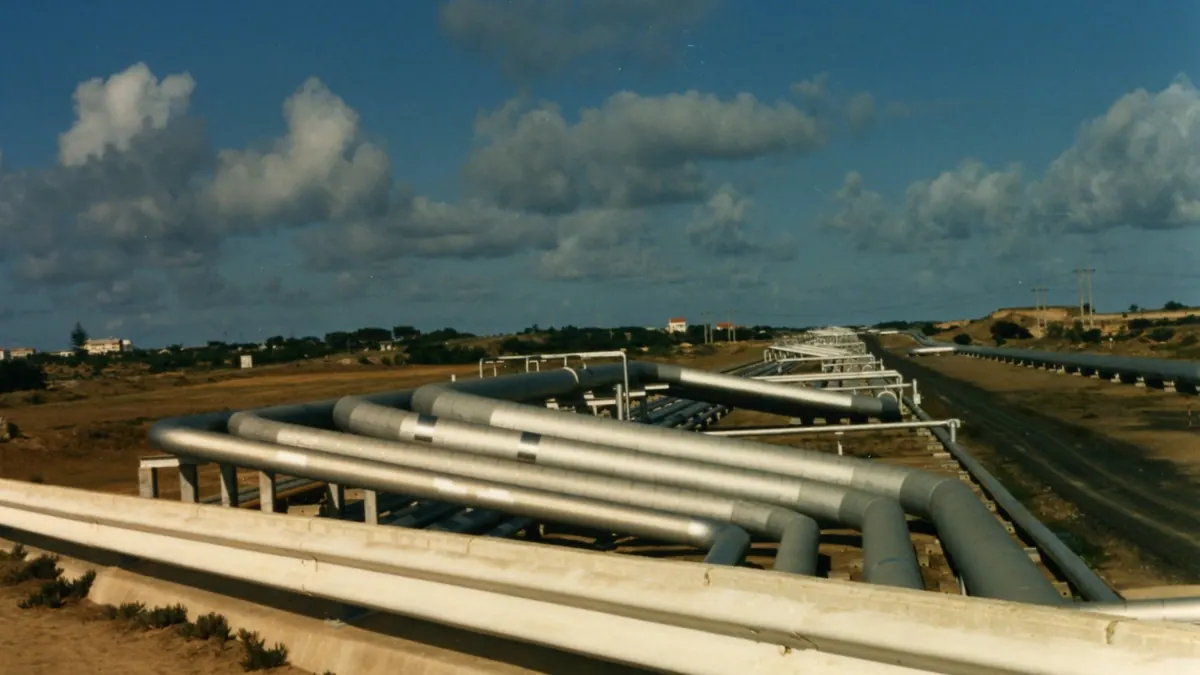

Adding hydrogen to the gas grid (blending) is considered a way of using surplus renewable energy, but it has a limited climate and technical effect. Hydrogen has about three times less energy per cubic metre than methane (about 3 kWh/m³ versus about 10 kWh/m³), so a mixture containing 20% hydrogen by volume has about 14% lower energy density, and the energy from hydrogen makes up only about 7% of it. The CO₂ emission reduction is therefore in the order of a few per cent, while the consequences for appliances and metering can be significant. Biomethane is simpler in this respect, because it has properties similar to natural gas and requires no changes to infrastructure.
Calculation for 20% H₂ (by volume)
Assumptions: grid gas ≈ pure methane at 9.97 kWh/m³ (calorific value), hydrogen at 3.0 kWh/m³.
- Energy of the mixture: 0.8 × 9.97 + 0.2 × 3.0 = 7.98 + 0.60 = 8.58 kWh/m³ (a drop of about 14%).
- Share of energy from hydrogen: 0.60/8.58 ≈ 7%.
- To deliver the same energy, about 16% more volume has to be pumped (9.97/8.58 ≈ 1.16).
- CO₂ reduction on combustion: about 7% (assuming hydrogen emits no CO₂ on combustion).
For 10% hydrogen by volume, the share of energy is about 3.5%. This indicates a small climate benefit relative to the scale of the changes.
Technical consequences
- Wobbe index and calorific value. Combustion parameters change; domestic and industrial appliances designed for natural gas may require adjustment.
- Custody-transfer metering. Gas meters and chromatographs must be adapted to the new composition; differences in calorific value make settlement more difficult.
- Materials. Hydrogen can cause hydrogen embrittlement of some steels, especially in high-pressure networks; limits depend on the material, pressure and age of the infrastructure.
- Gas storage and compressors. Operating parameters change; hydrogen requires different seals.
- Industry. Some processes (e.g. glass production, chemicals) are sensitive to gas composition.
- CNG vehicles. Engines and cylinders have limits on hydrogen content, often very low.
Research and demonstration projects in several countries (including in the United Kingdom, where mixtures of up to 20% H₂ were tested in separate networks) show that higher shares are possible locally after appliances have been prepared, but the solutions cannot easily be extended to entire networks.
Regulations
In 2024 the EU adopted a package on the market for renewable gases, natural gas and hydrogen (including Directive (EU) 2024/1788 and Regulation (EU) 2024/1789), which sets out rules on network access, planning of hydrogen infrastructure and the treatment of renewable gases. The question of the permissible share of hydrogen in the grid and gas quality standards remains the subject of standardisation work and agreements between operators. In Poland, limits and requirements are set by operators on the basis of regulations and standards; the exact values must be verified with the operator.
Biomethane as an alternative
Biomethane does not change the properties of the gas in the grid, so it requires no rebuilding or change of appliances, while at the same time lowering the carbon footprint of the gas. For comparison: to achieve an emission reduction of 7%, it is enough for biomethane with a low carbon footprint to make up 7–8% of the energy in the grid, with no changes at all on the receiving side. Hydrogen, on the other hand, has applications where biomethane is not enough (e.g. chemical processes), but injecting it into the entire grid is a limited solution.
Example: the energy cost of blending
A 5 MW electrolyser operating 4000 h/year produces about 385 t of H₂ (20,000 MWh/52 kWh/kg), i.e. about 4.3 million m³ of H₂ (385,000 kg/0.0899 kg/m³). In a network with a flow of 100 million m³ of gas a year, injecting 4.3 million m³ of hydrogen is only about 4% of volume and about 1.3% of energy. The calculation shows that even a large plant has little effect on the composition of the whole network, but requires almost the same metering adjustments.
Conclusions
- Blending hydrogen with gas in the grid is a complementary solution, not a main one.
- Hydrogen is best directed to applications where it provides the greatest value.
- Biomethane is directly compatible with the existing infrastructure.
- Every decision to allow hydrogen in the grid requires an analysis of materials, customers' appliances and metering.
What about sensitive customers
Some customers, e.g. glass or ceramics producers, CNG stations and plants using gas as a feedstock, are particularly sensitive to a change in composition. For them the permissible share of hydrogen is often very low, and local injection would require separate networks or separation of streams. That is why hydrogen blending ideas are usually accompanied by plans to build dedicated hydrogen infrastructure for the largest consumers.
Summary
Hydrogen in the gas grid is a technical and economic option with limited climate impact, while biomethane provides a comparable benefit without changes to infrastructure.
Sources
Related articles