Law and regulationEvent
Romania prepares an emergency ordinance to accelerate biomethane
According to reports of 19 September 2025, the Romanian government is preparing an emergency ordinance that will define the biomethane producer and its rights and obligations. The strategy target: 5% biomethane in the gas grid by 2030.
Other language versions: polski.
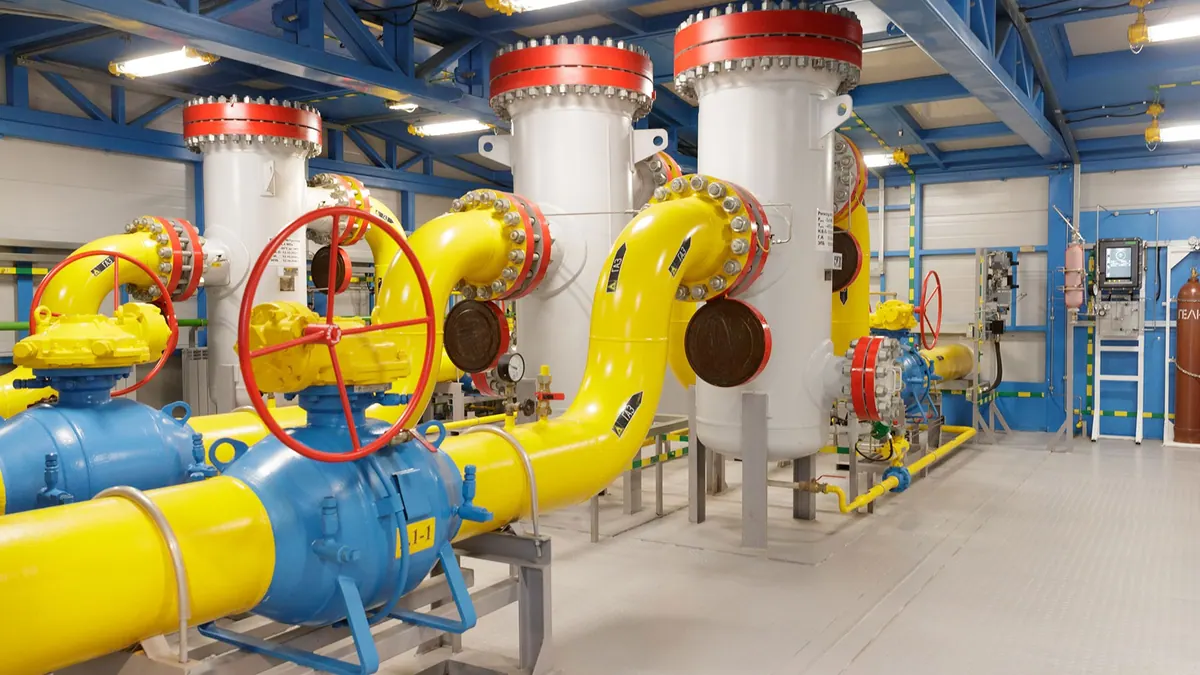

In September 2025 the Romanian government is preparing an emergency ordinance with the force of law (ordonanță de urgență) that is to build a legal framework for biomethane. According to the report of 19 September, it amends the Electricity and Natural Gas Law no. 123/2012, including key definitions, and creates the concept of a biomethane producer with powers similar to those of traditional gas producers. Romania is one of the EU countries with great potential but practically without an injection market.
What the draft contains
A biomethane producer would be obliged to obtain a licence, operate safely and in an environmentally compliant manner, and meet strict quality and safety standards before injecting gas into the grid, and also to bear the costs of connection and injection infrastructure. In return it would receive access to distribution grids, the right to trade its own production and the possibility of developing technical rules for its activity. The Romanian gas distribution network is nearly 60,000 km long and, according to commentators, could be adapted to transmit green gases.
Targets: the energy strategy for 2025–2035 assumes 5% biomethane in the grid by 2030 and 10% by 2050, mainly from agricultural residues and organic waste. The EBA estimates that by 2030 Romania could be the sixth-largest biomethane producer in the EU (about 2 billion m³ a year), and by 2050 the seventh (about 8 billion m³). The article does not mention subsidies for producers.
Why this matters
A legal framework is the first step, without which projects cannot be financed: banks need clarity about the producer's status, grid access rights and responsibility for gas quality. Romania joins the group of Central and Eastern European countries building the foundations of a biomethane market (alongside Poland or the Czech Republic).
Significance for the industry in Poland
For Polish companies, neighbouring markets are both competition for technology suppliers and potential export markets. Romania, like Poland, has a large agricultural sector and an extensive gas grid, so the regulatory conclusions are comparable: first definitions and access rights, then operating support and connections. Polish provisions on biomethane (the FIP premium up to 1 MW since 2023, the announced auctions for larger installations) are currently more advanced than the Romanian assumptions, but it is Poland that must make up for pace of delivery.
What next
The document still had to be adopted by the government; at the time of publication there was no certainty about the date. It is worth following whether it will be supplemented with an operating support system – without it, grid access alone is not enough to launch investments.
Sources
Related articles