Report template for biogas or biomethane producers: new regulation applies from 1 January 2024
The regulation of the Minister of Climate of 11 December 2023, published on 27 December, introduces a report template for small-installation energy producers and biogas or biomethane producers. It enters into force on 1 January 2024.
Other language versions: polski.

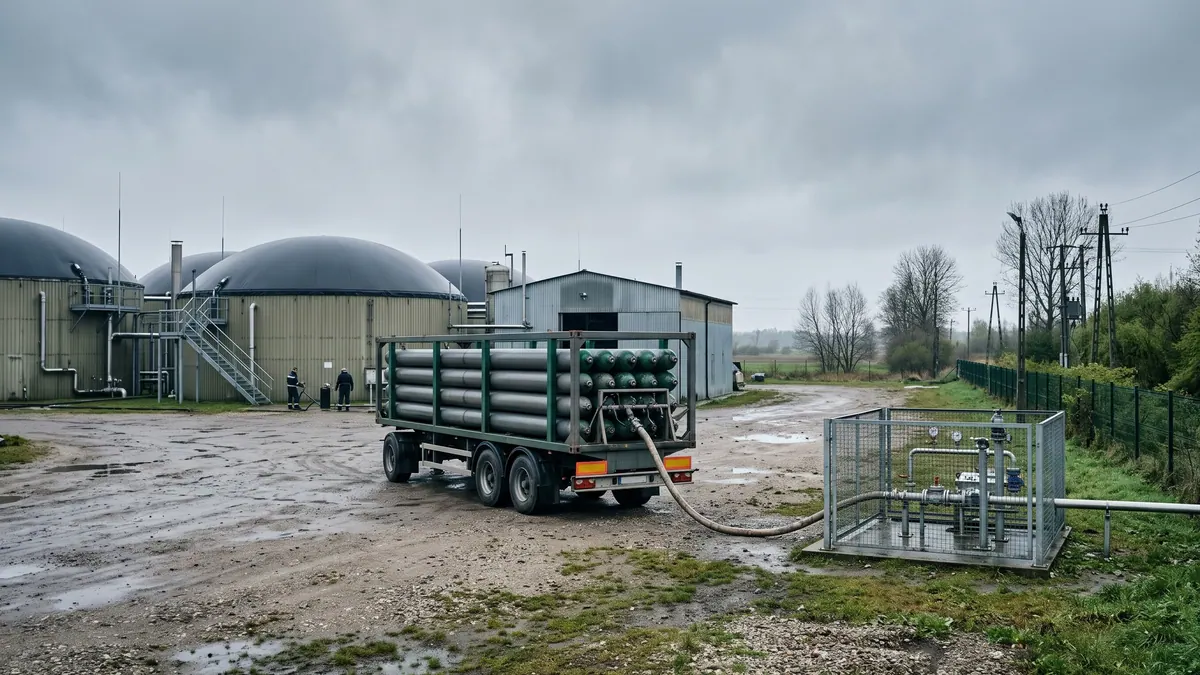
On 11 December 2023 the Minister of Climate and Environment issued a regulation on the template for the report of an energy producer in a small installation and the report of a biogas or biomethane producer (Journal of Laws (Dz.U.) 2023, item 2770). It was published on 27 December and enters into force on 1 January 2024. The regulation supplements the August 2023 amendment to the Act on Renewable Energy Sources (ustawa o OZE), which introduced a register of biogas producers kept by the President of the Energy Regulatory Office (URE) and an obligation to submit half-yearly reports. The template standardises the data that producers must provide to the regulator.
What is changing
Under the Act on Renewable Energy Sources, a biogas or biomethane producer is required to keep detailed records, maintain a legal title to the installation and premises, comply with feedstock restrictions and submit half-yearly reports to the President of URE. The template introduced sets out the structure of the report, including data on the installation, the types and quantities of feedstocks, the quantity of biogas and biomethane produced, and how it is used. For small renewable energy installations generating energy, the template is separate.
Standardised reports allow URE to monitor the market, verify compliance with feedstock criteria and prepare annual information on the state of the sector. The data will also be useful when issuing guarantees of origin and settling the support system.
Significance for the industry in Poland
For producers this is a new administrative obligation that requires putting records in place. Agricultural biogas plants, which until now reported to KOWR (the National Support Centre for Agriculture) and, for energy, to URE, must prepare to collect data in an organised form. It is also important to document the origin of substrates, because the act on agricultural biogas plants and the regulation on the list of substrates specify which feedstocks are permitted.
Businesses should pay attention to the quality of measurement data: weighbridges at the entrance, biogas metering, gas composition analyses and laboratory determinations of feedstocks. Reliable data is also a condition for benefiting from support and certification.
What to look out for
Even before the first reporting period, it is worth setting up a spreadsheet or system that will collect data on deliveries and production in a layout consistent with the template. A person responsible for reporting should be designated, along with the reporting deadlines.
Why reporting pays off
Reliable production data makes it easier to deal with banks, gas buyers and certifiers. A producer who can show a history of feedstock deliveries, production and gas quality has a stronger position in negotiations and passes audits faster. Well-planned reporting also reduces the risk of penalties for failing to meet obligations.
What next
The President of URE will prepare guidelines and tools for submitting reports. Any ambiguities will be clarified in the regulator's practice and in questions from the industry.
Sources
Related articles