BiohydrogenEvent
Rules for renewable hydrogen (RFNBO) published in the Official Journal of the EU
On 20 June 2023 Delegated Regulations (EU) 2023/1184 and 2023/1185 on RFNBO were published. They enter into force on 10 July 2023. Hydrogen from biomass is subject to separate sustainability criteria.
Other language versions: polski.
Two delegated regulations of the European Commission were published in the Official Journal of the EU on 20 June 2023: (EU) 2023/1184, which sets out the rules for recognising hydrogen and derived fuels as renewable fuels of non-biological origin (RFNBO), and (EU) 2023/1185, which establishes the methodology for calculating greenhouse gas emission reductions. They enter into force on 10 July 2023. These are the basic regulations for the renewable hydrogen market in the EU. For the biogas industry it is important that they cover hydrogen from electrolysis, not hydrogen from biomass.
What is changing
For hydrogen from electrolysis to be recognised as RFNBO, the electricity must meet three rules:
- additionality – the electrolyser is to be linked to new renewable sources, commissioned no more than 36 months before the installation; a transitional period is provided for installations commissioned before 2028,
- temporal correlation – hydrogen is to be produced at a time close to the production of renewable energy: with monthly settlement until the end of 2029 and hourly settlement from 2030,
- geographical correlation – the renewable source and the electrolyser should be located in the same bidding zone or in an interconnected zone.
The rules can be waived, among other cases, in zones with a very high share of renewables, or when electricity prices are very low or the renewable source is redispatched. The second regulation sets out how life-cycle emissions are calculated – the hydrogen is to deliver at least a 70% emission reduction compared with the fossil fuel – and the rules for recycled carbon fuels.
Significance for the industry in Poland
For the Polish hydrogen market, based today mainly on natural gas in the chemical industry, the regulations set the conditions for investment in electrolysers. Projects supplied from the grid will have to prove the origin of the energy. The biogas industry should understand the boundary well: hydrogen from the reforming of biogas or biomethane is not RFNBO. It is subject to the sustainability and emission-saving criteria for biofuels and bioenergy under the Renewable Energy Directive. In practice this means a different set of documents and different certification systems.
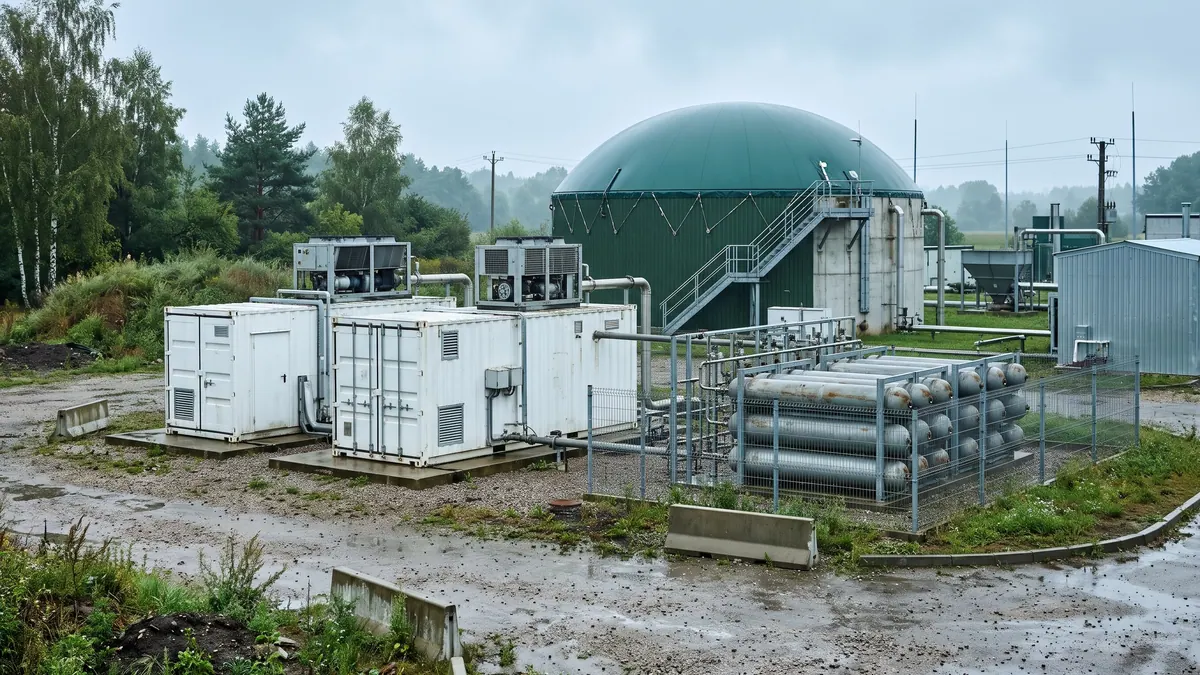
Hydrogen can, however, complement a biogas plant: in biological or catalytic methanation of the CO₂ from biogas, hydrogen serves to increase the amount of methane.
What to pay attention to
When planning hybrid projects (biogas plus hydrogen), it is necessary to establish which fuel will be produced and under which rules it will be accounted for. Different pathways have different requirements for certification, record-keeping and reporting.
What about methane and biogas
In practice the hydrogen market will split into three pathways: renewable hydrogen from electrolysis (RFNBO), hydrogen from biomass and biogas, and low-carbon hydrogen from natural gas with CO₂ capture. Each has different requirements and different certification systems. For biogas producers it is important that biomethane may become a feedstock for hydrogen production, but this requires additional installations and compliance with the feedstock sustainability criteria.
What next
Once the rules enter into force, the Commission and Member States will implement a certification system. In future the rules will be used in the RED III directive and in the gas and hydrogen package.
Sources
Related articles