BiogasEvent
Municipal biogas plant in Rybnik-Niewiadom: environmental decision upheld despite protests
The Local Government Appeals Board in Katowice upheld the environmental decision for the municipal biogas plant in Rybnik-Niewiadom on a reclaimed spoil heap. A residents' association protested; the decision can be appealed to the Voivodeship Administrative Court (WSA).
Other language versions: polski.
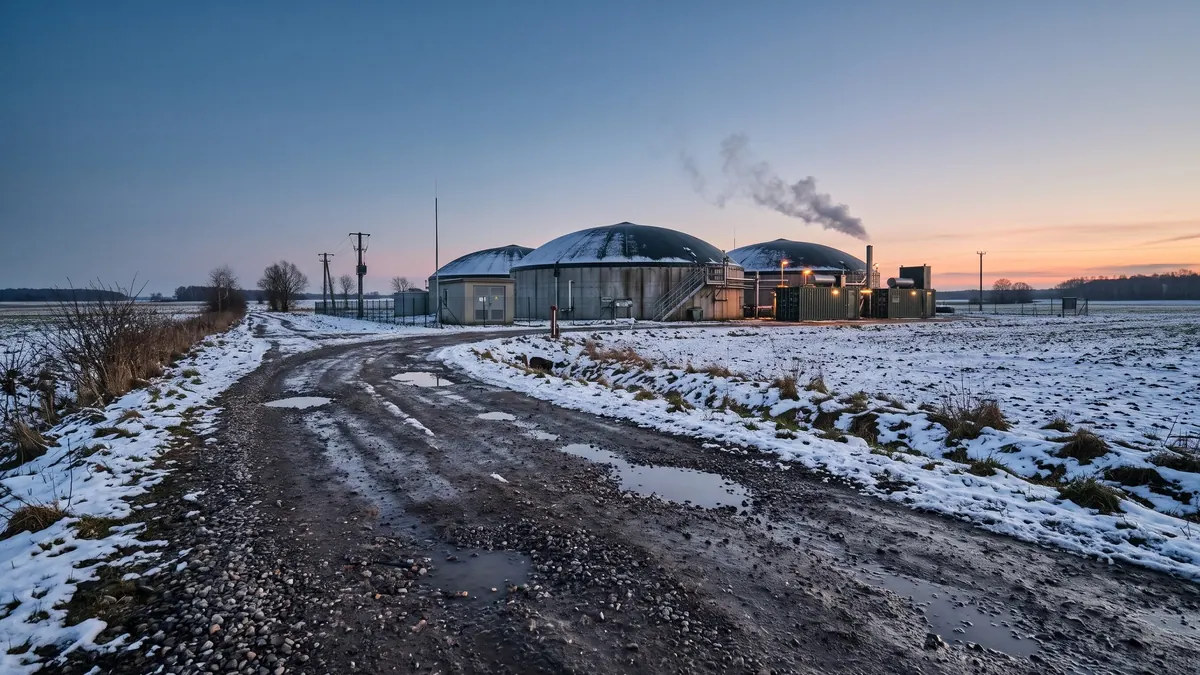
The Local Government Appeals Board (Samorządowe Kolegium Odwoławcze, SKO) in Katowice upheld the decision on environmental conditions for the municipal biogas plant in Rybnik, in the Niewiadom district. The ruling was announced on 29 September 2026. The investor is Centrum Zielonej Energii (CZE), a subsidiary of the city of Rybnik, formed from the merger of Hossa and Centrum Zielonej Energii Subregionu Zachodniego. The environmental decision was issued on 7 May 2026 by the mayor of Racibórz, because the investor is a municipal entity from Rybnik.
The case and the arguments
The biogas plant is to stand on Sportowa Street, on the site of a reclaimed colliery spoil heap, next to the municipal Municipal Waste Selective Collection Point (PSZOK). The feedstock will be waste, mainly from Rybnik; the biogas will be burned in a cogeneration unit. The capacity and throughput of the installation have not been given. Earlier, in October 2025, the media had reported plans to build a municipal biogas plant on a reclaimed spoil heap in Silesia.
The appeal was filed by the Niewiadom Association, which operates in the district. After several months the Board held that the standards on air quality, water and noise will be met, and dismissed the objections, including on the risk of explosion. The SKO decision is final in the administrative proceedings, but is not legally binding (prawomocna): it can be appealed to the Voivodeship Administrative Court (WSA), which the association has not directly announced. After the installation is put into use, the investor is obliged to carry out within two years a post-implementation analysis covering groundwater, air and noise, with odour measurements by day and night at the nearest buildings.
Why it matters
Local conflicts around biogas plants are one of the main barriers to the sector's development. Residents fear odours, heavy goods vehicle traffic and safety hazards. Waste-treatment installations, processing municipal biowaste, are usually built close to conurbations, so the risk of disputes is greater than with agricultural ones. Good practice is transparency, odour monitoring and community involvement – hence initiatives such as the "Code of Good Practice for Biogas and Biomethane" of February 2026.
Significance for the industry in Poland
Rybnik is an example of a municipal investment in biowaste management with local government participation, sited on a post-industrial area – a logical choice (availability of land, infrastructure, no competition for agricultural land). For other municipalities it is important that the environmental decision is a document on which further stages depend: the building permit, the connection and, in the case of NFOŚiGW (National Fund for Environmental Protection and Water Management) programmes, also a condition for applying for grants. Delays resulting from appeals extend the schedule by months.
What to watch
It is worth following whether the association files a complaint with the WSA, and whether the investor obtains financing (the municipal biogas cogeneration programme open until 30 November 2026). The results of odour monitoring after start-up will be key to social acceptance.
Sources
Related articles