BioLNG and bioCNGGuide
bioCNG as a fuel: refuelling, vehicle cylinders, range and station requirements
bioCNG is biomethane compressed to about 200–250 bar that powers gas vehicles. We explain the pressures, types of cylinders, fuel consumption, station construction and gas quality requirements.
Other language versions: polski.
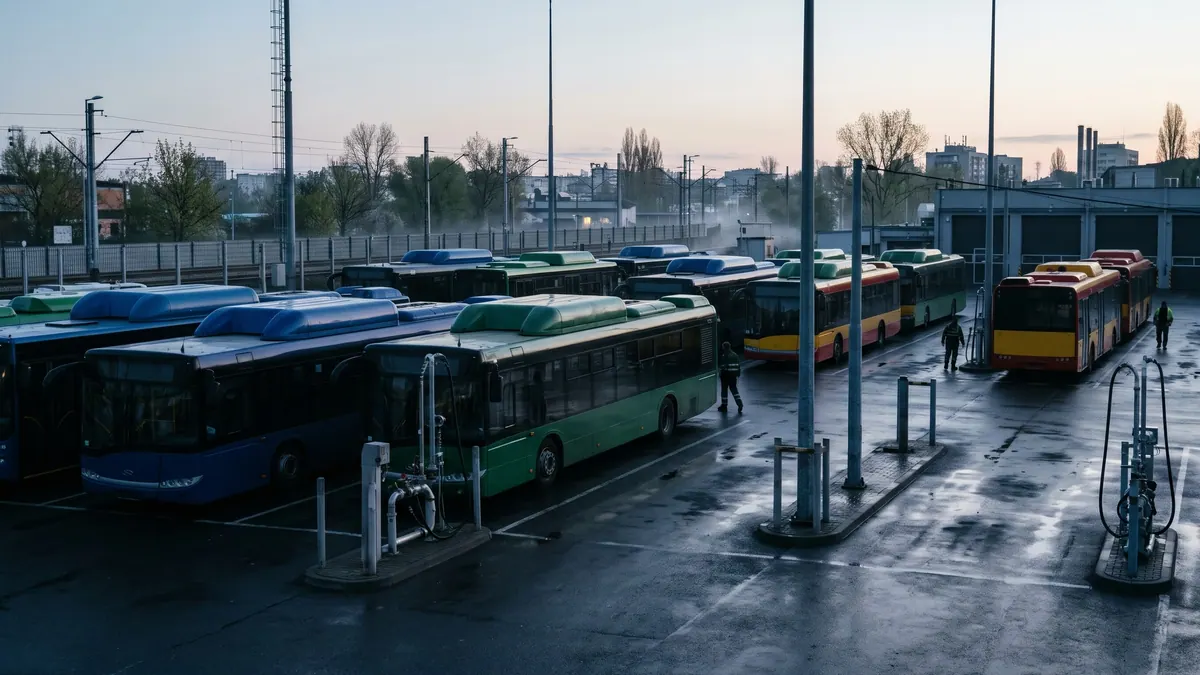
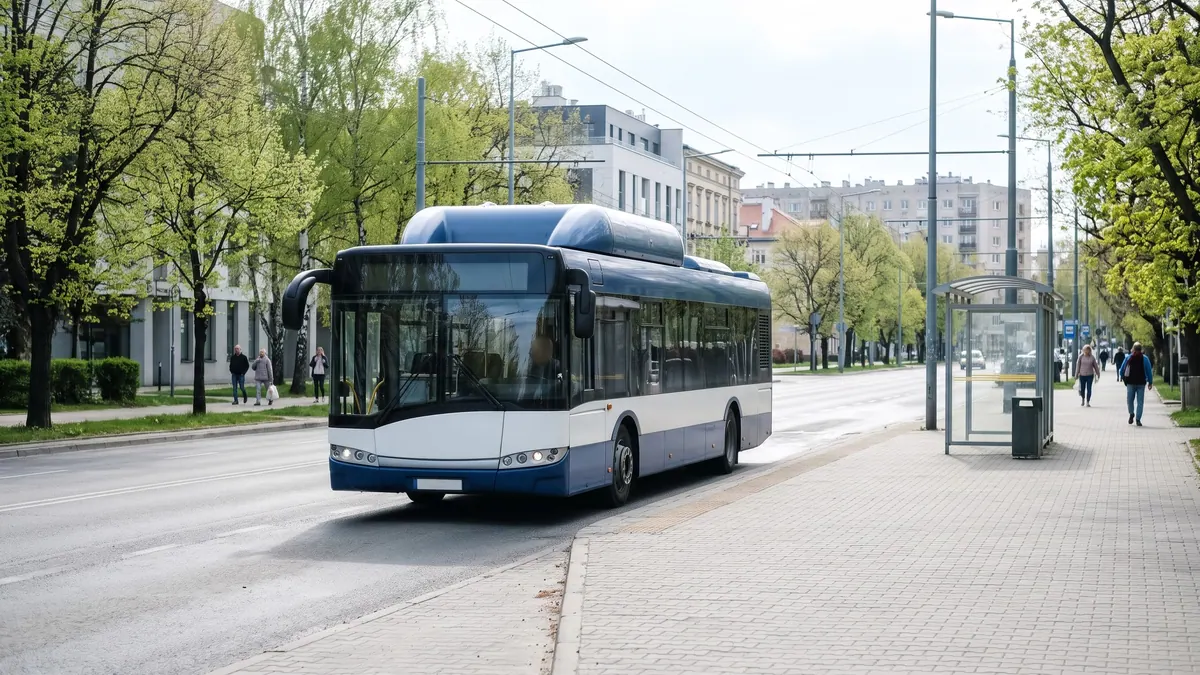
bioCNG is biomethane compressed to a pressure of about 200 bar (nominally in the vehicle) and supplied at refuelling stations as a fuel for cars, buses and light delivery vehicles. Technically it does not differ from compressed natural gas (CNG), so CNG vehicles can be fuelled with bioCNG without any changes. The difference lies in the origin and the carbon footprint, which is confirmed by documents (sustainability certification, guarantees of origin or other schemes). In transport bioCNG works well in urban fleets and local distribution, while for long-distance transport LNG is more often considered.
Pressures and cylinders
Tanks in vehicles usually have a nominal pressure of 200 bar (at a temperature of 15°C). The station compresses gas to a higher pressure (of the order of 250 bar), because the gas heats up after filling and the pressure falls after cooling. Cylinders are made as:
| Type | Material | Characteristics |
|---|---|---|
| I | steel | heavy, cheap |
| II | steel + fibre wrap | lighter |
| III | aluminium + composite | much lighter |
| IV | plastic + composite | lightest, more expensive |
Lighter cylinders make it possible to reduce the vehicle's own mass or increase range, but they raise the price. Cylinders are subject to periodic testing and have a limited service life.
How much energy and how many kilometres
Methane has a calorific value of about 50 MJ/kg, i.e. about 13.9 kWh/kg. The density of methane at normal conditions is about 0.717 kg/m³, so 1 kg of CNG corresponds to about 1.39 m³ of gas. In passenger cars consumption is of the order of 3–5 kg/100 km, in city buses several dozen kg/100 km, depending on mass, route and driving style. For orientation: a passenger car with a tank for 15 kg of gas at a consumption of 4 kg/100 km has a theoretical range of about 375 km; a bus with a stock of, say, 200 kg and a consumption of 45 kg/100 km – about 440 km (example values).
Station construction
- Connection to the gas grid or gas delivery from a biogas plant.
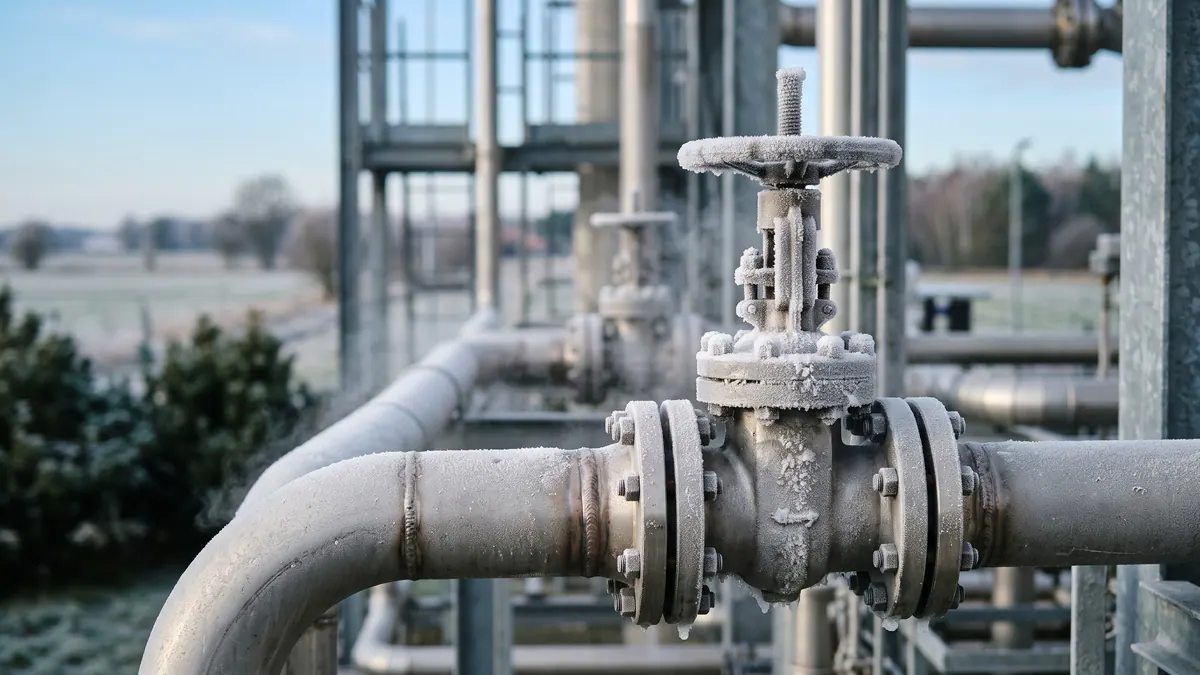
- Gas drying – water in compressed gas risks corrosion and freezing.
- Compressors – multistage, cooled.
- Buffer store – a cascade of tanks at different pressures, which speeds up refuelling and reduces the load on the compressors.
- Dispenser – with a (mass) metering system, gas cooling and safeguards.
- Safety system – gas detection, emergency cut-offs, ATEX zones.
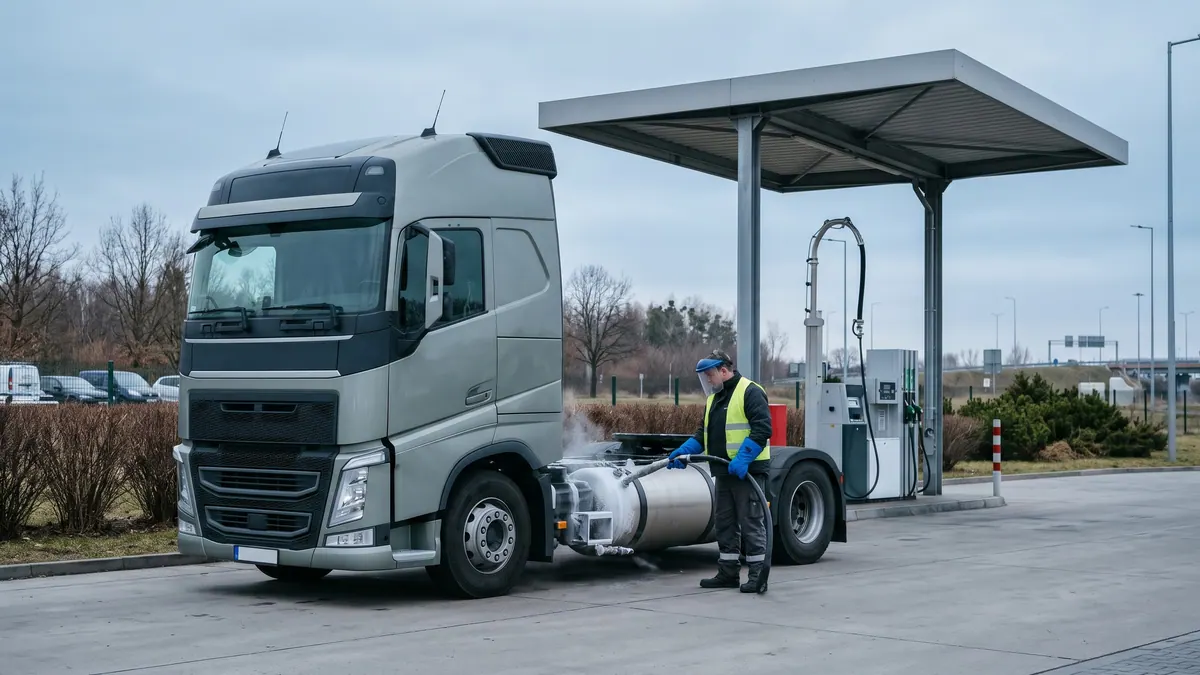
Fast-fill stations (filling in a few minutes) differ from slow-fill stations (a few hours, for fleets staying overnight at the depot).
Quality requirements
The fuel must meet the specification for automotive gas, concerning among other things the methane number, the content of siloxanes, oxygen, sulphur and moisture. In Europe the reference point is EN 16723-2. Siloxanes and sulphur are harmful to the catalytic systems in gas engines, and water to cylinders and fittings.
Where the gas comes from
The station can draw gas from the grid, with the biological origin confirmed by documents (e.g. guarantees of origin), or be supplied directly from a biogas plant. Accounting for the "green" character of the fuel requires a consistent documentation system to avoid double counting of the same energy.
Example: a bus fleet
Assumptions: 20 buses, each travelling 60,000 km a year at a consumption of 45 kg/100 km. Gas consumption: 20 × 60,000 × 0.45 = 540,000 kg a year ≈ 750 thousand m³. Energy: 540,000 × 13.9 = 7.5 GWh. Capacity of the biomethane installation corresponding to this consumption: 750 thousand m³ / 8000 h ≈ 94 m³/h. This is a typical value for a small or medium biomethane plant, which shows that a single installation can supply a fleet of several dozen buses. The figures are estimates.
Pros and cons
Pros: mature vehicle technology, low noise and local emissions (NOₓ, particulates) relative to diesel, the possibility of reducing GHG emissions by using bioCNG, infrastructure in many cities.
Cons: lower energy density than LNG and diesel, the mass of the cylinders, a smaller network of stations in some regions, the need for testing and servicing of tanks.
Accounting as a renewable fuel
For bioCNG to count towards emission reduction targets in transport, its origin and compliance with sustainability criteria must be documented. Depending on the country, registers of guarantees of origin, mass balance systems or direct deliveries from a single biogas plant are used. It is important that the same batch of gas is not assigned simultaneously to transport and to another use, because this would lead to double counting.
Summary
bioCNG is a practical fuel for urban and regional fleets, provided a station is available and there is reliable proof of the origin of the gas. When planning, it is worth setting the costs of vehicles, fuel and infrastructure against the regulatory requirements for clean transport.
Sources
Related articles