BioLNG and bioCNGExplainer
bioLNG: what it is and when liquefying biomethane makes sense
bioLNG is biomethane liquefied at about −162°C, with a volume about 600 times smaller than the gas. We explain its properties, advantages, costs and the situations in which liquefaction pays off.
Other language versions: polski.
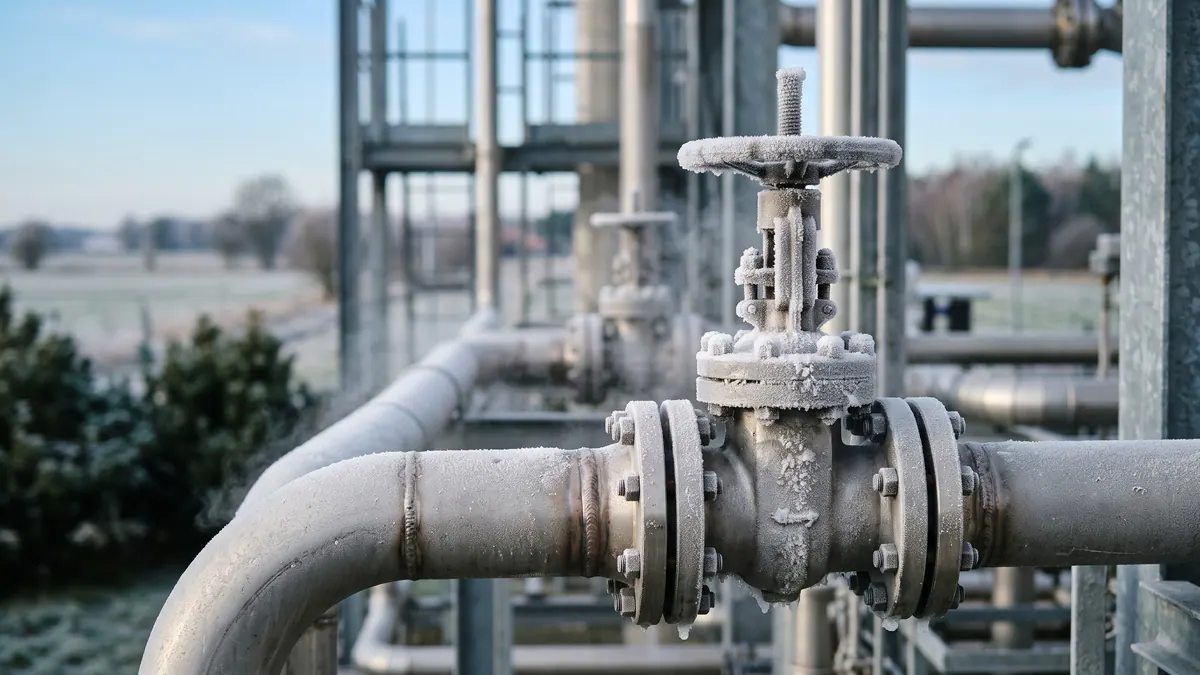
bioLNG (liquefied biomethane) is biomethane cooled to a temperature of about −162°C at a pressure close to atmospheric, at which it turns into a liquid. After liquefaction it occupies about 600 times less volume than in the gaseous state, so it can be carried in tankers over long distances and used to refuel heavy vehicles or ships. Chemically it is the same fuel (mainly methane) as liquefied natural gas (LNG), so it uses existing infrastructure and engines; it differs in origin, and therefore in carbon footprint.
Properties
| Parameter | Indicative value |
|---|---|
| Liquefaction temperature (1 atm) | about −162°C |
| Liquid density | about 0.42–0.47 t/m³ |
| Expansion ratio | about 600 m³ of gas from 1 m³ of liquid |
| Calorific value of methane | about 50 MJ/kg, i.e. about 13.9 kWh/kg |
| Energy density | about 6 MWh/m³ of liquid (order of magnitude) |
For comparison, bioCNG at a pressure of 200–250 bar has an energy density several times lower than a cryogenic liquid; this is the fundamental advantage of bioLNG in applications where range and payload matter.
Why liquefy
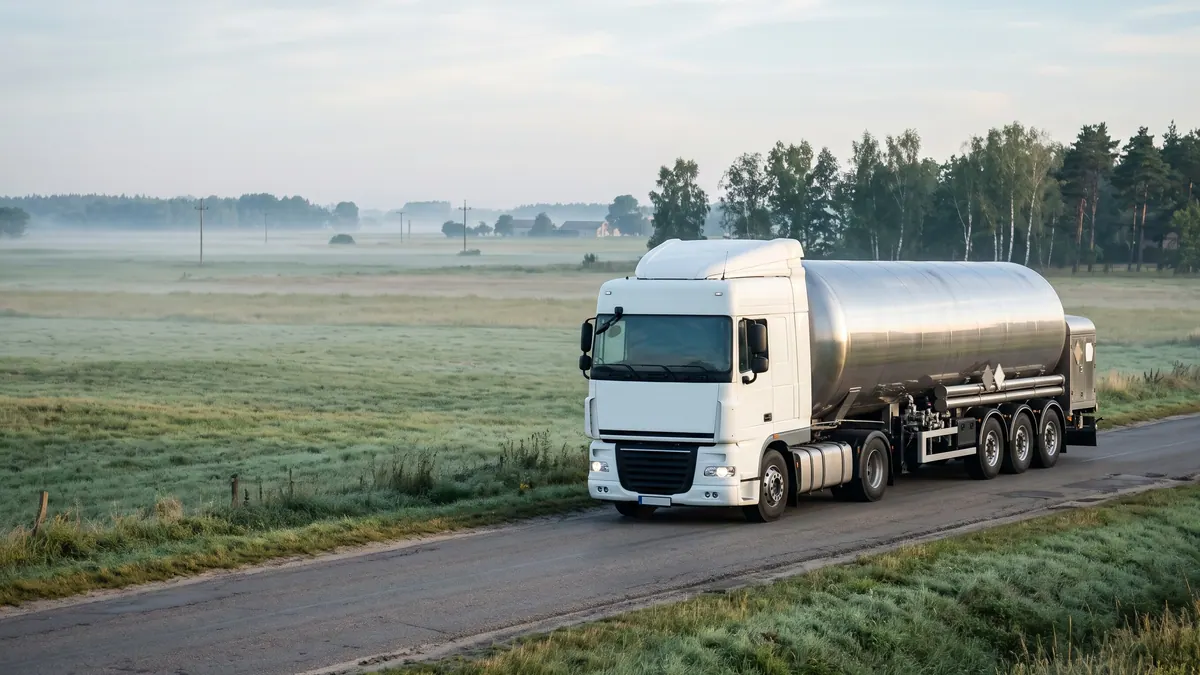
- Heavy transport. Trucks fuelled by LNG have a longer range than CNG, and bioLNG can make it possible to reduce fuel emissions using the same fleet.
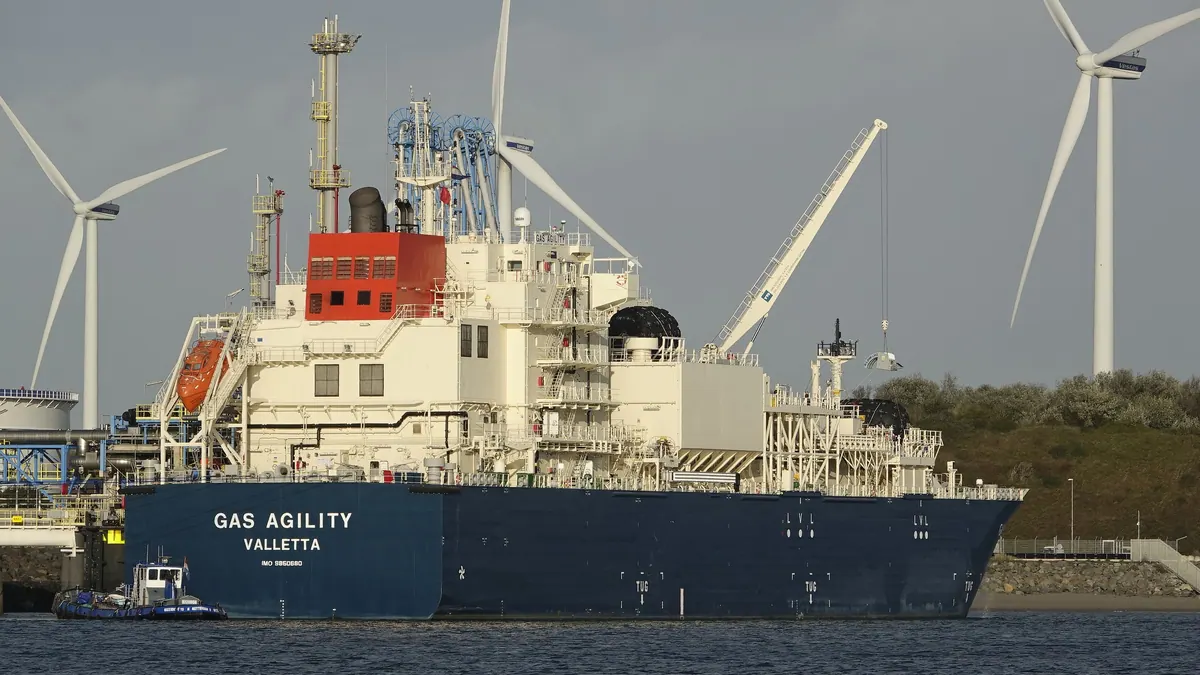
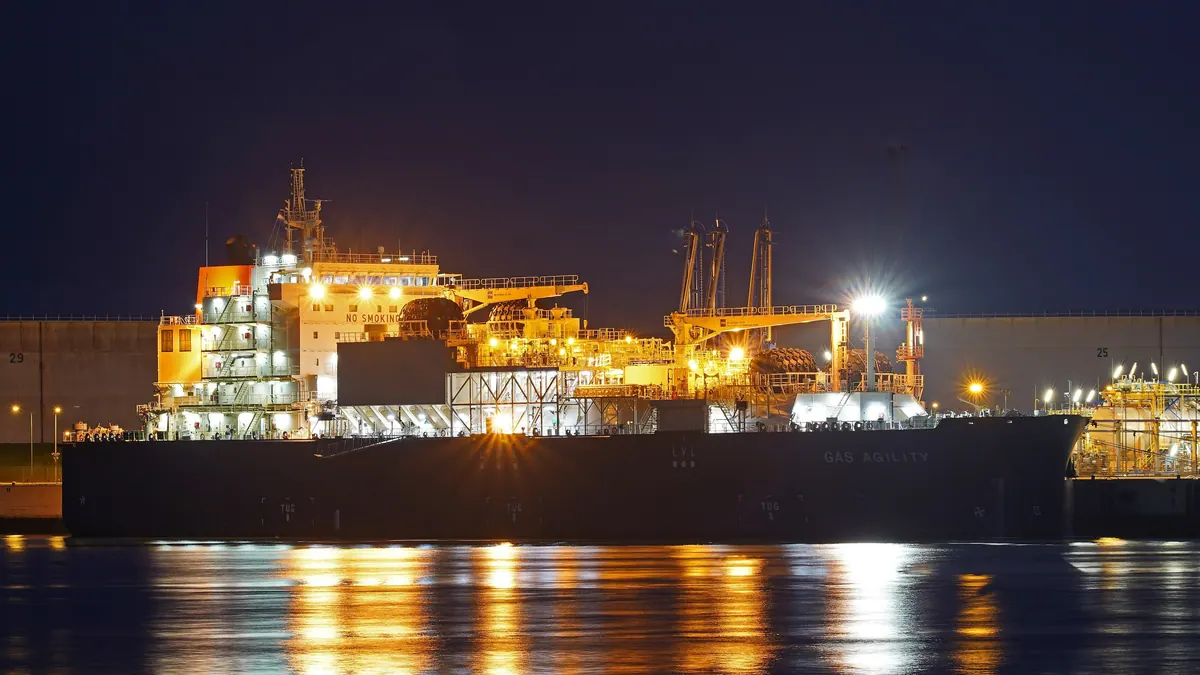
- Shipping and the maritime industry. Ships fuelled by LNG can use bioLNG, which is attractive to shipowners seeking to reduce emissions.
- Customers off the grid. Industry and agriculture without access to a gas pipeline can receive liquefied gas in tankers.
- Long-distance logistics. Liquefaction reduces the unit cost of transporting energy.
What is needed to liquefy
- Thorough gas purification. CO₂ freezes in liquid methane, so its concentration before liquefaction must fall to a level of the order of several dozen ppm; the same applies to water (below 1 ppm), H₂S and other impurities. For this reason liquefaction is sometimes combined with cryogenic CO₂ separation or with additional adsorbers.
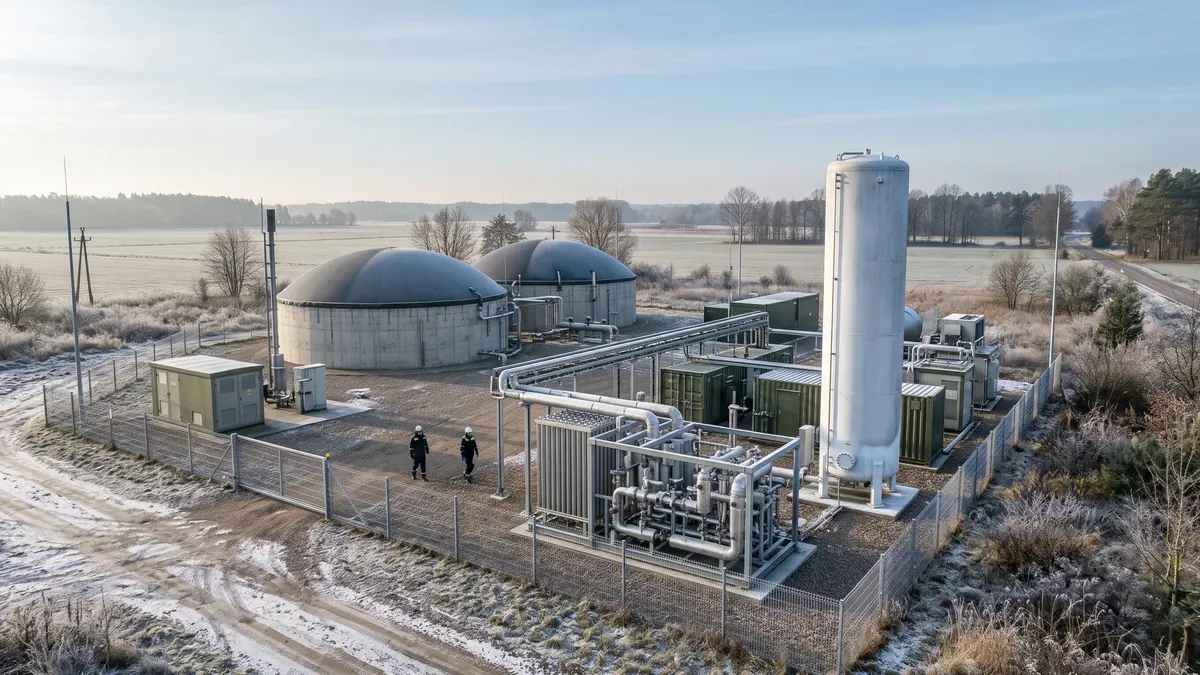
- A liquefaction installation (micro-liquefier) – a system of compressors and heat exchangers cooled by a refrigerant (e.g. nitrogen or a hydrocarbon mixture).
- Cryogenic tanks with vacuum insulation.
- Safety systems – ESD, gas detection, protection against expansion, explosion hazard zones.
- Logistics – cryogenic tankers, a loading arm, refuelling stations.
Energy for liquefaction
Liquefaction requires a considerable amount of energy, which on a small scale is estimated at tenths of a kWh per m³ of gas or around 0.4–0.8 kWh per kg of bioLNG (depending on technology, scale and conditions). For biomethane with an energy content of about 10 kWh/m³ this means several to a dozen or so per cent of the gas energy. Assuming 0.6 kWh/kg: for 1 kg of LNG (13.9 kWh) we use 4.3% of the energy, in the form of electricity. On top of this come evaporation losses (boil-off) during storage and transfer.
Worked example
Assumptions: a liquefier processes 500 m³/h of biomethane (≈ 0.72 kg/m³ → 360 kg/h), energy consumption 0.6 kWh/kg, 8000 h/year. Production: 2880 t of bioLNG a year; electricity consumption: 360 × 0.6 × 8000 = 1728 MWh/year. At an assumed electricity price of PLN 600/MWh this is about PLN 1.04 million, i.e. about PLN 360 per tonne of bioLNG (about PLN 26/MWh of fuel energy). The value is only an illustration: real costs also include depreciation of the liquefier, gas purification, logistics and losses.
When liquefaction pays off
Most often when the value chain includes a customer who pays a premium for a renewable fuel in transport (under regulations obliging emission reductions) and when the volume is stable. Without these elements, biomethane injected into the grid is usually simpler and cheaper. Liquefaction can also be justified when connection to the grid is impossible or delayed and there is an LNG station or an industrial customer nearby.
Risks
- dependence on a single customer or regulation,
- the cost of electricity and the stability of the liquefier's operation,
- safety and staff training,
- availability of LNG fleets and stations,
- volatility of the prices of competing fuels.
Safety and regulations
BioLNG is a cryogenic liquid, so handling requires protection against frostbite, leak checks and trained staff. Tanks are designed with safety valves, and the evaporated gas (boil-off) must have somewhere to go: to re-liquefaction, compression or the grid. Installations are subject to regulations on pressure equipment, fire protection and explosion hazard zones (ATEX), and the transport of cryogenic tankers to regulations on the carriage of dangerous goods (ADR).
Summary
bioLNG is a way of delivering green gas where a gas pipeline does not reach, and of decarbonising heavy and maritime transport. It requires higher expenditure and care in gas purification, but it gives access to markets in which biomethane from the grid is not a sufficient solution.
Sources
Questions and answers
How does bioLNG differ from bioCNG?
bioCNG is biomethane compressed to approx. 200–250 bar and stored as a gas, while bioLNG is the same gas liquefied at approx. −162°C. bioLNG has a higher energy density, so it gives vehicles a longer range and cheaper transport over long distances.
Related articles