BioLNG and bioCNGAnalysis
bioCNG in urban public transport: gas buses versus electric – a comparison of emissions and costs
CNG buses running on bioCNG can reduce fuel-cycle emissions and improve air quality, but electric buses are gaining the advantage. We compare emissions, fuel costs and the role of the Clean Vehicles Directive.
Other language versions: polski.
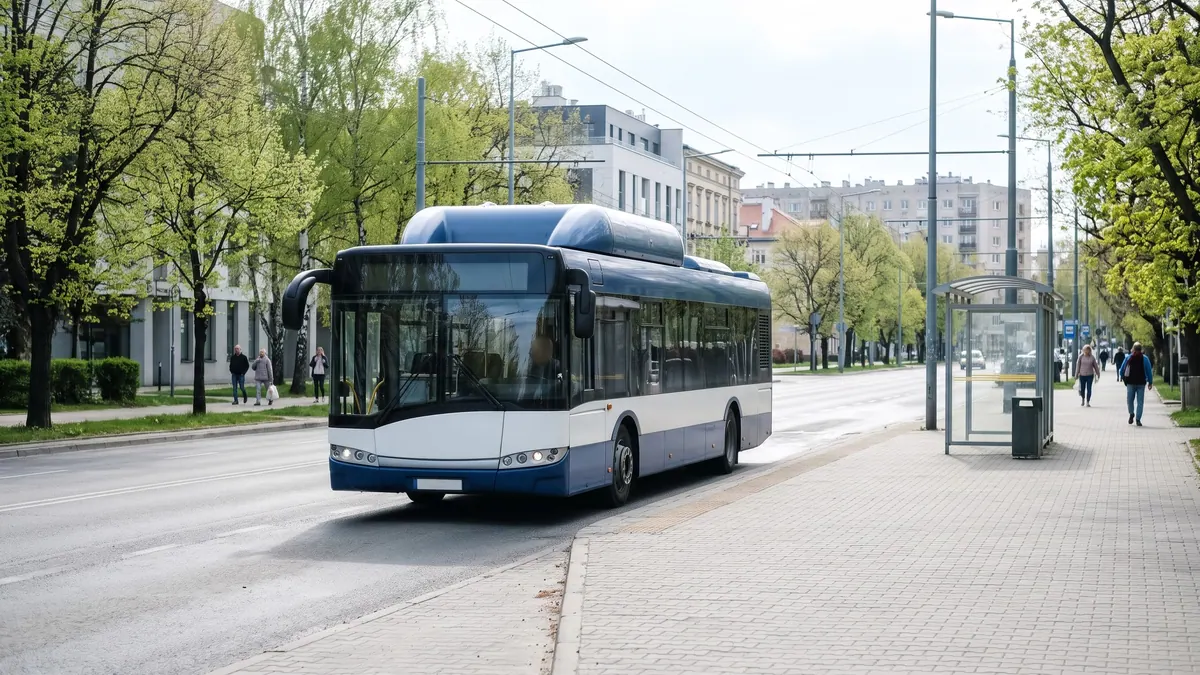
A CNG bus running on bioCNG emits from its tailpipe an amount of CO₂ similar to a combustion-engine bus, but this is biogenic CO₂, and emissions across the whole fuel cycle can be significantly lower, especially for biomethane from slurry or wastes. Electric buses have zero local emissions and in many cities a cost advantage, and the EU Clean Vehicles Directive assigns zero-emission buses a special role. bioCNG is therefore a complementary solution: sensible for existing fleets and routes where electrification is difficult, and where a cheap biomethane plant is available.
Emissions: tailpipe versus the whole cycle
Burning 1 kg of methane gives 2.75 kg of CO₂. A city bus consuming 40 kg CNG/100 km emits about 110 kg CO₂/100 km from its tailpipe. Diesel used at 40 l/100 km gives, at 2.65 kg CO₂/l, about 106 kg CO₂/100 km. In terms of tailpipe emissions, CNG therefore does not differ significantly from diesel. The differences appear on a well-to-wheel basis:
- for CNG from natural gas, emissions from extraction, transport and possible leaks are added;
- for bioCNG from wastes and slurry, CO₂ from combustion is biogenic, and the chain balance can be very low, even negative if methane emissions are avoided;
- for electric buses, emissions depend on the electricity mix in the grid and on battery production.
CNG buses, on the other hand, have lower NOx and particulate emissions than older diesels, which improves air quality in cities, although modern diesels meeting Euro VI standards are also clean.
Worked example (a fleet of 30 buses)
Assumptions: each bus travels 60,000 km per year and consumes 40 kg CNG/100 km, which gives 24 t of gas per year per vehicle and 720 t for the fleet (about 10 GWh at 13.9 kWh/kg). Tailpipe emissions: 720 × 2.75 ≈ 1980 t CO₂ per year. If the gas is bioCNG, the tailpipe CO₂ is biogenic; chain emissions depend on the pathway. Assuming 25 gCO₂e/MJ (biomethane from wastes), total emissions are 10,000 MWh × 3600 MJ/MWh × 25 g = 900 t CO₂e; at 94 gCO₂e/MJ (fossil fuel comparator) – 3384 t CO₂e. A reduction of about 2480 t CO₂e per year. For electric buses, consumption of 1.2 kWh/km gives 72 MWh per vehicle per year and 2160 MWh for the fleet; at a grid intensity of 0.6 tCO₂/MWh this is 1296 t CO₂e per year (the value depends on the mix), and with renewable power – closer to zero. Conclusion: bioCNG from wastes can compete in emissions terms with coal-heavy grid electricity, but loses to low-emission electricity.
Costs
A CNG bus is usually cheaper to buy than an electric one, but more expensive in fuel operation relative to electricity, especially with cheaper charging tariffs. CNG infrastructure (a station) and charging infrastructure (a depot) require investment. The total cost of ownership (TCO) should be compared: vehicle price, fuel or energy, servicing, infrastructure, battery replacement, support. Prices change quickly, so the analysis requires current offers.
Regulations
Directive (EU) 2019/1161 sets minimum targets for the share of clean vehicles in public procurement, and for buses part of the target must be met with zero-emission vehicles. This means that cities' new orders increasingly focus on electric buses, while CNG/bioCNG serve as a transitional or complementary solution. National regulations and available grants influence decisions.
When bioCNG makes sense
- The city already has a CNG fleet and a station, and replacement is spread over time.
- A biomethane plant operates in the area and local offtake is advantageous.
- Routes are long or the depot lacks the grid connection capacity for charging.
- The priority is a rapid reduction of emissions from existing vehicles.
Conclusions for operators
An operator considering the purchase or continued operation of CNG buses should investigate the availability of certified bioCNG, a supply contract with transparent confirmation of origin and the city's plan for regulatory changes. It is worth dividing the decision into stages: keep the existing CNG fleet on bioCNG, and direct new purchases to where electrification is cost-effective. In this way the risk of stranded assets is limited and flexibility is retained.
Summary
bioCNG can significantly reduce bus emissions, but in the long term competition from electromobility is growing. For operators a sensible strategy is a case-by-case analysis: where there is a cheap biomethane plant and a CNG fleet, bioCNG is a good transitional option.