BioLNG and bioCNGAnalysis
bioLNG in heavy-duty transport: range, TCO and emissions accounting pitfalls
LNG trucks running on bioLNG can reduce emissions across the whole fuel cycle, but EU CO₂ standards for heavy-duty vehicles count only tailpipe emissions. We analyse range, costs and regulations.
Other language versions: polski.
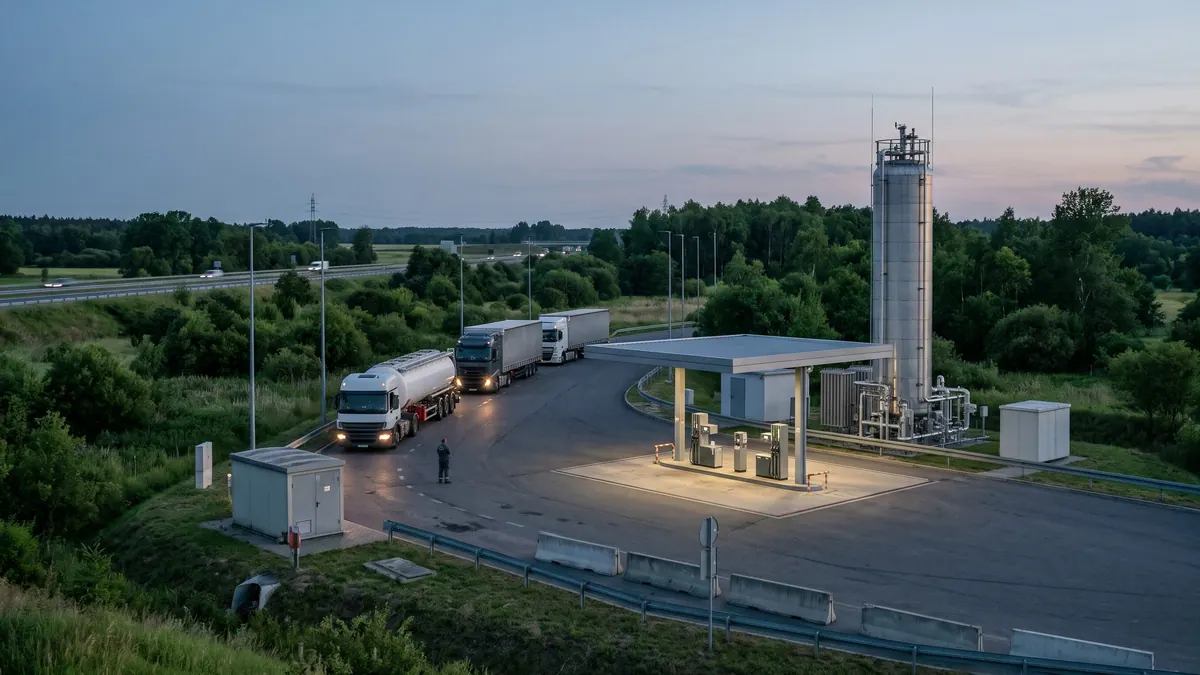
bioLNG in LNG-fuelled trucks makes it possible to reduce greenhouse gas emissions over the fuel cycle without changing the vehicles (it replaces fossil LNG), and a range of over 1000 km makes it suitable for long-distance haulage, in which electric vehicles are still limited. However, Regulation (EU) 2019/1242 on CO₂ emission standards for new heavy-duty vehicles, amended in 2024 by Regulation (EU) 2024/1610, counts tailpipe emissions rather than the whole fuel cycle, so the benefit of bioLNG is not included in the value for the vehicle manufacturer. This is one of the main pitfalls: biofuels help the climate but do not help manufacturers meet their fleet targets.
Range and consumption
LNG trucks usually have cryogenic tanks with a capacity of several hundred kg of LNG and consume several dozen kg per 100 km. At a consumption of 28 kg/100 km, a 400 kg tank gives over 1400 km. For long-distance haulage this means one refuelling per working day. The engine type affects efficiency and methane slip: spark-ignition (stoichiometric) engines with a three-way catalyst usually have lower slip than some dual-fuel solutions, but have lower efficiency than diesels; HPDI dual-fuel engines achieve higher efficiency but require pilot diesel oil.
EU regulations
The CO₂ standards regulation introduces reductions in the average emissions of new trucks relative to the 2019 reference level: 15% from 2025, 45% from 2030, 65% from 2035 and 90% from 2040. Tailpipe CO₂ emissions are counted, and zero-emission vehicles carry greater weight for the manufacturer. An LNG vehicle running on bioLNG has tailpipe emissions similar to an LNG vehicle (CO₂ from biomethane is biogenic, but in this methodology it counts as a tailpipe emission), so it does not bring the manufacturer closer to its targets. Road charges in some countries (the Eurovignette, charges for CO₂), on the other hand, may promote low-emission vehicles, and the rules differ among EU countries.
TCO example (illustrative)
Assumptions: mileage of 120,000 km per year, diesel consumption of 30 l/100 km, LNG 28 kg/100 km. Prices: diesel PLN 6.0/l, bioLNG PLN 7.5/kg. Fuel cost per 100 km: diesel PLN 180, bioLNG PLN 210. The difference of PLN 30/100 km × 1200 = PLN 36 thousand per year is to the disadvantage of bioLNG. The price of an LNG vehicle is higher by PLN 100 thousand (assumption), with possibly lower road charges by PLN 10 thousand per year. For five years: additional fuel PLN 180 thousand + vehicle premium PLN 100 thousand − savings on charges PLN 50 thousand = PLN 230 thousand more than diesel. For the company to break even, a premium for emission reduction is needed (e.g. from customers for "green" haulage), support or lower charges. The prices in the example are assumptions.
GHG reduction: what really enters the balance
On a well-to-wheel basis, bioLNG from slurry or wastes can have a clearly lower footprint than diesel. However, the balance must take into account:
- methane slip in the engine (depending on technology),
- losses in liquefaction, transport and at the station (boil-off),
- emissions from bioLNG production (energy for liquefaction),
- the method of accounting (mass balance, certificates).
Unburned methane has a GWP₁₀₀ of about 28–30, so a slip of several percent can cancel out part of the benefit. For this reason the choice of engine and fuel monitoring are important.
Alternatives
Battery electric vehicles are developing quickly in distribution and regional transport; in long-distance haulage the limitations are costs and charging infrastructure. Hydrogen vehicles are at the demonstration stage. Biodiesel and HVO are liquid fuels that do not require changing the fleet, but their feedstock availability is limited. bioLNG can be part of the mix, especially in regions with access to stations.
Conditions for success
- Availability of stations along routes (the TEN-T network).
- Contracts with customers ready to pay for green logistics.
- Certified bioLNG with a low footprint.
- Vehicles with low methane slip.
- Stable regulations.
Summary
bioLNG is a practical tool for reducing emissions in heavy-duty transport, but it does not always win on cost and is not accounted for in manufacturers' fleet standards. The decision to buy a fleet is worth basing on a full TCO calculation and a GHG balance.
Sources
Related articles