BioLNG and bioCNGAnalysis
FuelEU Maritime and bioLNG: what it means for shipping and gas suppliers
From 2025, the FuelEU Maritime Regulation introduces limits on the GHG intensity of energy used on ships. We explain the rules, the role of bioLNG, methane slip in LNG engines and penalties.
Other language versions: polski.

FuelEU Maritime is Regulation (EU) 2023/1805, which from 1 January 2025 requires a gradual reduction in the greenhouse gas intensity of energy used on ships with a gross tonnage above 5000 GT calling at EU ports. The reference value is 91.16 gCO₂e/MJ, and the required reduction is 2% in 2025, 6% in 2030, 14.5% in 2035, 31% in 2040, 62% in 2045 and 80% in 2050. The calculation covers the whole fuel cycle, including CO₂, CH₄ and N₂O, so for bioLNG both the production footprint and the unburned methane in the engine matter.
Scope
The Regulation applies to energy used on ships on voyages between EU ports (in full) and by half for voyages to or from non-EU ports, as well as while at berth in EU ports. The shipowner is responsible for achieving the limit on average GHG intensity in the reporting year and for submitting reports. The Regulation also provides for an obligation for passenger and container ships to use shore power in the main EU ports from 2030.
Intensity formula
GHG intensity is expressed as the sum of "well-to-tank" emissions (fuel production and delivery) and "tank-to-wake" emissions (combustion), divided by the energy used on board. For biofuels, including bioLNG, the well-to-tank factors derive from certified values in line with RED and verified by the certification scheme. For combustion, biogenic CO₂ is accounted for according to the rules of the Regulation, together with unburned methane and N₂O.
Methane slip
LNG-fuelled engines have a methane slip that depends on the engine type. The Regulation gives default slip values for different types of propulsion units (including low-speed dual-fuel engines, medium-speed engines and spark-ignition engines), with the range extending from low fractions of a percent to several percent of the fuel, and the values may be updated. For the shipowner this means that merely switching fuel to bioLNG is not enough to achieve high reductions if the engine has a high slip. In the balance, methane with a GWP₁₀₀ of about 28–30 raises the emission intensity.
Worked example (illustrative)
Assumptions: bioLNG with well-to-tank emissions of 20 gCO₂e/MJ (a value assumed for the example), combustion: methane slip of 2% of the fuel's energy. Unburned methane corresponds to 2% of the fuel's energy, i.e. 0.02 MJ for every MJ of fuel; at a calorific value of 50 MJ/kg this is 0.0004 kg, or 0.4 g CH₄ per MJ. With GWP₁₀₀ = 28, this gives 11.2 gCO₂e/MJ. The total intensity ≈ 20 + 11.2 = 31.2 gCO₂e/MJ, so the reduction relative to 91.16 is about 66%. For fossil LNG, CO₂ from combustion alone is about 56 gCO₂/MJ, to which supply chain emissions and slip are added, so the result is many times higher than for bioLNG. The example shows that bioLNG can deliver a large reduction, but methane slip and the production footprint determine the result.
Surplus and pooling
Ships that achieve a better result than required can carry the compliance surplus forward to subsequent periods or transfer it to other ships within a pool (pooling). A shipowner with a fleet can therefore optimise fuel use: some ships on bioLNG, others on conventional fuel, as long as the fleet average meets the limit.
Penalties
Financial penalties are provided for failure to meet the limits, calculated on the basis of the amount of energy non-compliance and a reference price, which for fossil fuel is about 2400 EUR per tonne of very low sulphur fuel oil equivalent (VLSFO). This means that for shipowners, solutions that reduce intensity can be cost-effective within the range of the premium for bioLNG and other fuels.
Consequences for bioLNG suppliers
- demand for bioLNG with a sustainability certificate and low GHG intensity;
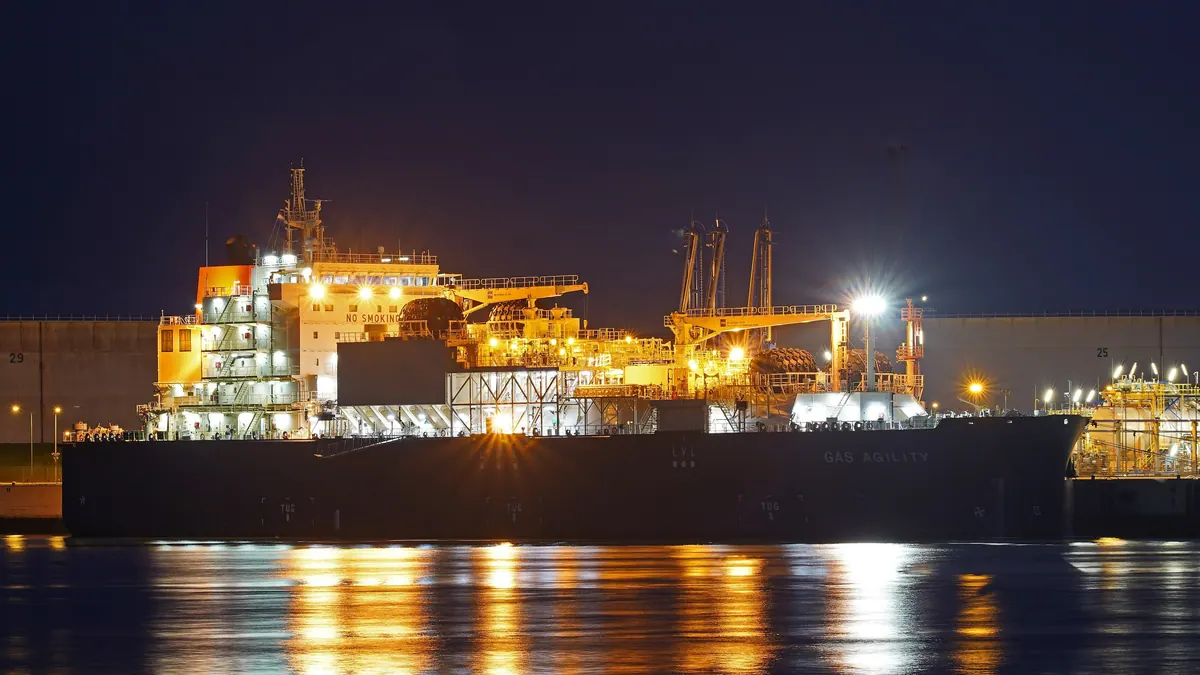
- the need for bunkering in EU ports, often from barges and tanker trucks;
- the importance of documentation (certificates, mass balance);
- competition from other fuels (methanol, ammonia, biodiesel);
- the need to minimise methane losses in production and transport.
Summary
FuelEU Maritime creates a market for low-emission-intensity fuels, including bioLNG, but rewards those solutions that have a low production footprint and low methane slip in engines. Gas suppliers should prepare GHG documentation and be ready for audits.
Sources
Related articles