BioLNG and bioCNGExplainer
The bioLNG supply chain: from biogas plant to station, truck and ship
The bioLNG chain consists of the biogas plant, upgrading, a liquefaction plant, storage, tanker transport and a station or bunkering. We describe the links, boil-off losses and where costs arise.
Other language versions: polski.
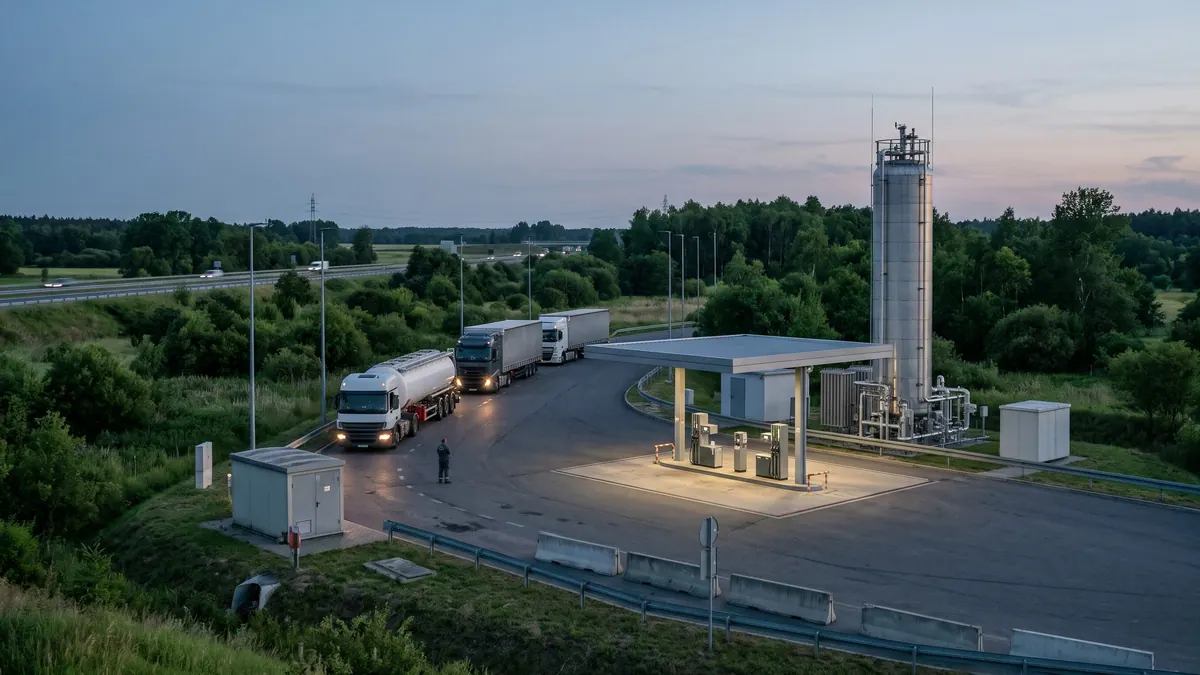
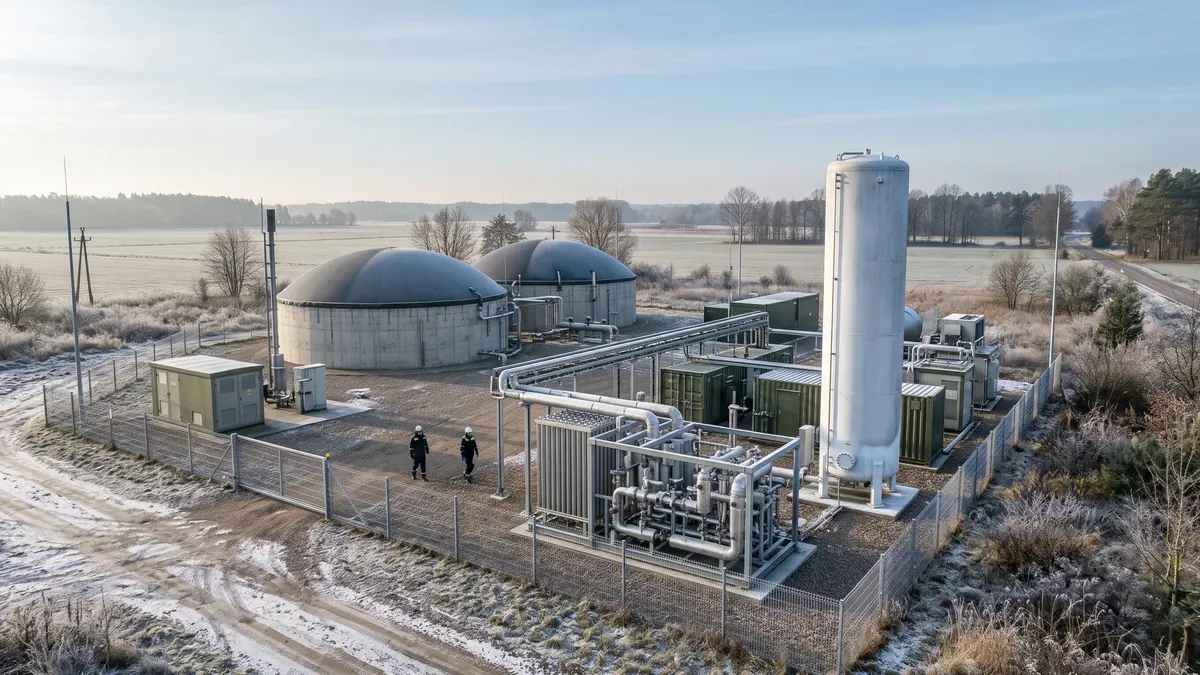
The bioLNG supply chain begins at the biogas plant and passes through upgrading of biogas to biomethane, final purification, liquefaction, storage in cryogenic tanks and distribution by tanker to vehicle refuelling stations or ship bunkering terminals. Alternatively, biomethane can be injected into the grid and liquefied near the consumer, with the origin of the green gas confirmed through mass balance. Each link adds costs and risks, so the profitability of bioLNG must be assessed for the whole chain.
The links in the chain
- Biogas plant and upgrading. Biomethane production at a scale that justifies a liquefaction plant (usually at least several hundred m³/h, although smaller solutions are being developed).
- Final purification. Removal of CO₂ down to ppm levels, water, H₂S and mercury.
- Liquefaction. A micro-liquefier (nitrogen cycle or mixed refrigerant).
- Storage. A vacuum-insulated tank with a boil-off gas return system.
- Loading. A loading arm with a metering system (mass flow meter).
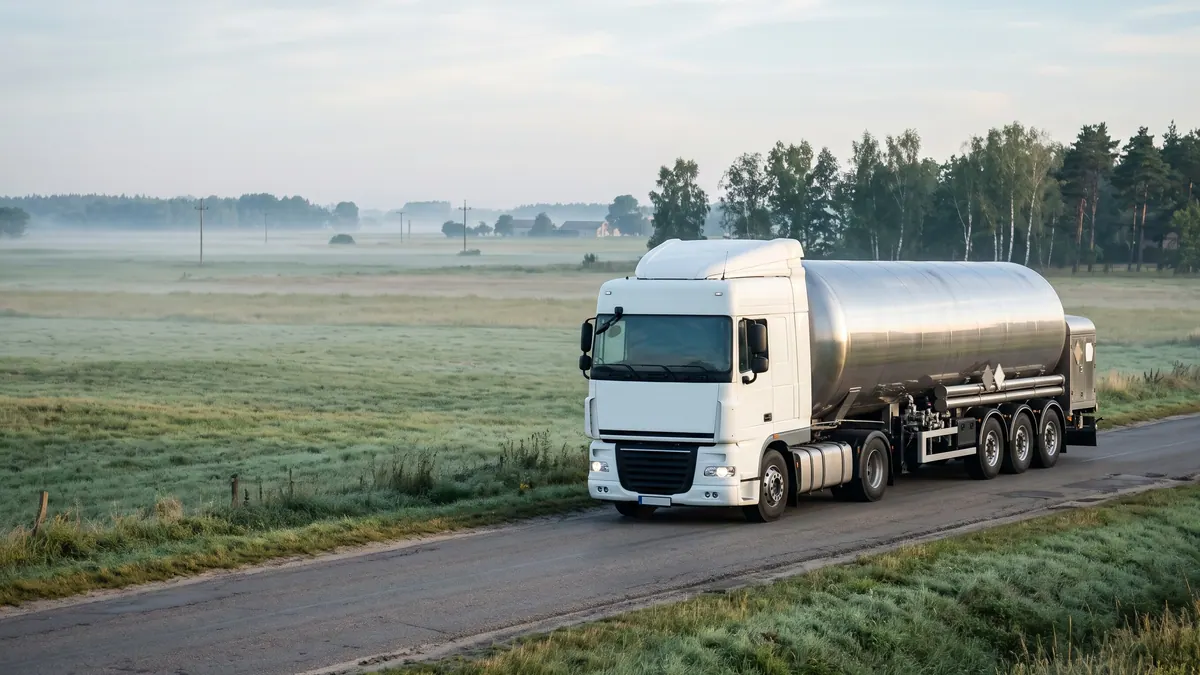
- Road transport. A cryogenic tanker, usually with a capacity of over a dozen tonnes of LNG; for distant customers, ISO containers or rail transport.
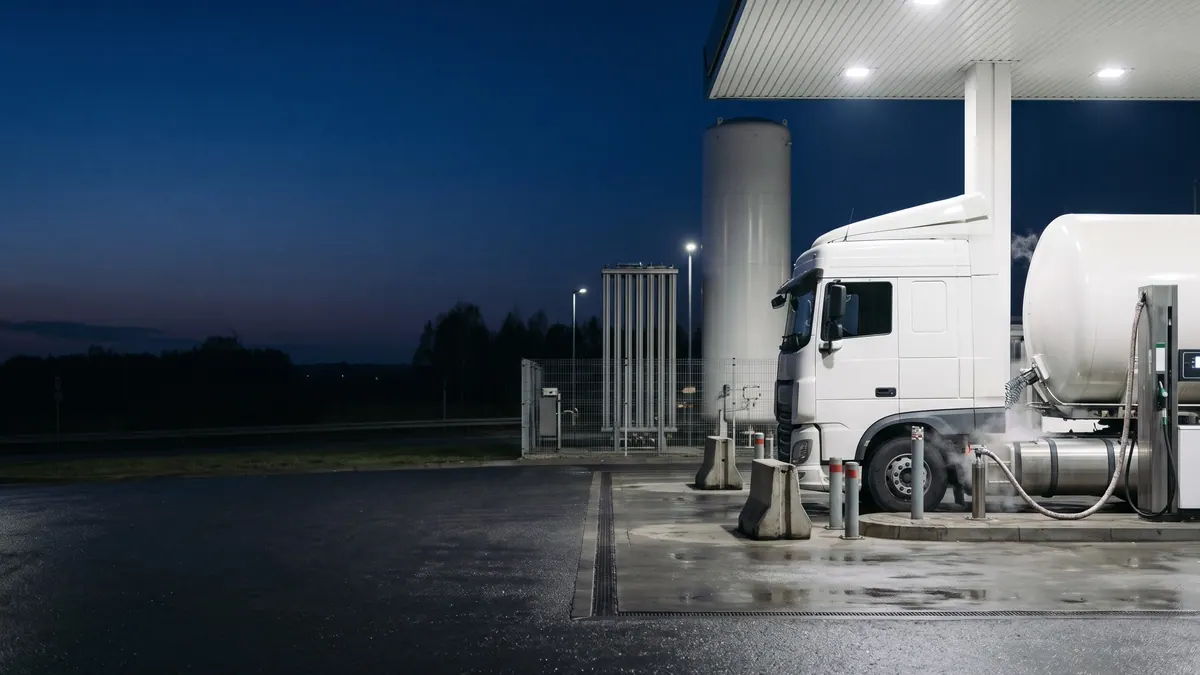
- LNG station or terminal. A tank, cryogenic pump and dispenser; in shipping, bunkering from a tanker truck or barge.
- End user. A vehicle, ship, industrial plant or local network.
Losses and boil-off
LNG evaporates continuously because heat passes through the insulation. The amount of boil-off depends on capacity, insulation quality and storage time; in well-designed tanks it amounts to fractions of a percent per day. The boil-off gas has to be managed: re-liquefied, compressed into cylinders, fed into the grid or burned in a flare (the last option is costly and unfavourable for the balance). Losses grow with the time spent in the chain – the shorter it is, the better.
Distance range
Cryogenic tankers make it possible to deliver bioLNG over distances of hundreds of kilometres, which is the main advantage over bioCNG. The unit transport cost (PLN/t·km) falls as the size of the load increases and rises for small deliveries. For this reason logistics are planned so that tankers are used to a high degree.
Example: tanker rotation
Assumptions: the liquefaction plant produces 8 t of bioLNG per day; a tanker has a capacity of 18 t. The volume is sufficient for about 0.44 trips per day, i.e. 3 trips per week; the annual number of trips is ≈ 160, with 160 fillings (8 × 365 / 18). With a one-way distance of 250 km (500 km round trip) and an assumed cost of PLN 5/km, the transport cost is PLN 2500 per trip, or PLN 400 thousand per year; per tonne, PLN 137/t, or about PLN 10/MWh (at 13.9 MWh/t). Added to this are the costs of loading, the station and losses; this exercise shows the order of magnitude, not a carrier's offer.
Documentation of origin
To sell bioLNG as a renewable fuel, continuity of documentation is needed: from the biogas plant certificate, through the liquefaction plant's mass balance, to the sale at the station. Negligence at any one link makes it impossible to count the fuel towards regulatory targets. In practice, the ISCC certification systems and others recognised by the European Commission are used, together with mass balance registers.
Two logistics variants
| Variant | Description | Advantages | Disadvantages |
|---|---|---|---|
| Liquefaction at the biogas plant | bioLNG delivered by tanker | no dependence on the grid | high capital cost for the producer, cryogenic transport |
| Grid injection + liquefaction at the consumer | mass balance | use of the grid, scale, one liquefaction plant for many producers | dependence on the grid and the certification system |
The second variant can be attractive when a large liquefaction plant or LNG terminal is located near the consumer and when regulations recognise mass balance in the grid.
Risks
- a single consumer and a single liquefaction plant constitute a single point of failure;
- unavailability of tankers and drivers with ADR qualifications;
- volatility of demand and prices;
- regulations on the recognition of biofuels;
- safety (low temperatures, fire risk).
What to check before investing
Before building a liquefaction plant, confirm customers' interest through preliminary agreements, check the availability of LNG stations and fleets in the region and investigate bunkering options in nearby ports. Make sure that the cost of the whole chain (liquefaction, storage, transport, station) fits within the price that customers are willing to pay for a renewable fuel, and that possible regulatory changes do not eliminate the premium on which the business plan is based.
Summary
The bioLNG chain has several links, each of which costs money. Profitability depends on scale, distance and stable offtake, and credibility on documentation of origin. Well-designed logistics can make bioLNG a practical way of decarbonising heavy-duty transport and shipping.
Sources
Related articles