

BMP testingWild, invasive and medicinal plantssingle study (2 samples)
Bigleaf lupine — BMP: 2 studies, weighted mean 335 m³ CH₄/t VS
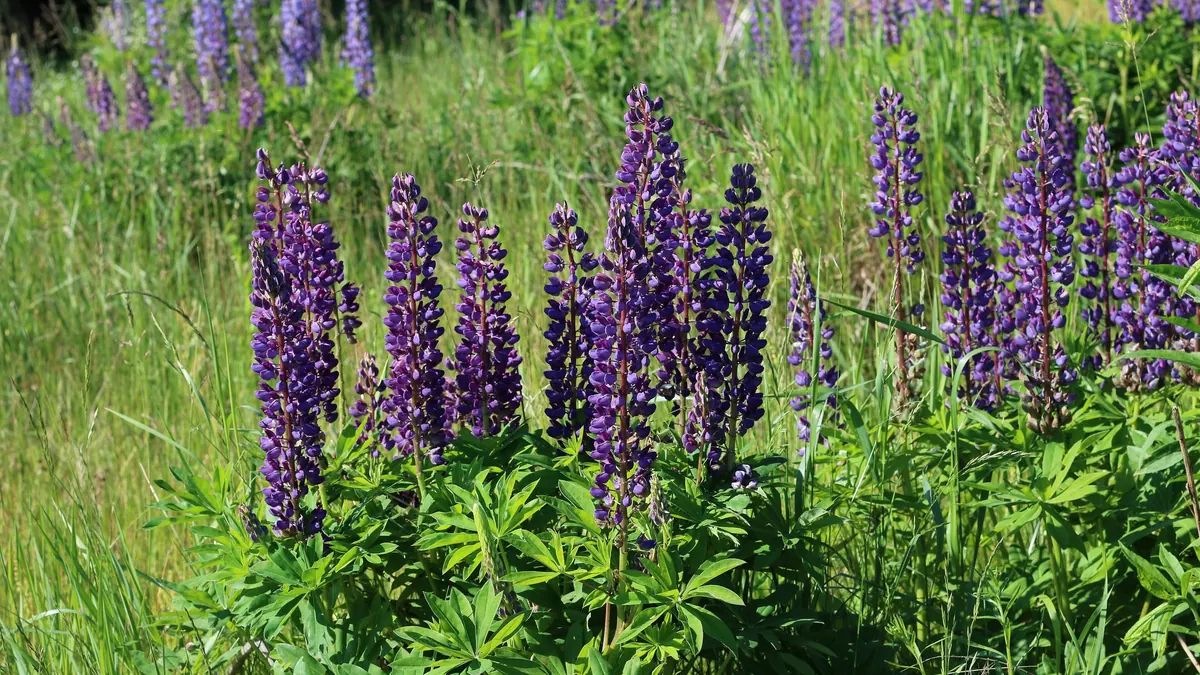
Garden lupin (Lupinus polyphyllus) is a perennial rich in protein and quinolizidine alkaloids, spreading in Poland as a naturalised species; it digests well, but the alkaloids and nitrogen require attention.
Photo George Chernilevsky / Wikimedia Commons, licence CC BY 4.0, source file; changes: cropping

- Weighted mean
- 335m³ CH₄/t VS
- Range
- 310–360m³ CH₄/t VS
- Records
- 2single study (2 samples)
- Publications
- 1source
- Temperatures
- 35 °Cof the test
Methane in biogas
Medium methane content · ≈ 5.2 kWh/m³ of biogas
estimate from the substrate type The collected studies contain no measurement. The interval follows from the approximate composition (carbohydrate-dominated (no protein or fat characteristics)) and the yields of compound groups according to FNR.
Rating for biogas plants
not rated — editorial rating for biogas plants
Not rated: no dry matter or volatile solids in the data. We calculate the rating when the dry matter and volatile solids of the material are known.
Add to the co-digestion calculator CSV data
BMP curves from 2 studies
Weighted mean Individual records
Dashed lines are a model curve (first-order kinetics, B(t) = B₀·(1 − e−kt)); the end point comes from the publication. All curves are model curves.
Cumulative methane production over the test [m³ CH₄/t VS]. The thick line is the weighted mean of all records (335); dots mark the end values given in the publications. Point at the chart to read values; click a legend item to hide or show a record.
Records and sources
Download CSV| Source | BMP m³ CH₄/t VS | Temperature | Sample | Curve |
|---|---|---|---|---|
| Lehtomaki (2006) · 1 | 310 | 35 °C · mesophilic | Lupine | end point (model curve) |
| Lehtomaki (2006) · 2 | 360 | 35 °C · mesophilic | Lupine | end point (model curve) |
| Weighted mean | 335 | arithmetic mean 335, SD 35 | ||
Typical composition
- Dry matter (DM)
- 13.4% (range 12.4–14.3)
- Nitrogen
- 3.7 % DM
- C/N ratio
- 12.5
Median and range of the determinations reported in the publications behind this substrate's BMP records (read from: CROPGEN D4); dry matter: 2 determinations, volatile solids: 0 determinations.
Sources: Lehtomaki (2006).
The composition of the raw material varies between batches — for plant calculations use an analysis of your own sample. The calculator inserts typical values automatically.
Process properties
Low confidence: the description is based on general characteristics of the substrate group, not on studies of this material. Treat it as a hint to be verified.
Advantages
- Methane potential in the database: weighted mean 335 m³ CH₄/t VS (median 335; range 310-360; 2 records from 1 source).
- Tested in a screening of boreal crops and residues (Lehtomäki 2006): data from a cool climate.
Drawbacks and risks
- Spread of results in the database: standard deviation 35 at a mean of 335 m³ CH₄/t VS (2 records from 1 source).
Dosing
No source dose limits; legumes are better combined with N-poor biomass (straw).
Introduce gradually, starting with a small dose and monitoring the process (e.g. FOS/TAC, pH, gas composition).
Sources of the process data
- Chen, Y.; Cheng, J.J.; Creamer, K.S. (2008) Inhibition of anaerobic digestion process: A review. Bioresource Technology
- Lehtomaki, A. Viinikainen, T.A. Rintala, J.A (2006) Screening boreal energy crops and crop residues for methane biofuel production. Submitted to Biomass and Bioenergy
- Weiland, P. (2010) Biogas production: current state and perspectives. Applied Microbiology and Biotechnology
The co-digestion calculator will assess a specific mixture containing this substrate.
What it is and where it comes from
Garden lupin (Lupinus polyphyllus), native to North America, was introduced as an ornamental plant and green manure, and today it spreads across meadows, roadsides and in the mountains, including in Poland, where in the natural-science literature it is sometimes described as an invasive species in certain habitats; whether and what restrictions arise for it under the rules on alien species must be checked in the current lists. Controlling it often relies on mowing, which generates biomass. In the dataset it represents wild-growing and invasive plants considered as an energy feedstock.
Properties relevant to digestion
The green mass has a high content of protein and nitrogen, as is typical of legumes, as well as fibre and soluble sugars; lignin increases as the plant matures, especially in the stems and pods. The low C/N ratio means that at a high share in the feed the risk of ammonia release rises. The plant contains quinolizidine alkaloids, which matter because of their toxicity to animals, but their significance for the digester microflora is not well documented. Ensiling or combining with carbon-rich materials helps to balance the composition.
How to read the spread of results
The dataset contains several records from one study, under mesophilic conditions at 35 °C, with similar values. The lack of independent sources does not allow inter-laboratory variability to be assessed. The result depends on the stage of development at mowing (before flowering, in flower, pods), the share of leaves, stems and inflorescences, the state of ensiling, comminution and the inoculum.
In biogas plant practice
Lupin biomass from mowing can supplement the feed together with grass silage, which contributes carbon and evens out the C/N ratio. It requires shredding and rapid ensiling. Ammonia must be monitored. Harvesting before fruiting reduces the risk of seed dispersal, but later harvesting must be combined with measures preventing their spread through transport and the digestate. The legal status depends on the origin: biomass from agricultural land is an agricultural product, and from road verges and green areas it is green waste.
Because the biomass most often comes from mowing meadows, its composition is often mixed with other species, and the result for pure lupin may differ from the result for the mixture. In practice, the whole green forage from a given site is usually assessed, rather than a single species.
Methodology in brief
BMP is the amount of methane obtained from volatile solids (VS) in a batch test, given in m³ CH₄ per tonne of VS (numerically the same as NmL CH₄/g VS in the publications) and converted to normal conditions (0 °C, 101.325 kPa). The weighted mean gives each publication a total weight of 1, split equally between its results for the substrate — a paper testing twenty varieties does not outweigh a paper with a single sample. In inter-laboratory programmes the unit is the laboratory (total weight 1), and within it the weight of a test grows with the number of bottles (replicates). Results after pretreatment (e.g. thermal, chemical, enzymatic) are shown separately and are not included in the mean.
Solid lines are curves measured in the tests. Where a publication gives only the final result, we draw a first-order kinetic model, B(t) = B₀·(1 − e−kt): only the end point comes from the publication, and the shape of the curve serves purely as visualisation — do not read the production on a particular day from it. For this substrate k = 0.134 d−1 was assumed (median of rate constants k reported in the sources and/or fitted to the mean measured curves).
The statistics describe the spread of published results — a descriptive compilation, not a meta-analysis or a guarantee of plant yield.
Bibliography
All sources of the site: bibliography.
Other substrates in the group “Wild, invasive and medicinal plants”

Mexican sunflower (Tithonia diversifolia) — BMP: 2 studies, weighted mean 210 m³ CH₄/t VS
210 m³ CH₄/t VS weighted mean from 2 studies
≈55 %

Ipomoea fistulosa leaves — BMP: 5 studies, weighted mean 415 m³ CH₄/t VS
415 m³ CH₄/t VS weighted mean from 5 studies
very good — editorial rating for biogas plants≈52 %
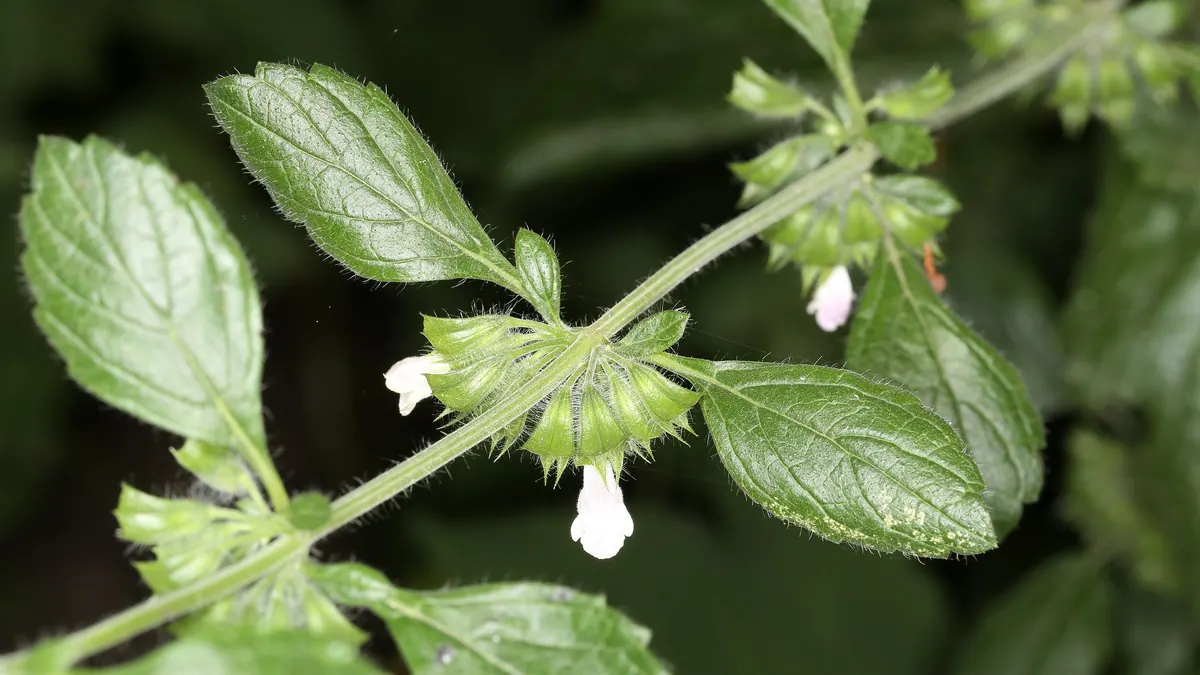
Herbs and herbal industry wastes (lemon balm, alder buckthorn, mint, andrographis, catnip, figwort) — BMP: 6 studies, mean 144 m³ CH₄/t VS
144 m³ CH₄/t VS weighted mean from 6 studies
≈59 %
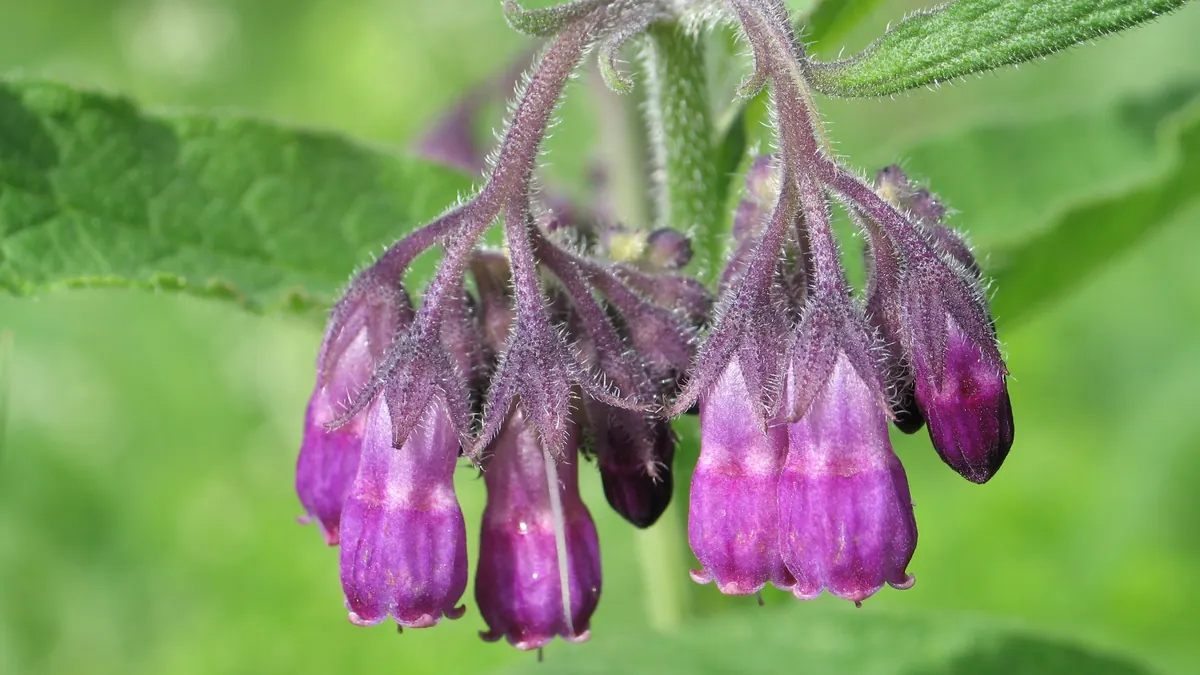
Comfrey — BMP: 2 studies, weighted mean 328 m³ CH₄/t VS
328 m³ CH₄/t VS weighted mean from 2 studies
good — editorial rating for biogas plants70 %