

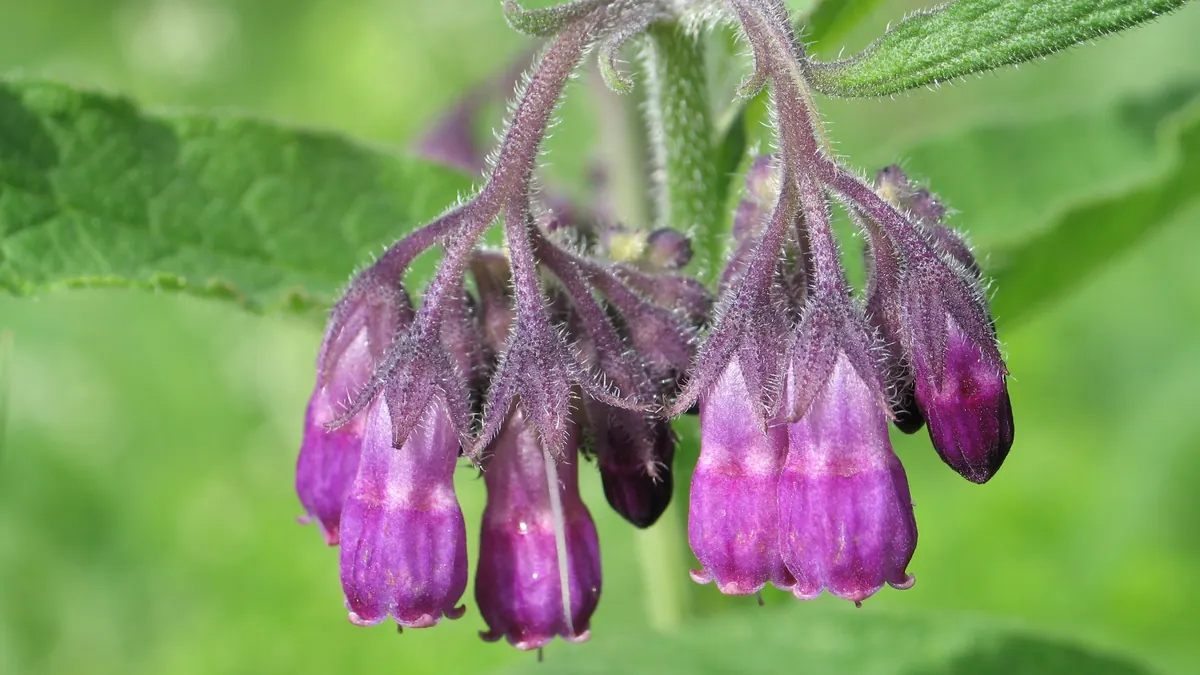
BMP testingWild, invasive and medicinal plantssingle study (2 samples)
Comfrey — BMP: 2 studies, weighted mean 328 m³ CH₄/t VS
Comfrey (Symphytum) is a perennial with a very high green mass production and a high nitrogen content, studied as energy biomass; it contains pyrrolizidine alkaloids.
Photo Robert Flogaus-Faust / Wikimedia Commons, licence CC BY 4.0, source file; changes: cropping

- Weighted mean
- 328m³ CH₄/t VS
- Range
- 323–334m³ CH₄/t VS
- Records
- 2single study (2 samples)
- Publications
- 1source
- Temperatures
- 35 °Cof the test
Methane in biogas
High methane content · ≈ 7.0 kWh/m³ of biogas
measured mean of 2 studies BMP, range 69.1–70.3 %; in a batch test the CH₄ share tends to be higher than in a plant.
Rating for biogas plants
good — editorial rating for biogas plantsStable, usually accepted without a fee
Potential per tonne of fresh matter: moderate (31 m³ CH₄/t); no particular threats to stability. No additional handling requirements.
Why? Rating factors
Potential per tonne +1
- +1potential 31 m³ CH₄/t fresh matter (BMP 328 × DM 11.1 % × VS 84 %)
Process stability 0
- 0no factors
Handling and costs 0
- 0no factors
Total points: 1 · thresholds: ≥ 2.5 very good, ≥ 1 good, below — neutral; negative with cumulative process risk.
Add to the co-digestion calculator CSV data
BMP curves from 2 studies
Weighted mean Individual records
Dashed lines are a model curve (first-order kinetics, B(t) = B₀·(1 − e−kt)); the end point comes from the publication. All curves are model curves.
Cumulative methane production over the test [m³ CH₄/t VS]. The thick line is the weighted mean of all records (328); dots mark the end values given in the publications. Point at the chart to read values; click a legend item to hide or show a record.
Records and sources
Download CSV| Source | BMP m³ CH₄/t VS | CH₄ in biogas % vol., measured | Temperature | Sample | Curve |
|---|---|---|---|---|---|
| Zubr (1986) · 1 DOI | 323 | 70.3 % | 35 °C · mesophilic | Comfrey · pretreatment: Silage: Air tight glass jars , fermented 30-40 days at 20 oC. | end point (model curve) |
| Zubr (1986) · 2 DOI | 334 | 69.1 % | 35 °C · mesophilic | Comfrey | end point (model curve) |
| Weighted mean | 328 | 69.7 % | arithmetic mean 328, SD 8 | ||
Typical composition
- Dry matter (DM)
- 11.1% (range 11.1–11.1)
- Volatile solids (VS)
- 84 % DM (range 84–84)
- C/N ratio
- 12
Median and range of the determinations reported in the publications behind this substrate's BMP records (read from: CROPGEN D4); dry matter: 1 determination, volatile solids: 1 determination. DM from a single determination – indicative value.
Sources: Zubr (1986).
The composition of the raw material varies between batches — for plant calculations use an analysis of your own sample. The calculator inserts typical values automatically.
Process properties
Low confidence: the description is based on general characteristics of the substrate group, not on studies of this material. Treat it as a hint to be verified.
Advantages
- Methane potential in the database: weighted mean 328 m³ CH₄/t VS (median 328; range 323–334; 2 records from 1 sources).
- The Zubr 1986 paper compared methanogenesis from fresh and ensiled material — information on the suitability of ensiling.
Drawbacks and risks
- Spread of results in the database: standard deviation 8 at a mean of 328 m³ CH₄/t VS (2 records from 1 sources).
Dosing
No dose data; caution is necessary because of alkaloids and the low level of knowledge.
Introduce gradually, starting with a small dose and monitoring the process (e.g. FOS/TAC, pH, gas composition).
Sources of the process data
- Chen, Y.; Cheng, J.J.; Creamer, K.S. (2008) Inhibition of anaerobic digestion process: A review. Bioresource Technology
- Zubr, J. (1986) Methanogenic fermentation of fresh and ensiled plant materials. Biomass 11(3), 159–171
- Weiland, P. (2010) Biogas production: current state and perspectives. Applied Microbiology and Biotechnology
The co-digestion calculator will assess a specific mixture containing this substrate.
What it is and where it comes from
Comfrey (Symphytum, most often common comfrey S. officinale or Russian comfrey S. × uplandicum) is a perennial herb of the borage family, growing in wet meadows and on the banks of waters. On organic farms it is sometimes grown as a green manure plant and for compost. It is distinguished by very rapid regrowth and a high production of green mass, which makes it a subject of research as energy biomass. The set describes the aboveground parts.
Properties relevant to digestion
The green forage contains a lot of water, a lot of nitrogen and protein, potassium and other minerals, as well as soluble sugars and fibre with moderate lignin in young shoots. The low C/N ratio means that at a high share the material may cause ammonia release, so it is worth combining it with carbon-rich material, such as grass silage or straw. The plant contains pyrrolizidine alkaloids, hepatotoxic to animals and humans; their fate in the digester and in the digestate is not well understood, which matters for the safety of digestate application.
How to read the spread of results
The set contains several records from a single study, under mesophilic conditions at 35 °C, with almost identical results. This indicates repeatability within a single study, but does not describe variability between plantations. The result is affected by the mowing date (young versus mature shoots), the number of cuts, fertilisation, degree of shredding, the form of the material (green forage or silage) and the inoculum.
In biogas plant practice
Comfrey can supplement the feed on organic farms as an additional crop, provided ammonia is controlled. The green forage is shredded and ensiled, preferably together with material of high C/N. Because of the pyrrolizidine alkaloids, a cautious approach to applying digestate on crops intended for consumption and for feed is justified until data on their fate are confirmed. Growing energy crops at an agricultural biogas plant is subject to restrictions arising from renewable energy legislation and the requirements of support schemes.
From the point of view of crop organisation, the advantage of comfrey is that it is perennial and can be mown repeatedly in a season, while the drawback is competition for land with fodder crops. Its value as an energy raw material in Polish conditions remains primarily a research matter.
Methodology in brief
BMP is the amount of methane obtained from volatile solids (VS) in a batch test, given in m³ CH₄ per tonne of VS (numerically the same as NmL CH₄/g VS in the publications) and converted to normal conditions (0 °C, 101.325 kPa). The weighted mean gives each publication a total weight of 1, split equally between its results for the substrate — a paper testing twenty varieties does not outweigh a paper with a single sample. In inter-laboratory programmes the unit is the laboratory (total weight 1), and within it the weight of a test grows with the number of bottles (replicates). Results after pretreatment (e.g. thermal, chemical, enzymatic) are shown separately and are not included in the mean.
Solid lines are curves measured in the tests. Where a publication gives only the final result, we draw a first-order kinetic model, B(t) = B₀·(1 − e−kt): only the end point comes from the publication, and the shape of the curve serves purely as visualisation — do not read the production on a particular day from it. For this substrate k = 0.134 d−1 was assumed (median of rate constants k reported in the sources and/or fitted to the mean measured curves).
The statistics describe the spread of published results — a descriptive compilation, not a meta-analysis or a guarantee of plant yield.
Bibliography
- Zubr, J. (1986). Methanogenic fermentation of fresh and ensiled plant materials. Biomass 11(3), 159–171. DOI: 10.1016/0144-4565(86)90064-8 DOI
All sources of the site: bibliography.
Other substrates in the group “Wild, invasive and medicinal plants”
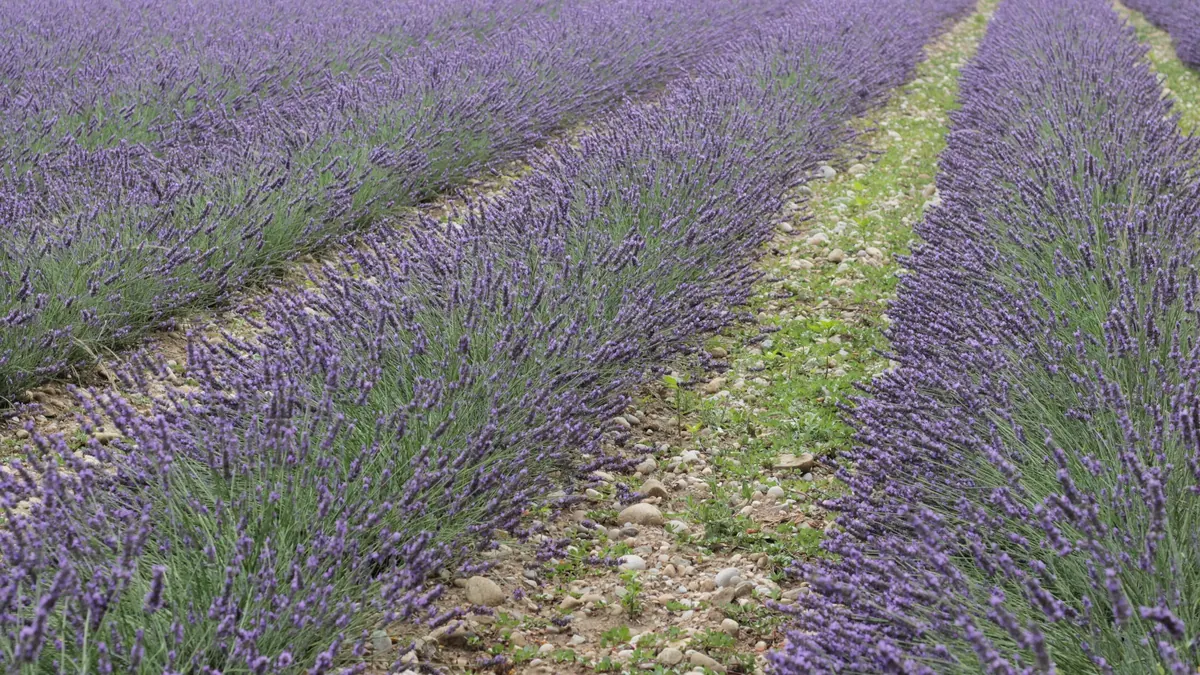
Lavender flowers and distillation residues — BMP: 2 studies, weighted mean 186 m³ CH₄/t VS
186 m³ CH₄/t VS weighted mean from 2 studies
≈52 %
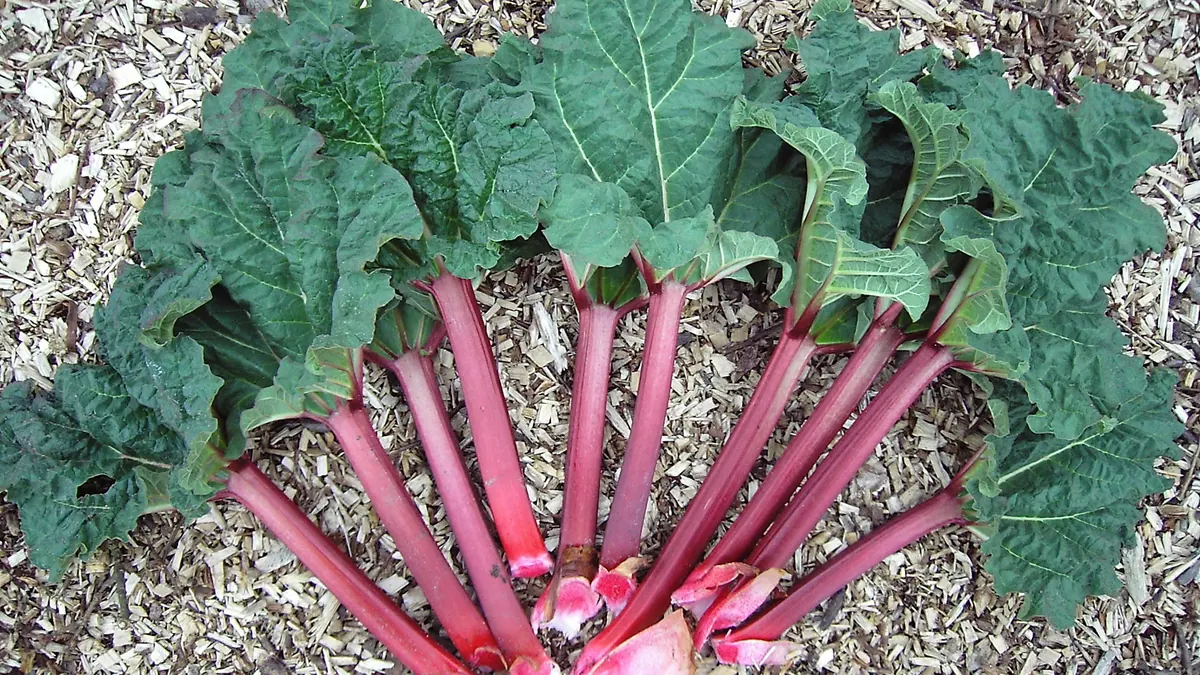
Rhubarb — BMP: 4 studies, weighted mean 368 m³ CH₄/t VS
368 m³ CH₄/t VS weighted mean from 4 studies
neutral — editorial rating for biogas plants67 %
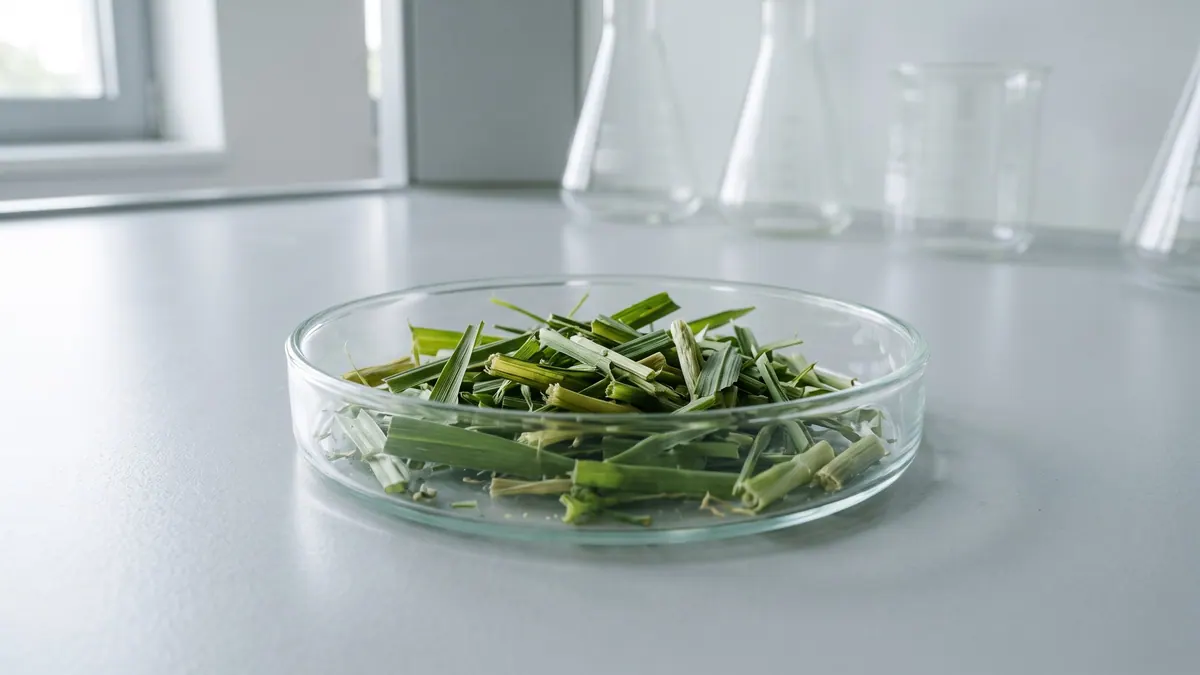
Aleman grass — BMP: 2 studies, weighted mean 296 m³ CH₄/t VS
296 m³ CH₄/t VS weighted mean from 2 studies
≈52 %
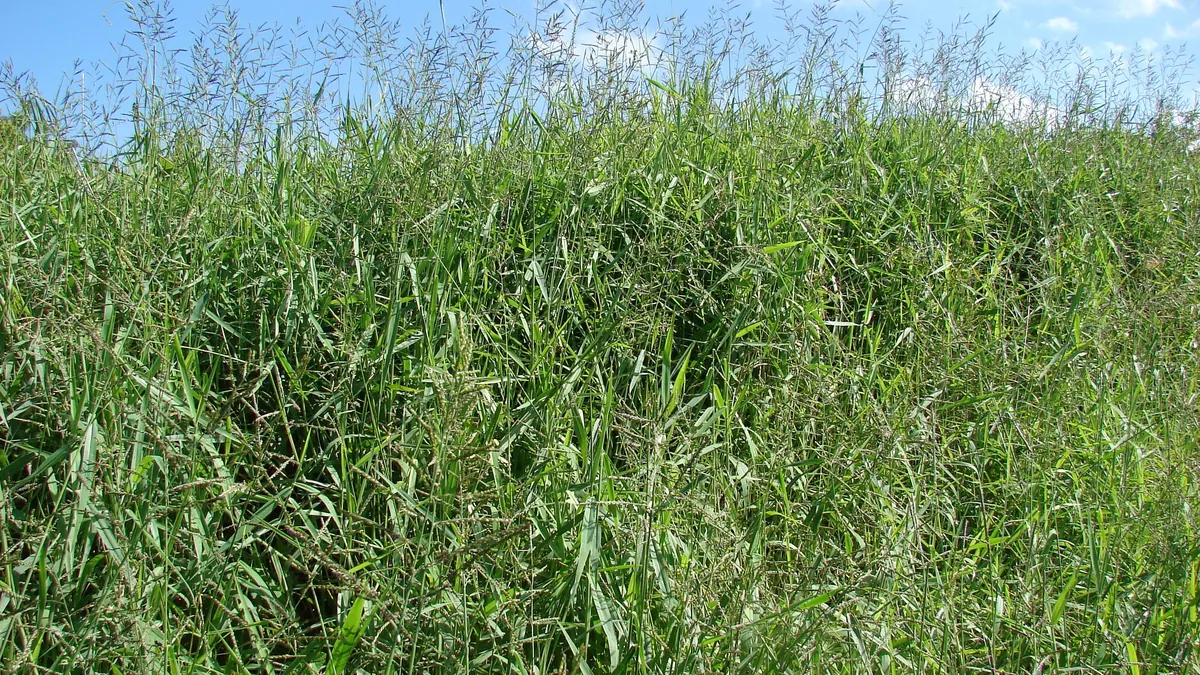
Para grass — BMP: 2 studies, weighted mean 240 m³ CH₄/t VS
240 m³ CH₄/t VS weighted mean from 2 studies
≈52 %