

BMP testingWild, invasive and medicinal plantssingle study (2 samples)
Aleman grass — BMP: 2 studies, weighted mean 296 m³ CH₄/t VS
Alemán grass (Echinochloa polystachya) is a tall tropical grass with enormous biomass production, studied as an energy crop for biogas in floodplain areas.
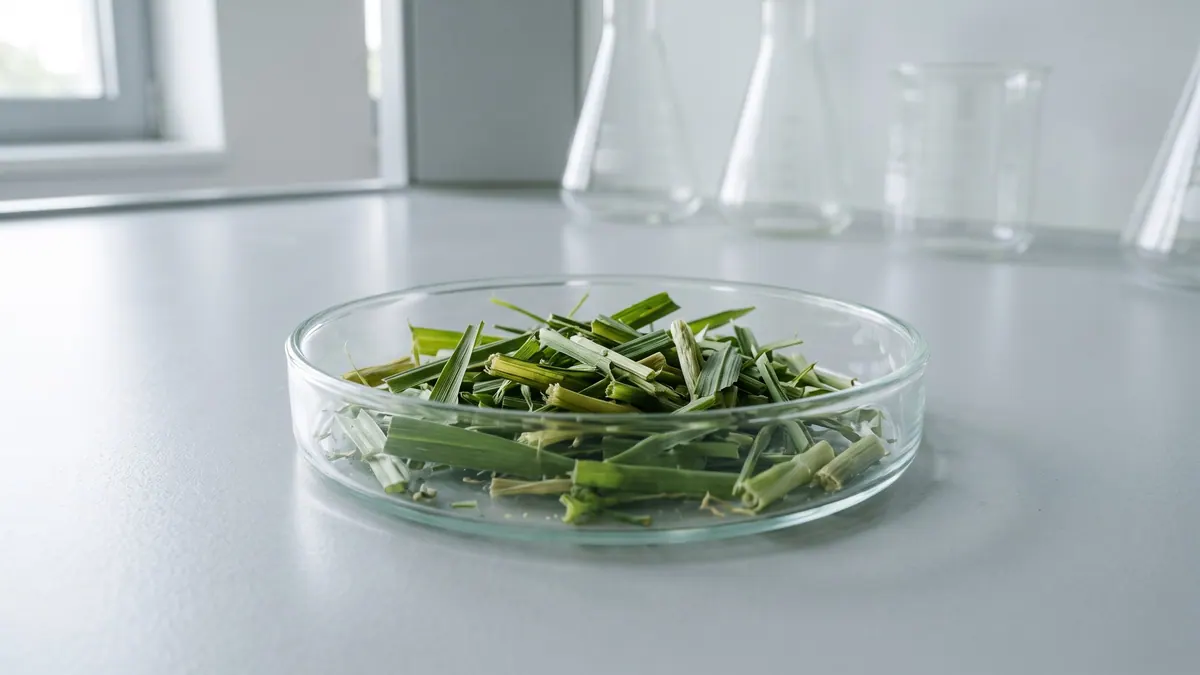
Illustration: FeedstockData (AI, Google Gemini)
- Weighted mean
- 296m³ CH₄/t VS
- Range
- 293–298m³ CH₄/t VS
- Records
- 2single study (2 samples)
- Publications
- 1source
- Temperatures
- 35 °Cof the test
Methane in biogas
Medium methane content · ≈ 5.2 kWh/m³ of biogas
estimate from the substrate type The collected studies contain no measurement. The interval follows from the approximate composition (carbohydrate-dominated (no protein or fat characteristics)) and the yields of compound groups according to FNR.
Rating for biogas plants
not rated — editorial rating for biogas plants
Not rated: no dry matter or volatile solids in the data. We calculate the rating when the dry matter and volatile solids of the material are known.
Add to the co-digestion calculator CSV data
BMP curves from 2 studies
Weighted mean Individual records
Dashed lines are a model curve (first-order kinetics, B(t) = B₀·(1 − e−kt)); the end point comes from the publication. All curves are model curves.
Cumulative methane production over the test [m³ CH₄/t VS]. The thick line is the weighted mean of all records (296); dots mark the end values given in the publications. Point at the chart to read values; click a legend item to hide or show a record.
Records and sources
Download CSV| Source | BMP m³ CH₄/t VS | Temperature | Sample | Curve |
|---|---|---|---|---|
| Chynoweth et al. (1993) · 1 DOI | 298 | 35 °C · mesophilic | Alemangrass | end point (model curve) |
| Chynoweth et al. (1993) · 2 DOI | 293 | 35 °C · mesophilic | Alemangrass 7A | end point (model curve) |
| Weighted mean | 296 | arithmetic mean 296, SD 4 | ||
Process properties
Low confidence: the description is based on general characteristics of the substrate group, not on studies of this material. Treat it as a hint to be verified.
Advantages
- Methane potential in the database: weighted mean 296 m³ CH₄/t VS (median 296; range 293–298; 2 records from 1 sources).
Drawbacks and risks
- Fibrous structure — lignin rises with the maturity of the plant (review by Hendriks 2009).
- Spread of results in the database: standard deviation 4 at a mean of 296 m³ CH₄/t VS (2 records from 1 sources).
Co-digestion — what to combine it with, what to watch out for
- combines well
group: Animal excreta (slurry, manure, poultry litter)
The standard combination of grasses with manure/slurry (pH stabilisation, N).[1][2]
Dosing
Practical requirements
- Shred: shredding increases the surface available for degradation and speeds it up, but does not necessarily raise the final gas yield (FNR 2010, Ch. 3 “Triturado”).
Sources of the process data
- Lehtomaki, A.; Huttunen, S.; Rintala, J.A. (2007) Laboratory investigations on co-digestion of energy crops and crop residues with cow manure for methane production: effect of crop to manure ratio. Resources, Conservation and Recycling
- Weiland, P. (2010) Biogas production: current state and perspectives. Applied Microbiology and Biotechnology
- Chynoweth, D.; Turick, C.; Owens, J.; Jerger, D.; Peck, M. (1993) Biochemical methane potential of biomass and waste feedstocks. Biomass and Bioenergy 5(1), 95–111
- Chynoweth, D.; Turick, C.; Owens, J.; Jerger, D.; Peck, M. (1993) Biochemical methane potential of biomass and waste feedstocks. Biomass and Bioenergy 5(1), 95–111
- Hendriks, A.T.W.M.; Zeeman, G. (2009) Pretreatments to enhance the digestibility of lignocellulosic biomass. Bioresource Technology
- FNR (2010). Guía sobre el Biogás – Desde la producción hasta el uso (hiszp. wydanie „Leitfaden Biogas”, GIZ 2013)
The co-digestion calculator will assess a specific mixture containing this substrate.
What it is and where it comes from
Alemán grass (Echinochloa polystachya) is a perennial grass occurring in the wetlands and floodplains of Central and South America and the south of the United States. It is studied as an energy crop for humid tropical and subtropical regions, because it gives very high yields of green biomass. In Poland it has no significance as a crop, so the results are treated as comparative material for energy grasses.
Properties relevant to digestion
The composition depends strongly on the age of the plant: young shoots are richer in sugars, protein and water, and older ones contain more cellulose, hemicellulose and lignin. The fibrous structure typical of tall grasses requires chopping, and with prolonged maturity digestibility falls. The risk of acidification is moderate for green forage and small for mature material. The C/N ratio is high for mature grasses, so co-digestion with slurry improves the balance. Green forage from floodplains may contain silt and sand.
How to read the spread of results
The dataset contains several records from one source, mesophilic at 35 °C, practically identical, which means low variability within a single experiment (samples labelled in the study as 6A and 7A). This does not, however, mean stability of the material in the field, because plant age, cutting date and growing conditions strongly affect the composition. Chopping, sample preparation and inoculum are also of importance.
In biogas plant practice
For tropical regions Alemán grass is an attractive feedstock because of its yield, but harvest logistics from wetlands and ensiling for storage are necessary. The green forage is chopped and mixed with manure. The choice of cutting date is a compromise between yield and digestibility. In Polish conditions a similar task is fulfilled by meadow grasses and grass silages, which are logistically easier.
It is worth adding that plants growing on floodplains are often heavily contaminated with silt after floods, which increases the ash content and lowers the result expressed per dry matter, although it does not change it expressed per volatile solids. When harvesting in the rainy season, logistics are additionally hampered.
Methodology in brief
BMP is the amount of methane obtained from volatile solids (VS) in a batch test, given in m³ CH₄ per tonne of VS (numerically the same as NmL CH₄/g VS in the publications) and converted to normal conditions (0 °C, 101.325 kPa). The weighted mean gives each publication a total weight of 1, split equally between its results for the substrate — a paper testing twenty varieties does not outweigh a paper with a single sample. In inter-laboratory programmes the unit is the laboratory (total weight 1), and within it the weight of a test grows with the number of bottles (replicates). Results after pretreatment (e.g. thermal, chemical, enzymatic) are shown separately and are not included in the mean.
Solid lines are curves measured in the tests. Where a publication gives only the final result, we draw a first-order kinetic model, B(t) = B₀·(1 − e−kt): only the end point comes from the publication, and the shape of the curve serves purely as visualisation — do not read the production on a particular day from it. For this substrate k = 0.134 d−1 was assumed (median of rate constants k reported in the sources and/or fitted to the mean measured curves).
The statistics describe the spread of published results — a descriptive compilation, not a meta-analysis or a guarantee of plant yield.
Bibliography
- Chynoweth, D.; Turick, C.; Owens, J.; Jerger, D.; Peck, M. (1993). Biochemical methane potential of biomass and waste feedstocks. Biomass and Bioenergy 5(1), 95–111. DOI: 10.1016/0961-9534(93)90010-2 DOI
- Chynoweth, D.; Turick, C.; Owens, J.; Jerger, D.; Peck, M. (1993). Biochemical methane potential of biomass and waste feedstocks. Biomass and Bioenergy 5(1), 95–111. DOI: 10.1016/0961-9534(93)90010-2 DOI
All sources of the site: bibliography.
Other substrates in the group “Wild, invasive and medicinal plants”
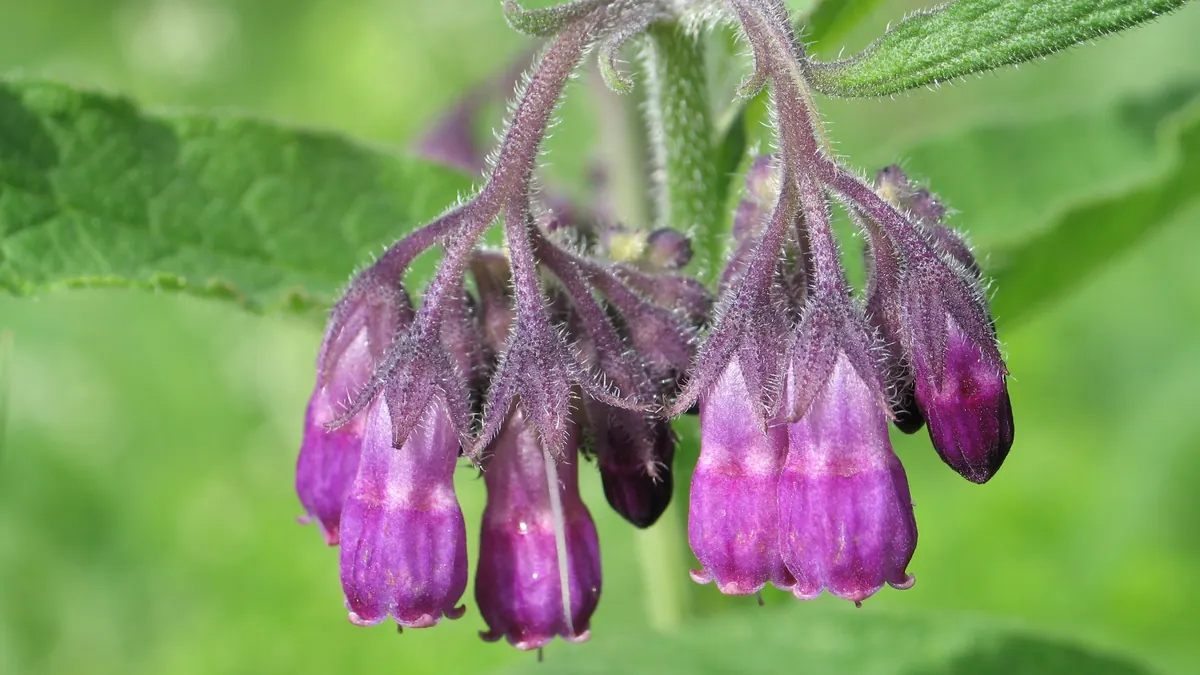
Comfrey — BMP: 2 studies, weighted mean 328 m³ CH₄/t VS
328 m³ CH₄/t VS weighted mean from 2 studies
good — editorial rating for biogas plants70 %
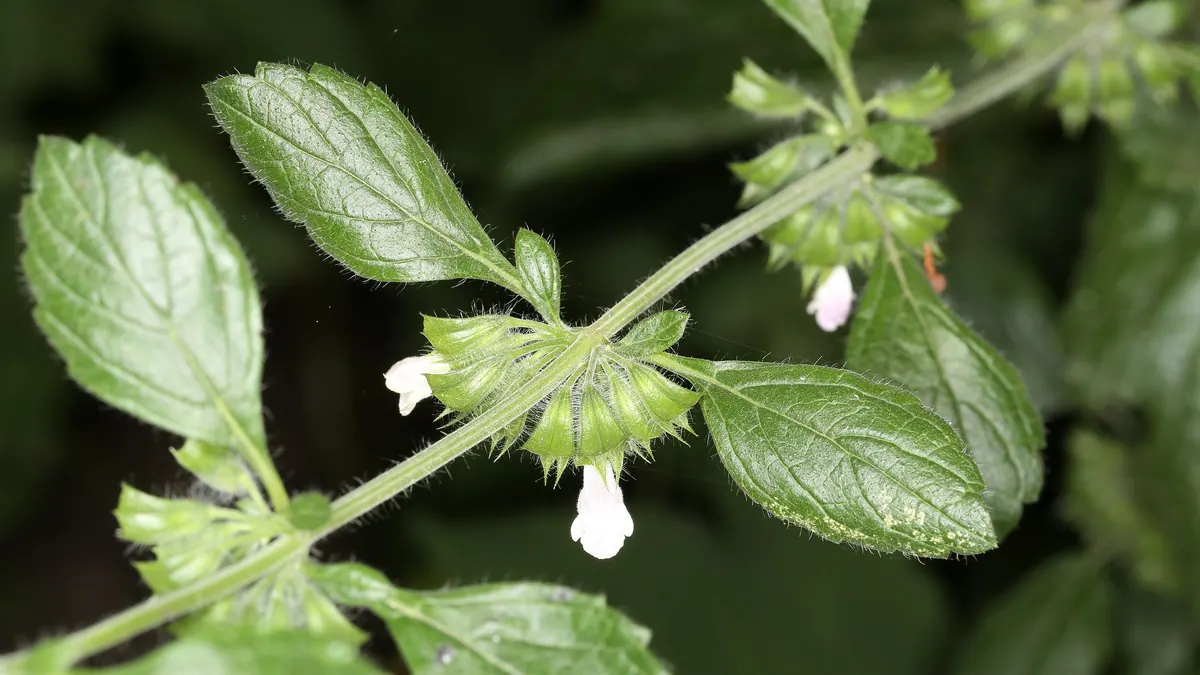
Herbs and herbal industry wastes (lemon balm, alder buckthorn, mint, andrographis, catnip, figwort) — BMP: 6 studies, mean 144 m³ CH₄/t VS
144 m³ CH₄/t VS weighted mean from 6 studies
≈59 %

Common reed — BMP: 15 studies, weighted mean 170 m³ CH₄/t VS
170 m³ CH₄/t VS weighted mean from 15 studies
≈52 %
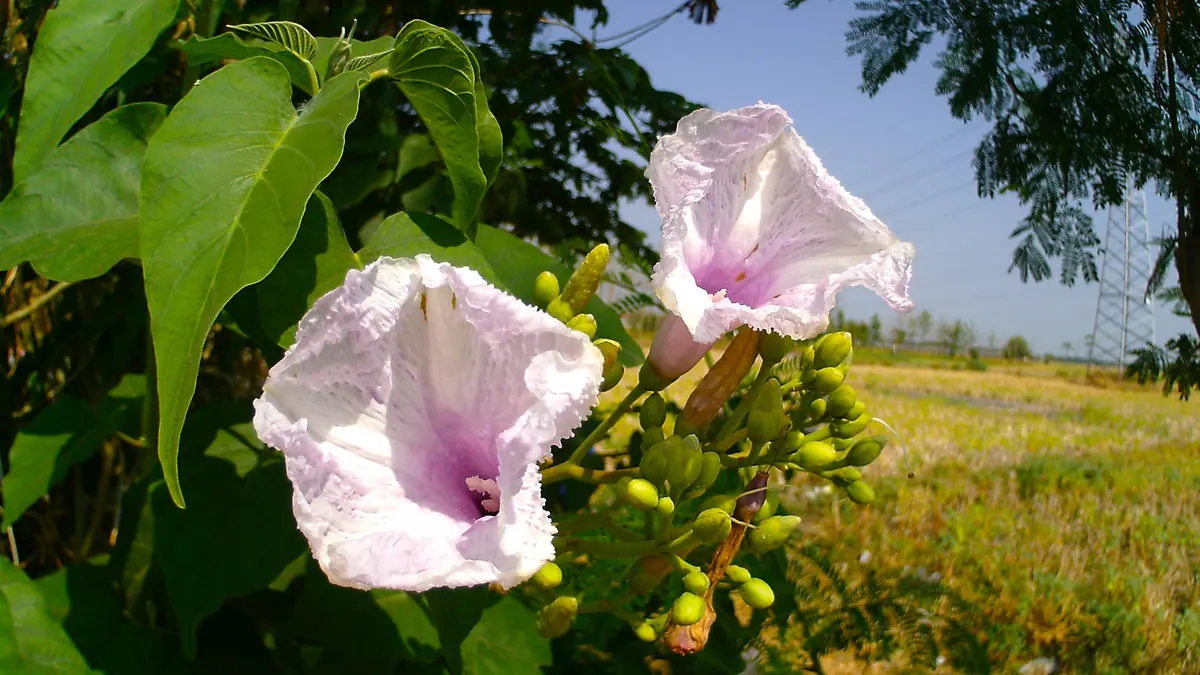
Ipomoea fistulosa leaves — BMP: 5 studies, weighted mean 415 m³ CH₄/t VS
415 m³ CH₄/t VS weighted mean from 5 studies
very good — editorial rating for biogas plants≈52 %