BiogasEvent
India: the 2023–24 budget provides for 500 GOBARdhan plants, including 200 CBG plants. 10,000 crore rupees
In the 2023–24 budget the finance minister announced 500 new "waste to wealth" plants: 200 CBG plants (including 75 municipal) and 300 cluster plants. Outlay: 10,000 crore rupees.
Other language versions: polski.
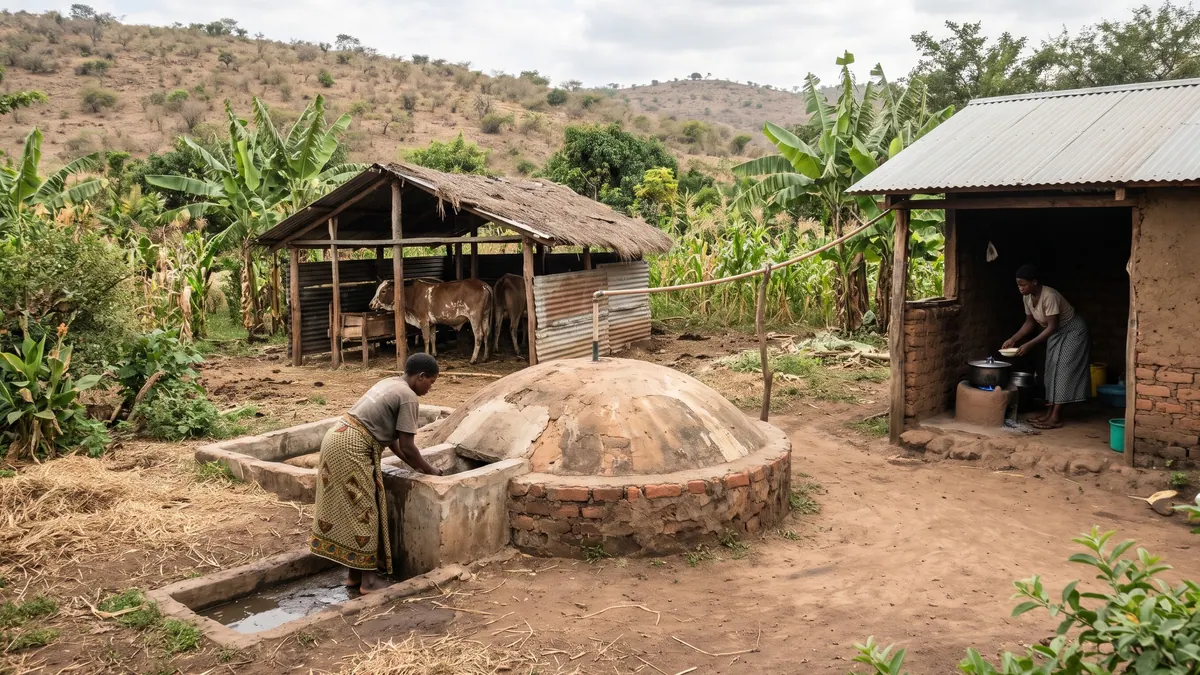
In India's federal budget for the 2023–24 financial year, presented on 1 February 2023, Finance Minister Nirmala Sitharaman announced 500 new "waste to wealth" plants under the GOBARdhan initiative with a total value of 10,000 crore rupees. Two hundred of them are compressed biogas (CBG) plants, including 75 in cities, and 300 are community or cluster plants.
What was announced
According to Down To Earth's report, the plan includes CBG plants, which experts regarded as a source of vehicle fuel, as well as community and cluster plants. The budget also announced that a 5% CBG blending obligation would be introduced "in due course" for all entities selling natural gas and biogas. In addition, the government announced fiscal support for biomass collection and the distribution of bio-manure, and an excise duty exemption for CBG blended with CNG (with regard to the GST already paid on CBG), to avoid tax cascading.
What GOBARdhan is
The name GOBARdhan derives from the Hindi "gobar" (cow dung). According to Down To Earth, the original programme was launched in 2018 in the Department of Drinking Water and Sanitation and was limited to cluster or community biogas plants, for example for schools or farms. According to the programme's website, GOBARdhan is an umbrella initiative that covers programmes converting animal manure and agricultural waste into biogas, CBG and bio-CNG, and the Department of Drinking Water and Sanitation in the Jal Shakti ministry is its coordinating department. The new plan in the 2023–24 budget extends the programme to compressed biogas plants.
Programme background
Down To Earth recalled three related government programmes: phase II of the Swachh Bharat Mission (support of up to 50 lakh rupees per district in 2020–21 to 2024–25), the waste-to-energy programme under the National Bioenergy Programme (600 crore rupees for 2021–2026) and SATAT, which envisaged 5,000 BioCNG plants and 15 million t of BioCNG by 2023–24. Atin Biswas of the Centre for Science and Environment explained that CBG was not part of the 2018 programme because it differs from biogas in composition: methane makes up less than 50% of biogas and about 95% of CBG. Biswas, whose team took part in an inter-ministerial committee on waste management, assessed positively both the 10,000 crore rupees of outlay and the announcement of the 5% obligation.
First reservations
A week after the budget, Down To Earth published a commentary assessing the announcement as a step in the right direction but pointing to "critical challenges" that must be addressed. A data gap was identified as a specific problem: the SATAT dashboard showed details of only 26 plants, even though 40 SATAT biogas plants were operating. This text did not give a detailed catalogue of barriers.
What this means for Poland and Europe
The Indian plan combines an investment subsidy with an announcement of a gas purchase obligation. For Europe it is an example showing that expanding the biomethane market requires both investment support and a guaranteed offtake of the product; the mere announcement of a programme, without specified mechanisms, does not determine its effectiveness.
Sources
Related articles