BiomethaneEvent
India: a ten-year GOBARdhan programme worth 23,731 crore rupees with an administered price for CBG
On 6 August 2026 India's cabinet approved the GOBARdhan programme for 2026/27–2035/36: 23,731 crore rupees, an administered price of 2,110 rupees per MMBtu and subsidies for building CBG plants.
Other language versions: polski.
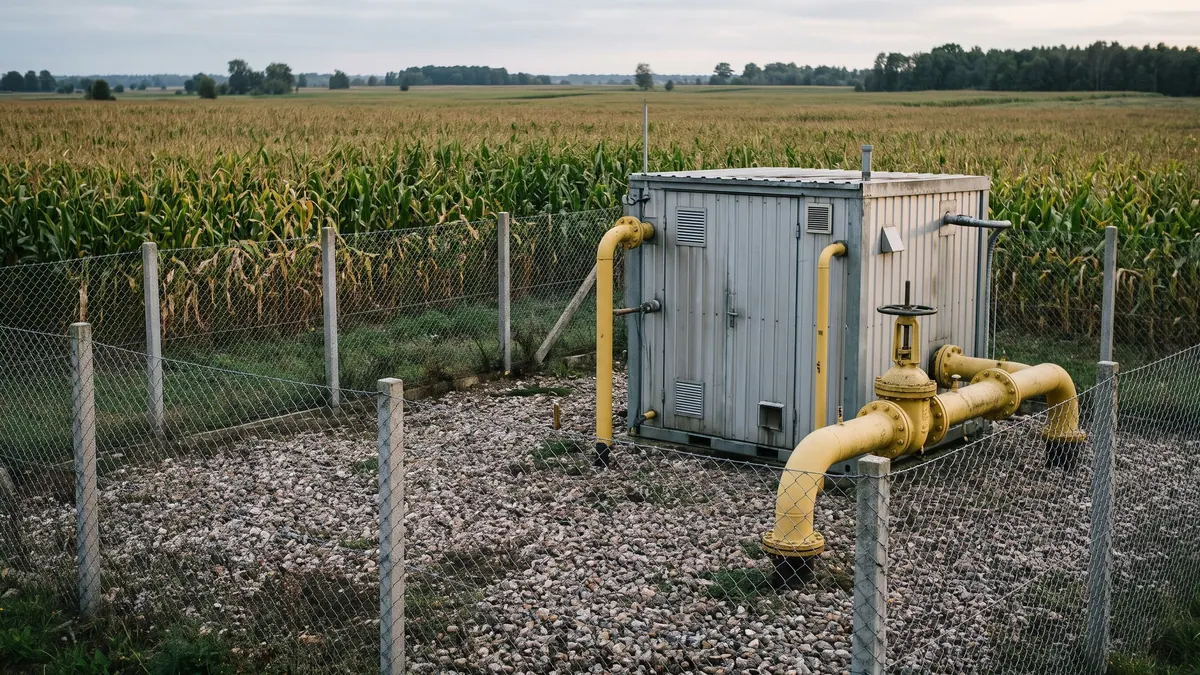
India's cabinet approved on 6 August 2026 a ten-year GOBARdhan programme worth 23,731 crore rupees, covering the financial years 2026–27 to 2035–36. The programme, administered by the Ministry of Petroleum and Natural Gas, is meant to lead to a nearly tenfold increase in domestic production of compressed biogas (CBG). It combines a blending obligation, an administered price and investment subsidies.
Main instruments
According to trade reports (AgroSpectrum India and Rural Voice), the programme includes:
- a CBG blending obligation for city gas distribution companies: 3% in 2026–27, 4% in 2027–28 and 5% from 2028–29, for CNG in transport and PNG in households,
- an administered price of 2,110 rupees per MMBtu within a price framework with a horizon of at least ten years,
- a capital subsidy of up to 2 crore rupees per tonne of daily capacity for new plants; support also covers expansion of existing plants (brownfield),
- financing of connections linking plants to transmission pipelines and city networks,
- credit guarantees for MSME projects, limiting collateral requirements,
- a Challenge Fund for the CBG Ecosystem supporting biomass mapping in districts, feedstock aggregation, technology deployment and capacity building.
According to Rural Voice, the programme brings the main support mechanisms together in a single national framework. The earlier tools mentioned by the sources are SATAT, MDA subsidies for organic fertilisers, the biomass aggregation machinery (BAM) scheme, support for pipeline infrastructure and assistance under the National Bioenergy Programme (CFA).
Digestate and organic fertilisers
The programme promotes fermented organic manure (FOM) and its liquid form (LFOM). Under the earlier MDA subsidy the government pays 1,500 rupees per tonne of fertiliser sold. According to DevDiscourse, citing government data up to 28 February 2026, total sales of FOM, LFOM and phosphate-rich organic manure (PROM) in 2023–24 to 2025–26 exceeded 20 lakh tonnes (20.65 lakh t, that is about 2.07 million t), with LFOM accounting for the largest share.
What we do not know
The available descriptions of the programme give neither absolute values of the production target nor the number of plants; "nearly tenfold increase" refers to the current production base. We also have no access to the implementation guidelines or the rules for applying for subsidies. We rely on press and trade reports rather than on the PIB release, which we were unable to open.
Why this programme matters
In India the lack of a stable price and certainty of gas offtake held back investment for years. An administered price in force for at least ten years and a purchase obligation for distributors address both of these problems. If the programme is implemented as announced, it may increase investor interest.
What this means for Poland and Europe
The Indian package combines four elements: a fixed price, an offtake obligation, an investment subsidy and financing of connections. For Polish regulators it is comparative material when designing a biomethane support system.
Sources
Related articles