

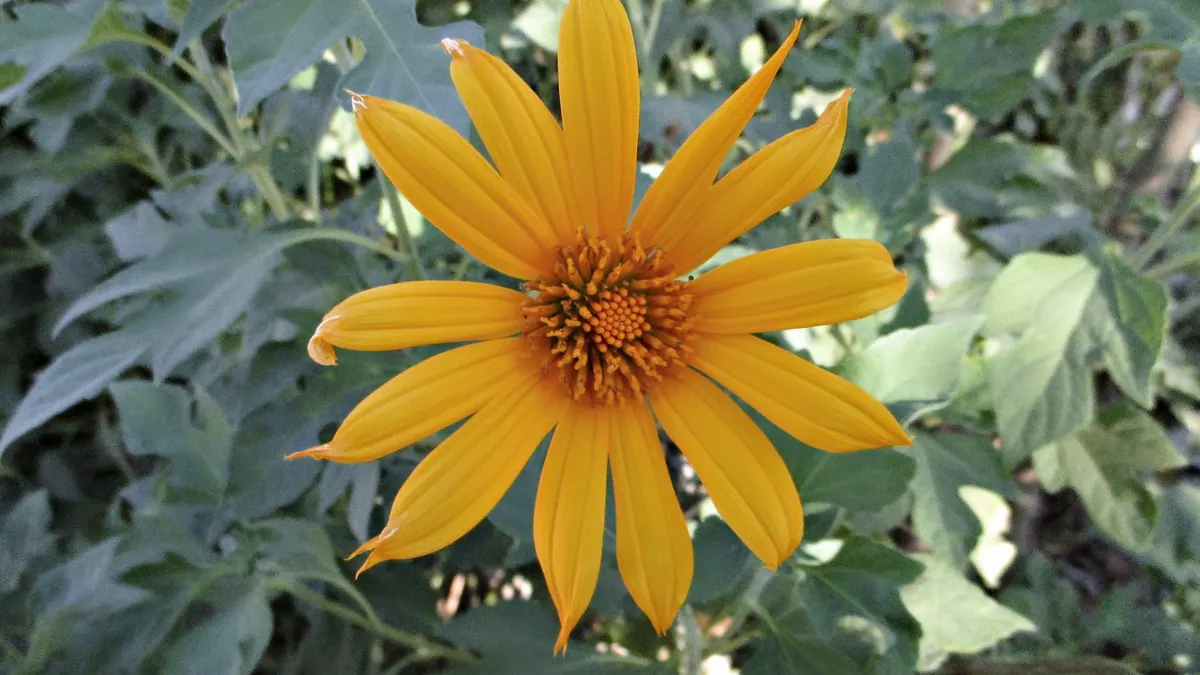
BMP testingWild, invasive and medicinal plantssingle study (2 samples)
Mexican sunflower (Tithonia diversifolia) — BMP: 2 studies, weighted mean 210 m³ CH₄/t VS
Mexican sunflower (Tithonia diversifolia) is a fast-growing tropical plant with high biomass production and high protein; it was studied as silage.
Photo David E Mead / Wikimedia Commons, licence CC0 1.0, source file; changes: cropping

- Weighted mean
- 210m³ CH₄/t VS
- Range
- 207–212m³ CH₄/t VS
- Records
- 2single study (2 samples)
- Publications
- 1source
- Temperatures
- 37 °Cof the test
Methane in biogas
Medium methane content · ≈ 5.5 kWh/m³ of biogas
estimate from the substrate type The collected studies contain no measurement. The interval follows from the approximate composition (protein from total nitrogen (N 2.8 % DM × 6.25)) and the yields of compound groups according to FNR.
Rating for biogas plants
not rated — editorial rating for biogas plants
Not rated: the dry matter in the data refers to a sample dried for the test, not to the material as delivered. We calculate the rating when the dry matter and volatile solids of the material are known.
Add to the co-digestion calculator CSV data
BMP curves from 2 studies
Weighted mean Individual records
Dashed lines are a model curve (first-order kinetics, B(t) = B₀·(1 − e−kt)); the end point comes from the publication. All curves are model curves.
Cumulative methane production over the test [m³ CH₄/t VS]. The thick line is the weighted mean of all records (210); dots mark the end values given in the publications. Point at the chart to read values; click a legend item to hide or show a record.
Records and sources
Download CSV| Source | BMP m³ CH₄/t VS | Temperature | Sample | Curve |
|---|---|---|---|---|
| Dahunsi (2019) · 1 DOI | 207 | 37 °C · mesophilic | grass silage Tithonia diversifolia | end point (model curve) |
| Dahunsi (2019) · 2 DOI | 212 | 37 °C · mesophilic | grass silage Tithonia diversifolia | end point (model curve) |
| Weighted mean | 210 | arithmetic mean 210, SD 4 | ||
Typical composition
- Dry matter (DM)
- 65.5% (range 62.5–68.4)
- Volatile solids (VS)
- 80.7 % DM (range 76.5–85)
- Nitrogen
- 2.8 % DM
- C/N ratio
- 16.8
Median and range of the determinations reported in the publications behind this substrate's BMP records (read from: MY-D); dry matter: 2 determinations, volatile solids: 2 determinations. C/N was calculated as the ratio of C and N content (% DM) from the same source.
Sources: Dahunsi (2019).
The composition of the raw material varies between batches — for plant calculations use an analysis of your own sample. The calculator inserts typical values automatically.
Process properties
Low confidence: the description is based on general characteristics of the substrate group, not on studies of this material. Treat it as a hint to be verified.
Advantages
- Methane potential in the database: weighted mean 210 m³ CH₄/t VS (median 210; range 207–212; 2 records from 1 sources).
- Mechanical pretreatment of lignocellulose shortens the lag and increases methane yield by up to 22% (Dahunsi 2019, a study of six lignocellulosic biomasses).
Drawbacks and risks
- A result from one paper only; size reduction was the key factor (Dahunsi 2019).
Dosing
No dose data; an entry that is mainly informational. A green additive to a feed low in N.
Practical requirements
- Size reduction (mechanical pretreatment, Dahunsi 2019)
Sources of the process data
- Chen, Y.; Cheng, J.J.; Creamer, K.S. (2008) Inhibition of anaerobic digestion process: A review. Bioresource Technology
- Dahunsi, S. (2019) Mechanical pretreatment of lignocelluloses for enhanced biogas production: Methane yield prediction from biomass structural components. Bioresource Technology 280, 18–26
- Hendriks, A.T.W.M.; Zeeman, G. (2009) Pretreatments to enhance the digestibility of lignocellulosic biomass. Bioresource Technology
- Weiland, P. (2010) Biogas production: current state and perspectives. Applied Microbiology and Biotechnology
The co-digestion calculator will assess a specific mixture containing this substrate.
What it is and where it comes from
Mexican sunflower (Tithonia diversifolia) originates from Mexico and Central America, and today grows in many tropical countries, where it is used as fodder, green manure and a reclamation plant. It is characterised by rapid growth and large production of green biomass without large inputs. In Poland the climate does not favour it, so it is not grown on an agricultural scale, and its significance for biogas is limited to tropical regions.
Properties relevant to digestion
The green biomass contains a lot of water and a high share of protein and nitrogen, as well as soluble sugars, cellulose, hemicellulose and lignin in moderate quantity, rising in older stalks. The high protein lowers the C/N ratio, so at large shares there is a risk of ammonia release; combining with a material of higher C/N improves the balance. The plant contains secondary compounds, such as sesquiterpene lactones, whose effect on fermentation is not well documented. Ensiling stabilises the material, but changes the composition through consumption of sugars.
How to read the spread of results
The dataset contains several records from one study, describing silage of this plant under mesophilic conditions at 37 °C. The results are almost identical, which indicates good repeatability within a single batch, but says nothing about variability between batches or laboratories. The result is affected by harvest date, plant age, the share of leaves and stalks, the quality of ensiling, chopping and inoculum. The result for silage need not correspond to the result for fresh matter.
In biogas plant practice
In tropical countries Mexican sunflower can be grown as an energy crop or obtained from hedgerows and field boundaries. Harvest before flowering gives a more digestible material. Ensiling enables storage outside the growing season. Ammonia should be monitored at high shares. Because the plant is sometimes regarded as invasive, its deliberate spread requires caution. For plants in Poland the material is unavailable.
For comparison with temperate-zone plants it can be treated as a high-protein green forage similar to lucerne or clover: it ferments readily and contributes nitrogen, but needs to be matched with carbon-rich material in order to avoid high ammonia concentrations and inhibition of the process.
Methodology in brief
BMP is the amount of methane obtained from volatile solids (VS) in a batch test, given in m³ CH₄ per tonne of VS (numerically the same as NmL CH₄/g VS in the publications) and converted to normal conditions (0 °C, 101.325 kPa). The weighted mean gives each publication a total weight of 1, split equally between its results for the substrate — a paper testing twenty varieties does not outweigh a paper with a single sample. In inter-laboratory programmes the unit is the laboratory (total weight 1), and within it the weight of a test grows with the number of bottles (replicates). Results after pretreatment (e.g. thermal, chemical, enzymatic) are shown separately and are not included in the mean.
Solid lines are curves measured in the tests. Where a publication gives only the final result, we draw a first-order kinetic model, B(t) = B₀·(1 − e−kt): only the end point comes from the publication, and the shape of the curve serves purely as visualisation — do not read the production on a particular day from it. For this substrate k = 0.134 d−1 was assumed (median of rate constants k reported in the sources and/or fitted to the mean measured curves).
The statistics describe the spread of published results — a descriptive compilation, not a meta-analysis or a guarantee of plant yield.
Results after pretreatment (4) — excluded from the mean
| Source | BMP m³ CH₄/t VS | Pretreatment | Sample |
|---|---|---|---|
| Dahunsi (2019) | 346 | physical | grass silage Tithonia diversifolia |
| Dahunsi (2019) | 307 | physical | grass silage Tithonia diversifolia |
| Dahunsi (2019) | 426 | physical | grass silage Tithonia diversifolia |
| Dahunsi (2019) | 377 | physical | grass silage Tithonia diversifolia |
Bibliography
- Dahunsi, S. (2019). Mechanical pretreatment of lignocelluloses for enhanced biogas production: Methane yield prediction from biomass structural components. Bioresource Technology 280, 18–26. DOI: 10.1016/j.biortech.2019.02.006 DOI
All sources of the site: bibliography.
Other substrates in the group “Wild, invasive and medicinal plants”
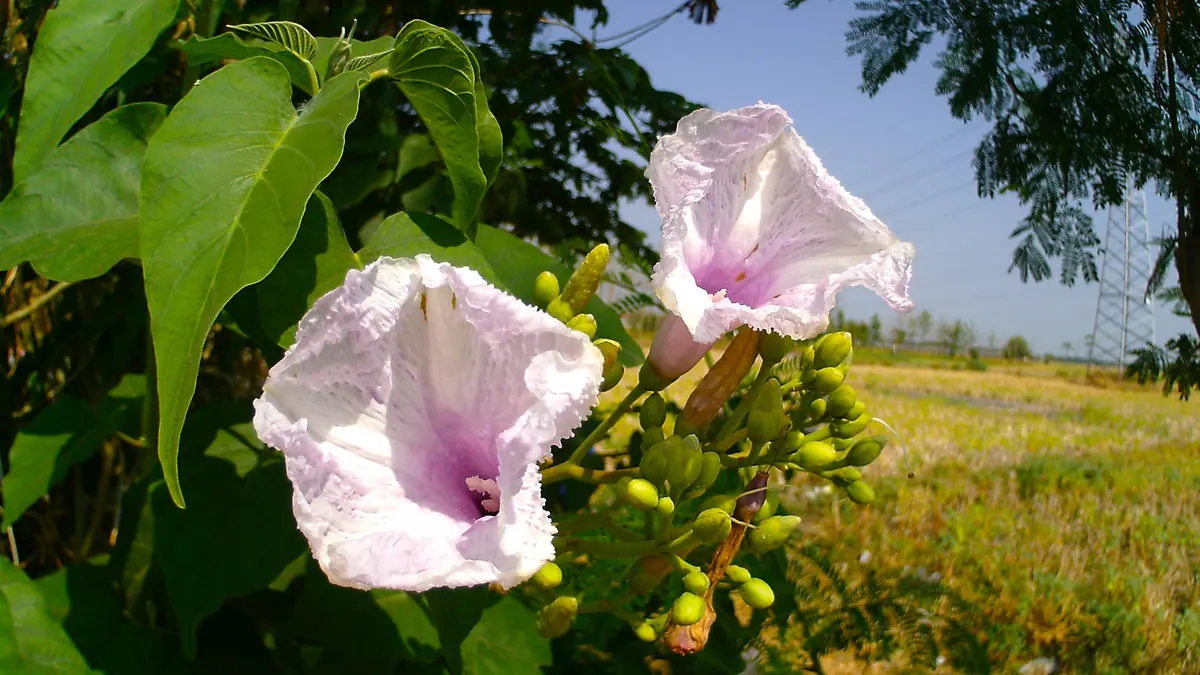
Ipomoea fistulosa leaves — BMP: 5 studies, weighted mean 415 m³ CH₄/t VS
415 m³ CH₄/t VS weighted mean from 5 studies
very good — editorial rating for biogas plants≈52 %
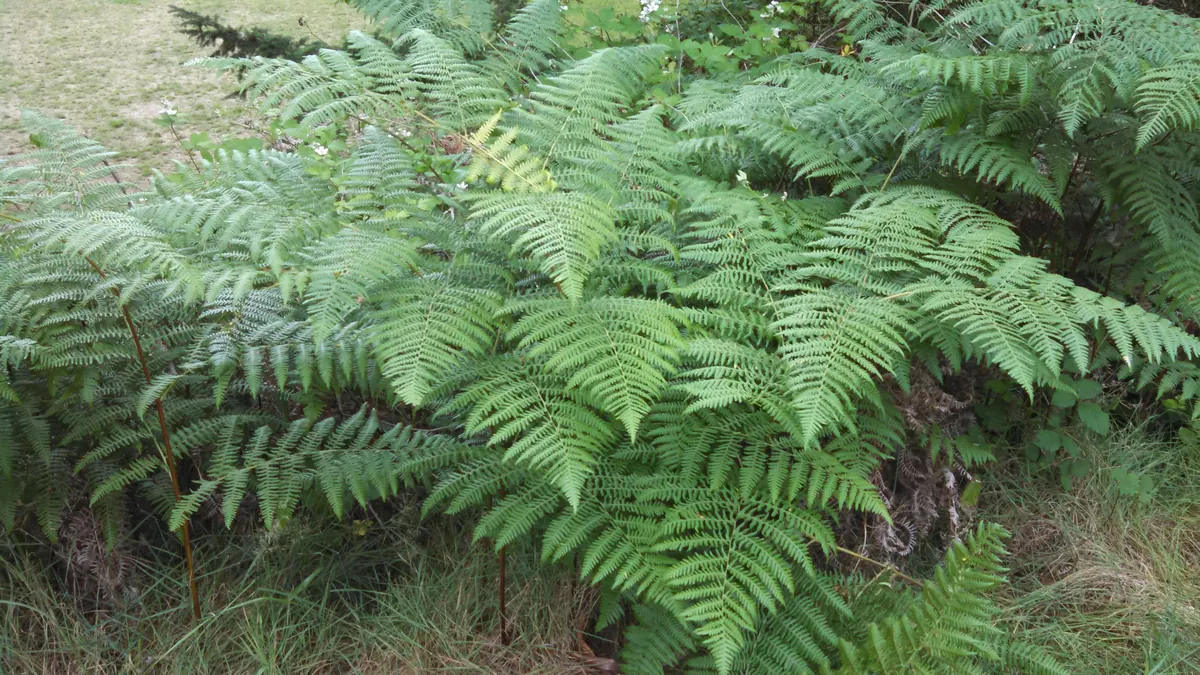
Forest underwood plants (ferns, thistles, wild raspberry) — BMP: 3 studies, weighted mean 169 m³ CH₄/t VS
169 m³ CH₄/t VS weighted mean from 3 studies
≈52 %
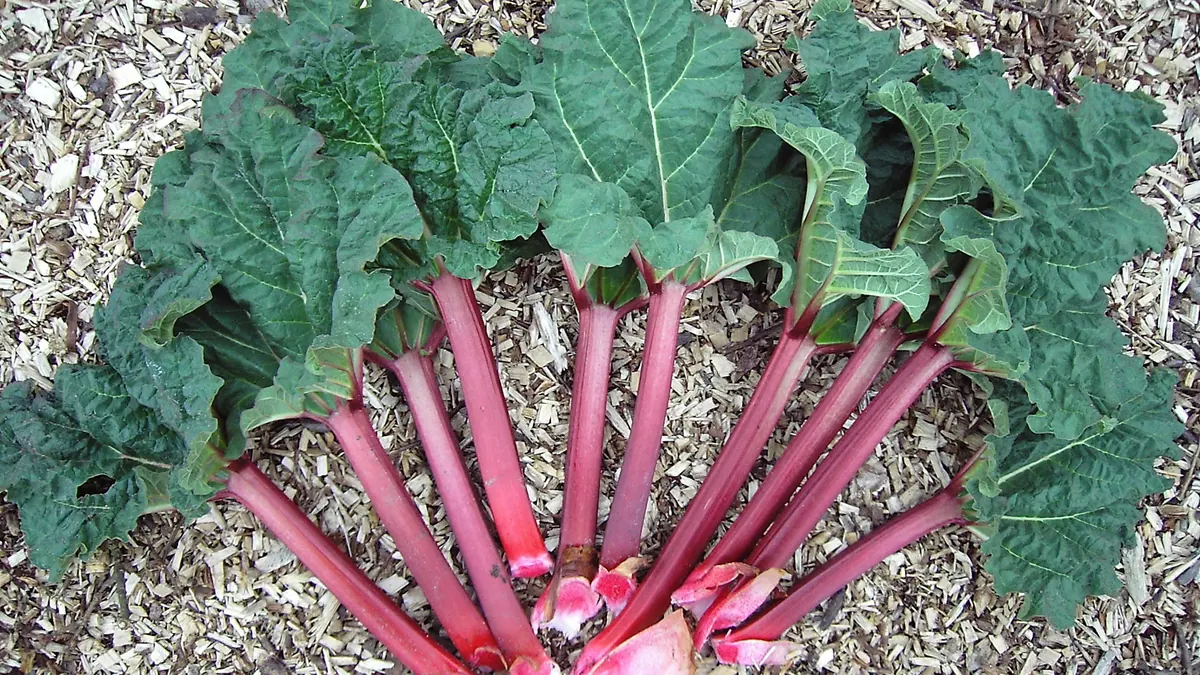
Rhubarb — BMP: 4 studies, weighted mean 368 m³ CH₄/t VS
368 m³ CH₄/t VS weighted mean from 4 studies
neutral — editorial rating for biogas plants67 %
Stinging nettle — BMP: 2 studies, weighted mean 315 m³ CH₄/t VS
315 m³ CH₄/t VS weighted mean from 2 studies
≈52 %