

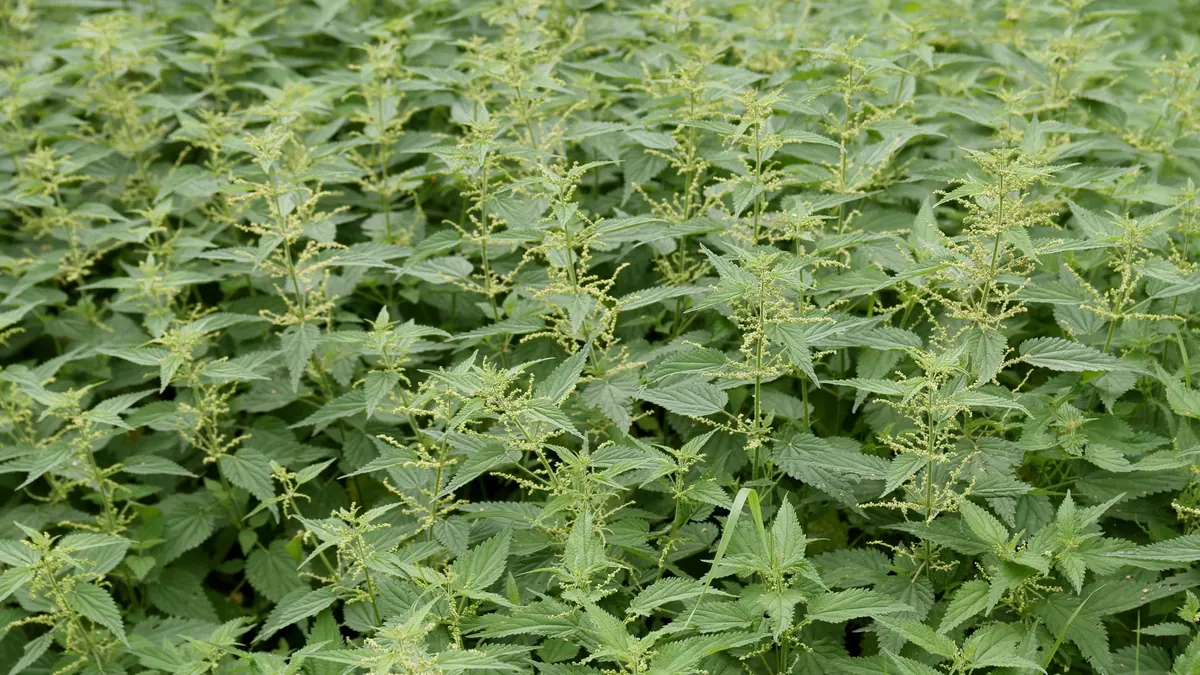
BMP testingWild, invasive and medicinal plantssingle study (2 samples)
Stinging nettle — BMP: 2 studies, weighted mean 315 m³ CH₄/t VS
Common nettle is a ruderal plant growing in masses, rich in nitrogen and bast fibre; it digests well, but records from one study differ markedly.
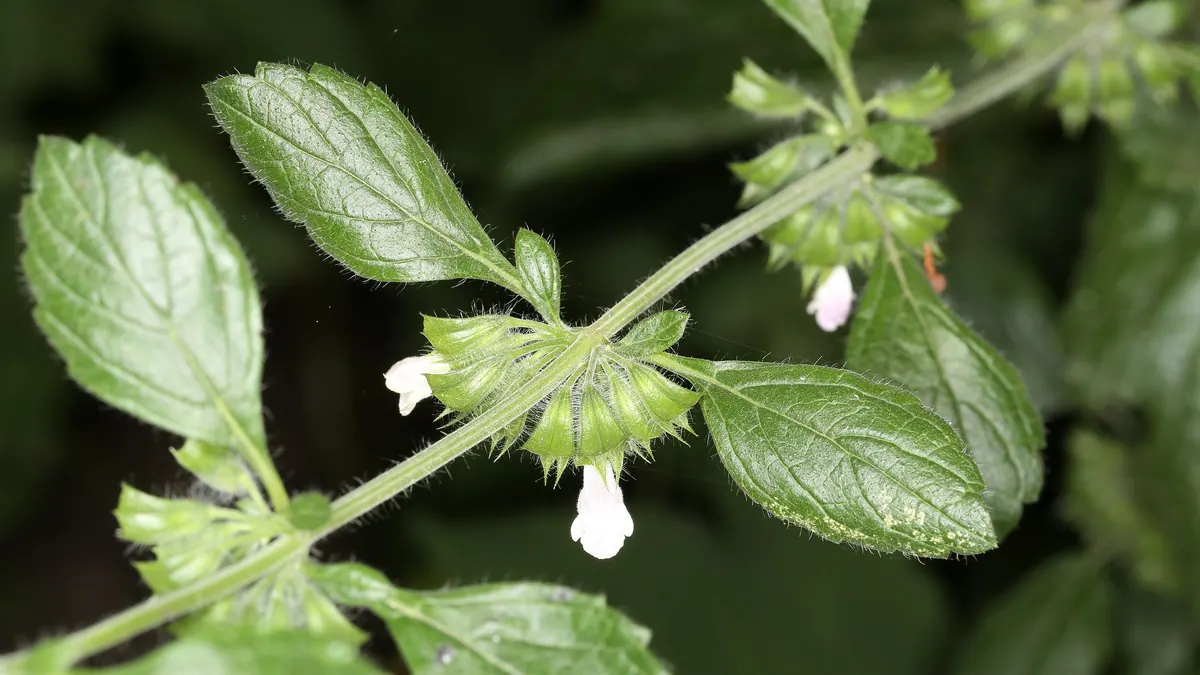
Photo kallerna / Wikimedia Commons, licence CC BY-SA 3.0, source file; changes: cropping

- Weighted mean
- 315m³ CH₄/t VS
- Range
- 210–420m³ CH₄/t VS
- Records
- 2single study (2 samples)
- Publications
- 1source
- Temperatures
- 35 °Cof the test
Methane in biogas
Medium methane content · ≈ 5.2 kWh/m³ of biogas
estimate from the substrate type The collected studies contain no measurement. The interval follows from the approximate composition (carbohydrate-dominated (no protein or fat characteristics)) and the yields of compound groups according to FNR.
Rating for biogas plants
not rated — editorial rating for biogas plants
Not rated: no dry matter or volatile solids in the data. We calculate the rating when the dry matter and volatile solids of the material are known.
Add to the co-digestion calculator CSV data
BMP curves from 2 studies
Weighted mean Individual records
Dashed lines are a model curve (first-order kinetics, B(t) = B₀·(1 − e−kt)); the end point comes from the publication. All curves are model curves.
Cumulative methane production over the test [m³ CH₄/t VS]. The thick line is the weighted mean of all records (315); dots mark the end values given in the publications. Point at the chart to read values; click a legend item to hide or show a record.
Records and sources
Download CSV| Source | BMP m³ CH₄/t VS | Temperature | Sample | Curve |
|---|---|---|---|---|
| Lehtomaki (2006) · 1 | 210 | 35 °C · mesophilic | Nettle | end point (model curve) |
| Lehtomaki (2006) · 2 | 420 | 35 °C · mesophilic | Nettle | end point (model curve) |
| Weighted mean | 315 | arithmetic mean 315, SD 148 | ||
Typical composition
- Dry matter (DM)
- 15.8% (range 15–16.6)
- Nitrogen
- 4.2 % DM
- C/N ratio
- 10.5
Median and range of the determinations reported in the publications behind this substrate's BMP records (read from: CROPGEN D4); dry matter: 2 determinations, volatile solids: 0 determinations.
Sources: Lehtomaki (2006).
The composition of the raw material varies between batches — for plant calculations use an analysis of your own sample. The calculator inserts typical values automatically.
Process properties
Low confidence: the description is based on general characteristics of the substrate group, not on studies of this material. Treat it as a hint to be verified.
Advantages
- Methane potential in the database: weighted mean 315 m³ CH₄/t VS (median 315; range 210–420; 2 records from 1 sources).
Drawbacks and risks
- Spread of results in the database: standard deviation 148 at a mean of 315 m³ CH₄/t VS (2 records from 1 sources).
Dosing
No source-based dose limits; a little-studied substrate — combine as an additive to a feed with low N content.
Sources of the process data
- Chen, Y.; Cheng, J.J.; Creamer, K.S. (2008) Inhibition of anaerobic digestion process: A review. Bioresource Technology
- Lehtomaki, A. Viinikainen, T.A. Rintala, J.A (2006) Screening boreal energy crops and crop residues for methane biofuel production. Submitted to Biomass and Bioenergy
- Weiland, P. (2010) Biogas production: current state and perspectives. Applied Microbiology and Biotechnology
The co-digestion calculator will assess a specific mixture containing this substrate.
What it is and where it comes from
Common nettle (Urtica dioica) grows commonly in Poland in ruderal habitats, by fences, in thickets and on wasteland, preferring nitrogen-rich soils. It has been grown for fibre and as a medicinal and fodder plant. The biomass can be obtained from mowing wasteland and green areas, but there is no established logistics as for grasses. In the literature it is studied as a potential biogas plant substrate in areas with little competition with crops.
Properties relevant to digestion
Nettle contains a high share of protein and nitrogen, as well as minerals, including calcium and iron. Green shoots have a moderate fibre content, and in older stems the share of lignin and bast fibre rises. The higher protein lowers the C/N ratio, so at a large share the risk of ammonia release rises; combining with carbon-rich material improves the balance. Long and strong bast fibres can wind around agitators if the material has not been well size-reduced. Stinging hairs are of no significance for digestion, but make manual handling difficult.
How to read the spread of results
The dataset contains several records from one study, all under mesophilic conditions at 35 °C, and the difference between them is marked. It may result from the harvest date, the age of the plant (young shoots versus mature stems), the share of leaves and stems, size reduction or replicates at a low number of trials. There is no independent source, so it is not possible to assess which of the results is more representative. The inoculum is also a typical factor.
In biogas plant practice
Nettle can supplement the feed on farms that have access to biomass from mowing, mainly as an addition in the growing season. It requires size reduction, and is best ensiled together with other green forages. The high protein requires ammonia monitoring. Biomass from wasteland raises additional questions of legal status: that from one's own land is an agricultural product, while that from mowing urban greenery is green waste.
For biogas practice, more important than a single value is that biomass from wasteland is sometimes contaminated with soil, stones and litter, so it requires selection before use. Harvest at the pre-flowering stage gives material of higher digestibility than after seed set.
Methodology in brief
BMP is the amount of methane obtained from volatile solids (VS) in a batch test, given in m³ CH₄ per tonne of VS (numerically the same as NmL CH₄/g VS in the publications) and converted to normal conditions (0 °C, 101.325 kPa). The weighted mean gives each publication a total weight of 1, split equally between its results for the substrate — a paper testing twenty varieties does not outweigh a paper with a single sample. In inter-laboratory programmes the unit is the laboratory (total weight 1), and within it the weight of a test grows with the number of bottles (replicates). Results after pretreatment (e.g. thermal, chemical, enzymatic) are shown separately and are not included in the mean.
Solid lines are curves measured in the tests. Where a publication gives only the final result, we draw a first-order kinetic model, B(t) = B₀·(1 − e−kt): only the end point comes from the publication, and the shape of the curve serves purely as visualisation — do not read the production on a particular day from it. For this substrate k = 0.134 d−1 was assumed (median of rate constants k reported in the sources and/or fitted to the mean measured curves).
The statistics describe the spread of published results — a descriptive compilation, not a meta-analysis or a guarantee of plant yield.
Bibliography
All sources of the site: bibliography.
Other substrates in the group “Wild, invasive and medicinal plants”
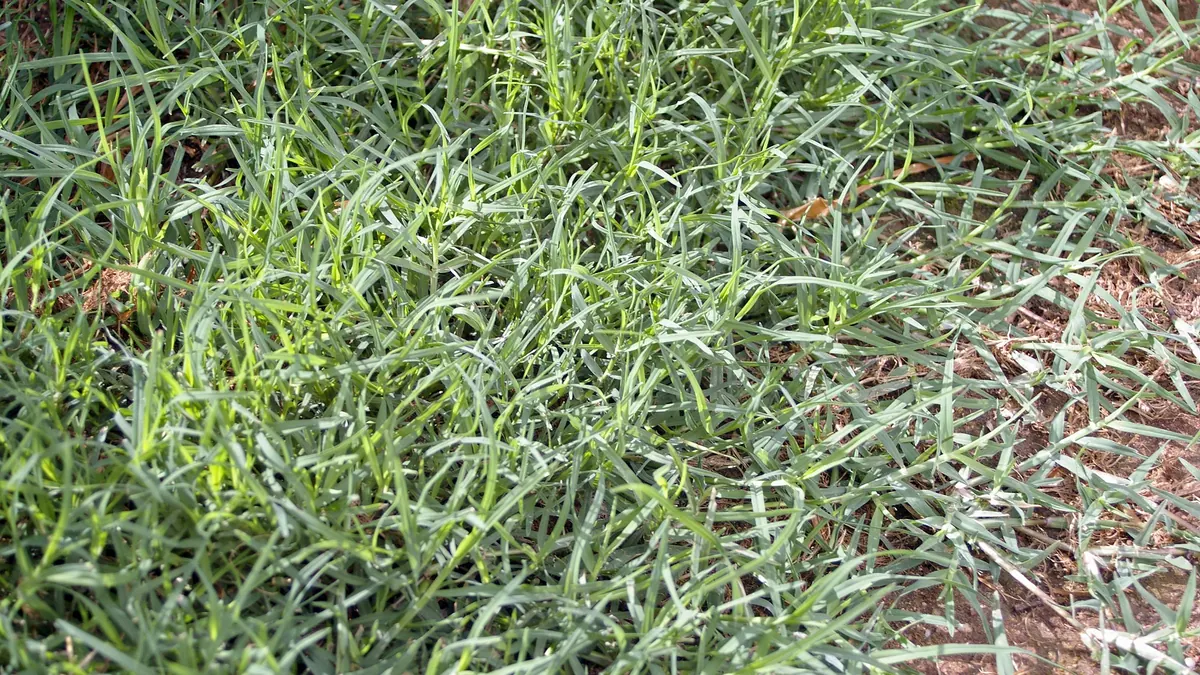
Bermuda grass — BMP: 5 studies, weighted mean 202 m³ CH₄/t VS
202 m³ CH₄/t VS weighted mean from 5 studies
good — editorial rating for biogas plants≈52 %
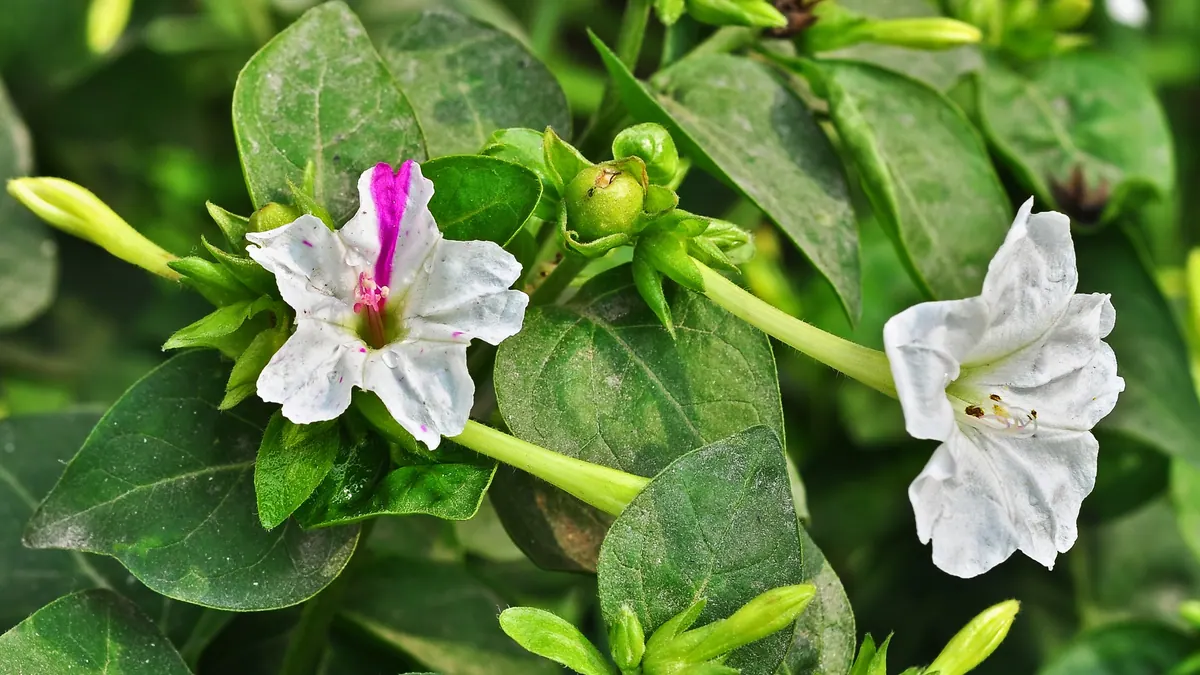
Four o'clock flower leaves — BMP: 5 studies, weighted mean 325 m³ CH₄/t VS
325 m³ CH₄/t VS weighted mean from 5 studies
good — editorial rating for biogas plants≈52 %
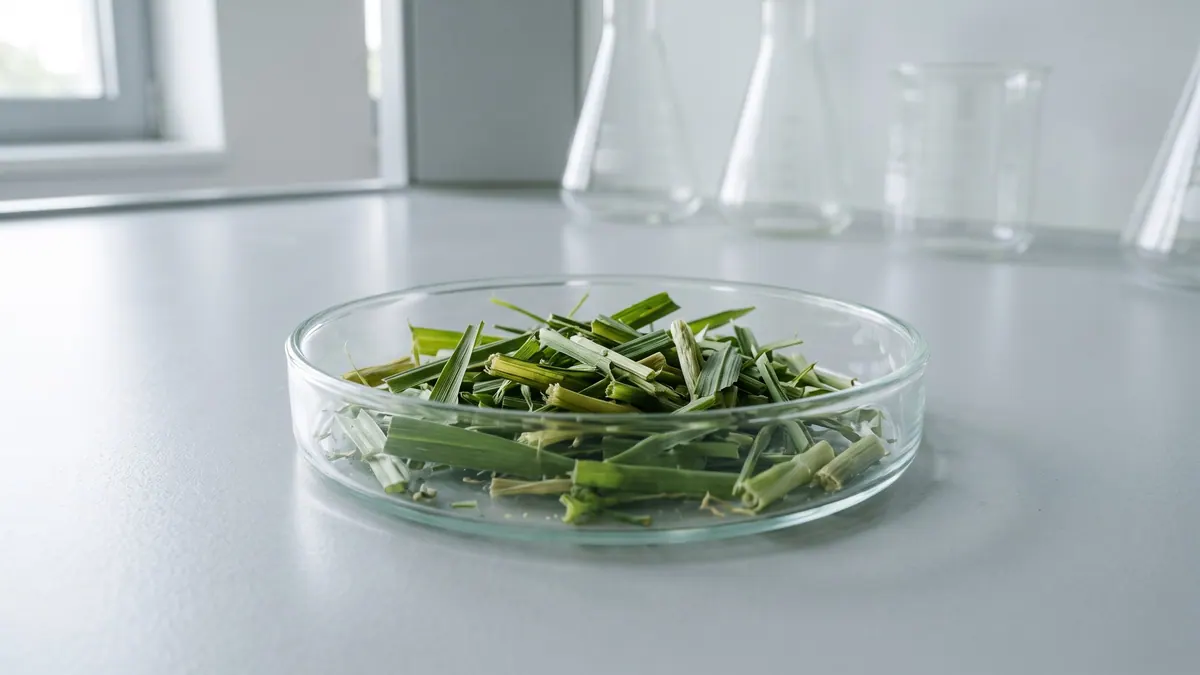
Aleman grass — BMP: 2 studies, weighted mean 296 m³ CH₄/t VS
296 m³ CH₄/t VS weighted mean from 2 studies
≈52 %
Herbs and herbal industry wastes (lemon balm, alder buckthorn, mint, andrographis, catnip, figwort) — BMP: 6 studies, mean 144 m³ CH₄/t VS
144 m³ CH₄/t VS weighted mean from 6 studies
≈59 %