

BMP testingFruit, vegetables and their residuessingle study (4 samples)
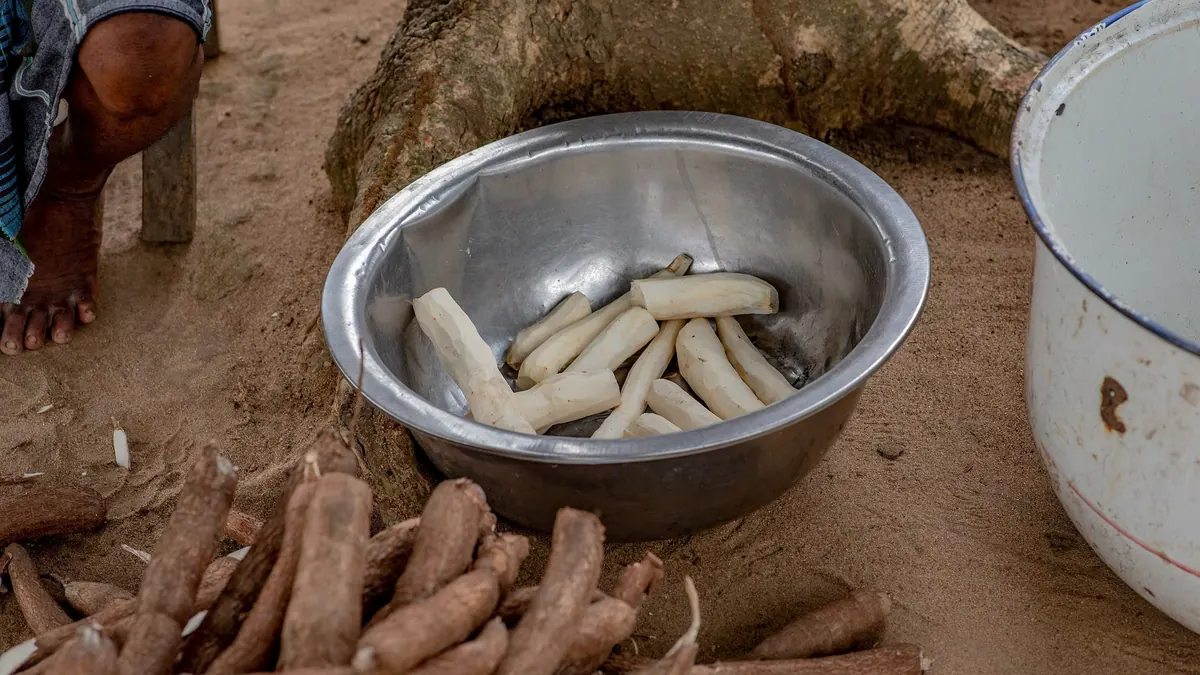
Cassava peels — BMP: 4 studies, weighted mean 268 m³ CH₄/t VS
Cassava peels are a starchy waste of flour and tapioca production; they contain cyanogenic glycosides, which may need to be broken down or diluted before digestion.
Photo Dappasolomon001 / Wikimedia Commons, licence CC BY-SA 4.0, source file; changes: cropping

- Weighted mean
- 268m³ CH₄/t VS
- Range
- 263–279m³ CH₄/t VS
- Records
- 4single study (4 samples)
- Publications
- 1source
- Temperatures
- —of the test
Methane in biogas
Medium methane content · ≈ 5.2 kWh/m³ of biogas
estimate from the substrate type The collected studies contain no measurement. The interval follows from the approximate composition (carbohydrate-dominated (no protein or fat characteristics)) and the yields of compound groups according to FNR.
Rating for biogas plants
not rated — editorial rating for biogas plants
Not rated: no dry matter or volatile solids in the data. We calculate the rating when the dry matter and volatile solids of the material are known.
Add to the co-digestion calculator CSV data
BMP curves from 4 studies
Weighted mean Individual records
Dashed lines are a model curve (first-order kinetics, B(t) = B₀·(1 − e−kt)); the end point comes from the publication. All curves are model curves.
Cumulative methane production over the test [m³ CH₄/t VS]. The thick line is the weighted mean of all records (268); dots mark the end values given in the publications. Point at the chart to read values; click a legend item to hide or show a record.
Records and sources
Download CSV| Source | BMP m³ CH₄/t VS | Temperature | Sample | Curve |
|---|---|---|---|---|
| Mabecua et al. (2021) · 1 DOI | 263 | — | Cassava peel CAS3 (manometric) | end point (model curve) |
| Mabecua et al. (2021) · 2 DOI | 264 | — | Cassava peel CAS4 (manometric) | end point (model curve) |
| Mabecua et al. (2021) · 3 DOI | 267 | — | Cassava peel CAS2 (manometric) | end point (model curve) |
| Mabecua et al. (2021) · 4 DOI | 279 | — | Cassava peel CAS1 (manometric) | end point (model curve) |
| Weighted mean | 268 | arithmetic mean 268, SD 7 | ||
Process properties
Advantages
- Methane yield in the compendium: median 266 (range 263–279) m³ CH₄/t VS, 4 records from 1 papers (weighted mean 268).
- Cassava peel after treatment with potash and phosphate buffer (pH 7.2) gave a high methane yield in the BMP test (Ahou et al. (2021))
Drawbacks and risks
- In cassava processing, cyanogenic glycosides release cyanide (up to 200 mg/l in starch production wastewater); at pH 5 and below cyanide accumulated and pre-acidification failed, so acidification and toxicity overlap (Siller and Winter (1998))
- Treating the peel with potash and phosphate buffer of pH 7.2 was necessary — without it there is a risk of inhibition by acidification (Ahou et al. (2021))
Co-digestion — what to combine it with, what to watch out for
- combines well
group: Animal excreta (slurry, manure, poultry litter)
Cassava pulp containing cyanides was digested stably with pig slurry (C/N 35:1) without an inhibitory effect of the cyanides, after acclimatisation of the sludge.[1]
- combines well
substrates: nitrogen-rich — e.g. Pig slurry, Poultry manure, Waste activated sludge (secondary sludge), Chlorella vulgaris, Nannochloropsis salina
A nitrogen-rich co-substrate balances the low C/N of fruit and vegetable waste (Bouallagui et al. 2009).[2]
- combines well
substrates: high alkalinity (buffer) — e.g. Cattle manure, Pig slurry, Cattle slurry, Duck slurry, Rumen and digestive tract content
Co-digestion of easily degradable substrates with dairy slurry increased the methane yield relative to slurry alone.[3]
- caution
Co-digestion of cassava peel with water hyacinth gave a lower yield than the sum of the mono-digestion yields of both substrates.[4]
Dosing
The sources do not give a share in the feed. Ahou et al. (2021): cassava peel required potash and phosphate buffer of pH 7.2, and a mix of peel and hyacinth gave less methane than the sum of both substrates separately.
Introduce gradually, starting with a small dose and monitoring the process (e.g. FOS/TAC, pH, gas composition).
Sources of the process data
- Anaerobic co-digestion of cyanide containing cassava pulp with pig manure
- Improvement of fruit and vegetable waste anaerobic digestion performance and stability with co-substrates addition
- Biochemical methane potential and biodegradability of complex organic substrates
- Lab-scale anaerobic digestion of cassava peels: the first step of energy recovery from cassava waste and water hyacinth
- Agro-Waste, a Solution for Rural Electrification? Assessing Biomethane Potential of Agro-Waste in Inhambane Province, Southern Mozambique
- Degradation of cyanide in agroindustrial or industrial wastewater in an acidification reactor or in a single-step methane reactor
- Effects of size and thermophilic pre-hydrolysis of banana peel during anaerobic digestion, and biomethanation potential of key tropical fruit wastes
- Effect of particle size on biogas generation from biomass residues
The co-digestion calculator will assess a specific mixture containing this substrate.
What it is and where it comes from
Cassava (Manihot esculenta) is the staple starch crop of the tropics. When tubers are peeled for the production of flour, tapioca, gari or starch, peels arise, constituting a significant percentage of the mass of the roots. In Poland cassava is an imported product (mainly processed), so the peels are not a significant waste stream, and the data come from studies in producing countries.
Properties relevant to digestion
The peels contain starch, soluble sugars and a good deal of fibre with a moderate lignin content. The key feature is cyanogenic glycosides, mainly linamarin, from which hydrogen cyanide is formed under the action of enzymes. Its high concentration inhibits methanogenesis, but under digestion conditions the glycosides undergo gradual breakdown, and the toxic effect is limited by appropriate dilution and gradual dosing. Starch hydrolyses quickly, so acidification is also a risk. The material has a low protein content, which means a high C/N ratio.
How to read the spread of results
All records come from one study and concern several cassava varieties, and the results differ little. This gives a picture of a small effect of variety in this study, but the lack of independent sources makes it impossible to assess variability between laboratories. In addition, the result is affected by the maturity of the roots, the glycoside content (dependent on variety: bitter varieties have more), the method of peeling and sample preparation, and the inoculum.
In biogas plant practice
Cassava peels can be added to co-digestion with manure or sludge, after chopping and in gradual portions. Bitter varieties and fresh peels require caution because of hydrogen cyanide; preliminary chopping and a short incubation in which the glycosides break down help, as does dilution of the feed. Storage in the moist state leads to rapid spoilage. The management of waste from processing is subject to waste regulations.
In plants processing large quantities of cassava, it is worth observing the concentration of hydrogen cyanide in the liquid phase and in the biogas, particularly when the variety or batch changes, because the glycoside content is often very variable even within a single plantation.
Residues from starch production, such as pressed pulp, are described in a separate entry, because they have a different composition from the peels alone: less lignified fibre and more residual starch. Results should therefore not be transferred between these materials.
Methodology in brief
BMP is the amount of methane obtained from volatile solids (VS) in a batch test, given in m³ CH₄ per tonne of VS (numerically the same as NmL CH₄/g VS in the publications) and converted to normal conditions (0 °C, 101.325 kPa). The weighted mean gives each publication a total weight of 1, split equally between its results for the substrate — a paper testing twenty varieties does not outweigh a paper with a single sample. In inter-laboratory programmes the unit is the laboratory (total weight 1), and within it the weight of a test grows with the number of bottles (replicates). Results after pretreatment (e.g. thermal, chemical, enzymatic) are shown separately and are not included in the mean.
Solid lines are curves measured in the tests. Where a publication gives only the final result, we draw a first-order kinetic model, B(t) = B₀·(1 − e−kt): only the end point comes from the publication, and the shape of the curve serves purely as visualisation — do not read the production on a particular day from it. For this substrate k = 0.245 d−1 was assumed (median of rate constants k reported in the sources and/or fitted to the mean measured curves).
The statistics describe the spread of published results — a descriptive compilation, not a meta-analysis or a guarantee of plant yield.
Bibliography
- Mabecua, F.; Schwede, S.; Lucas, C.; Klintenberg, P. (2021). Agro-Waste, a Solution for Rural Electrification? Assessing Biomethane Potential of Agro-Waste in Inhambane Province, Southern Mozambique. Water 13(7), 939. DOI: 10.3390/w13070939 DOI
All sources of the site: bibliography.
Other substrates in the group “Fruit, vegetables and their residues”
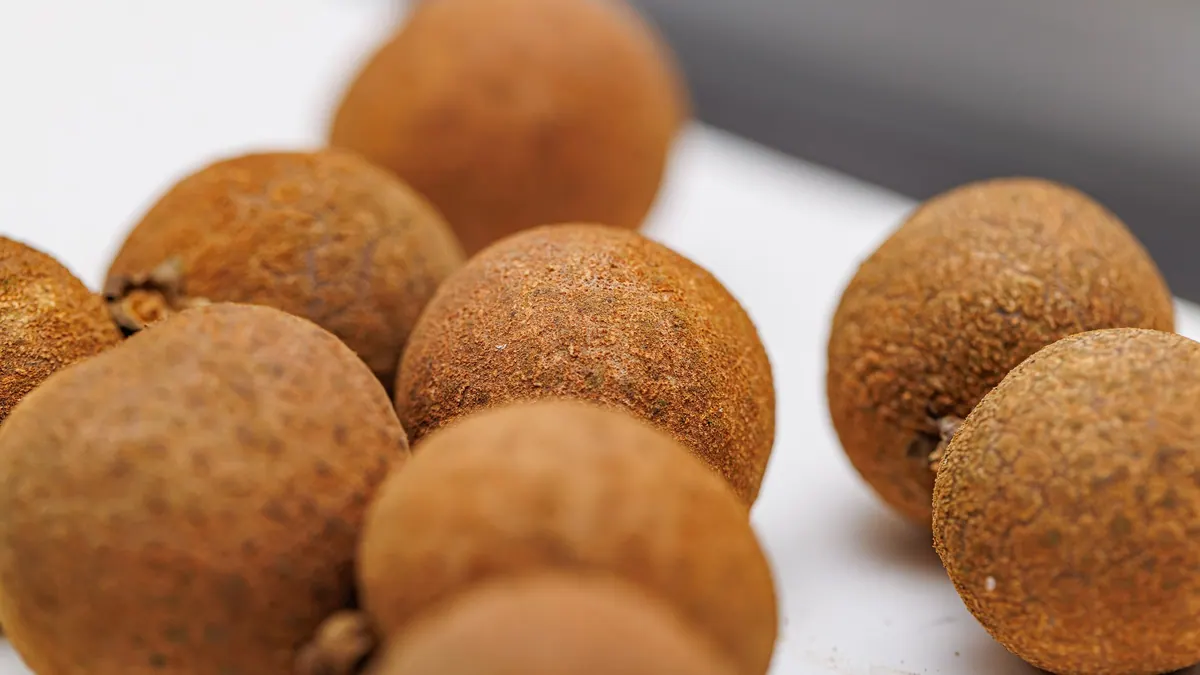
Longan peel, seed and waste — BMP: 3 studies, weighted mean 190 m³ CH₄/t VS
190 m³ CH₄/t VS weighted mean from 3 studies
≈52 %
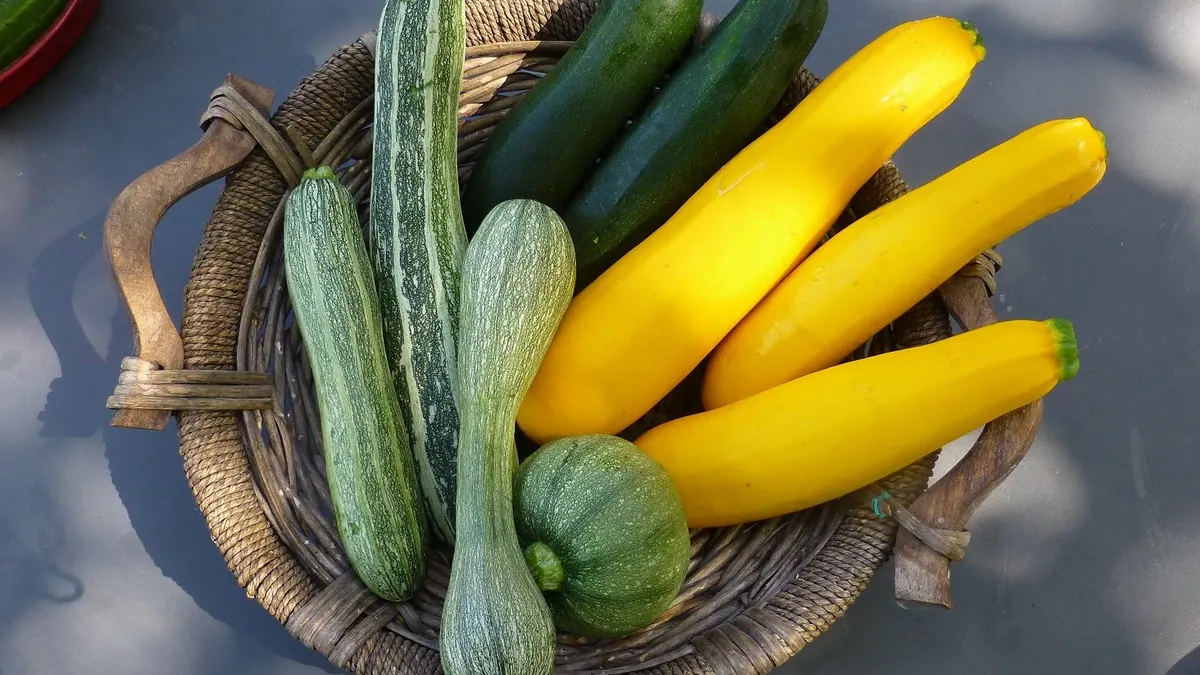
Zucchini and vegetable marrow — BMP: 4 studies, weighted mean 309 m³ CH₄/t VS
309 m³ CH₄/t VS weighted mean from 4 studies
≈52 %
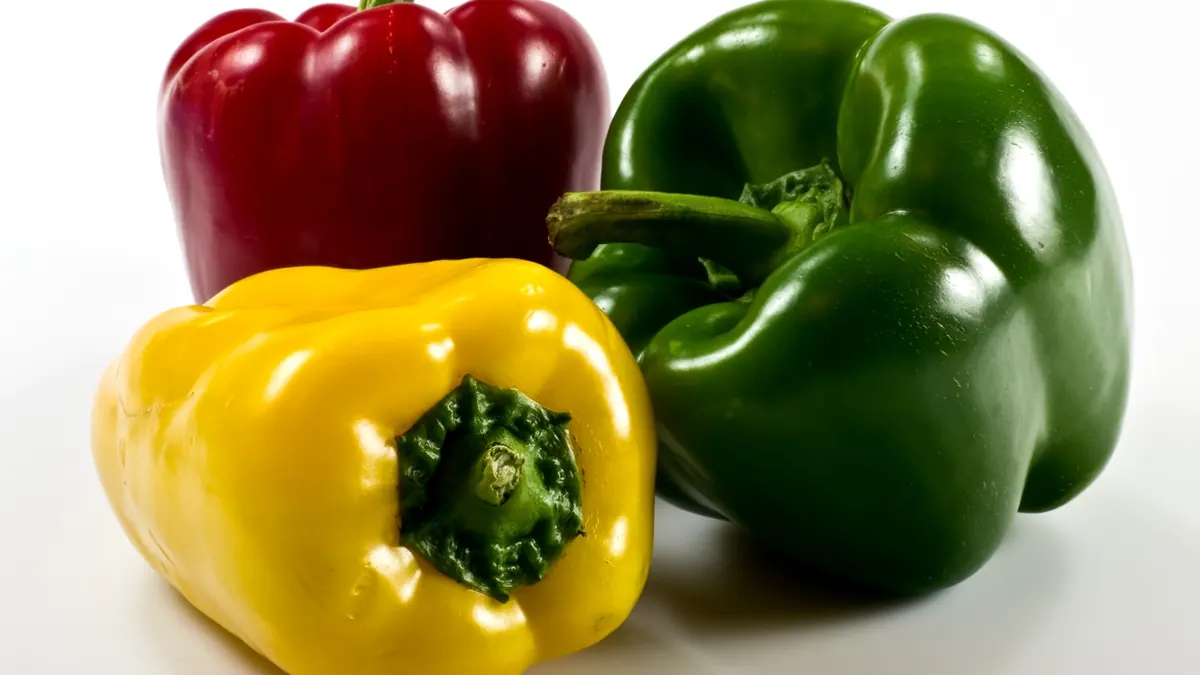
Peppers (fruit) — BMP: 5 studies, weighted mean 329 m³ CH₄/t VS
329 m³ CH₄/t VS weighted mean from 5 studies
≈54 %
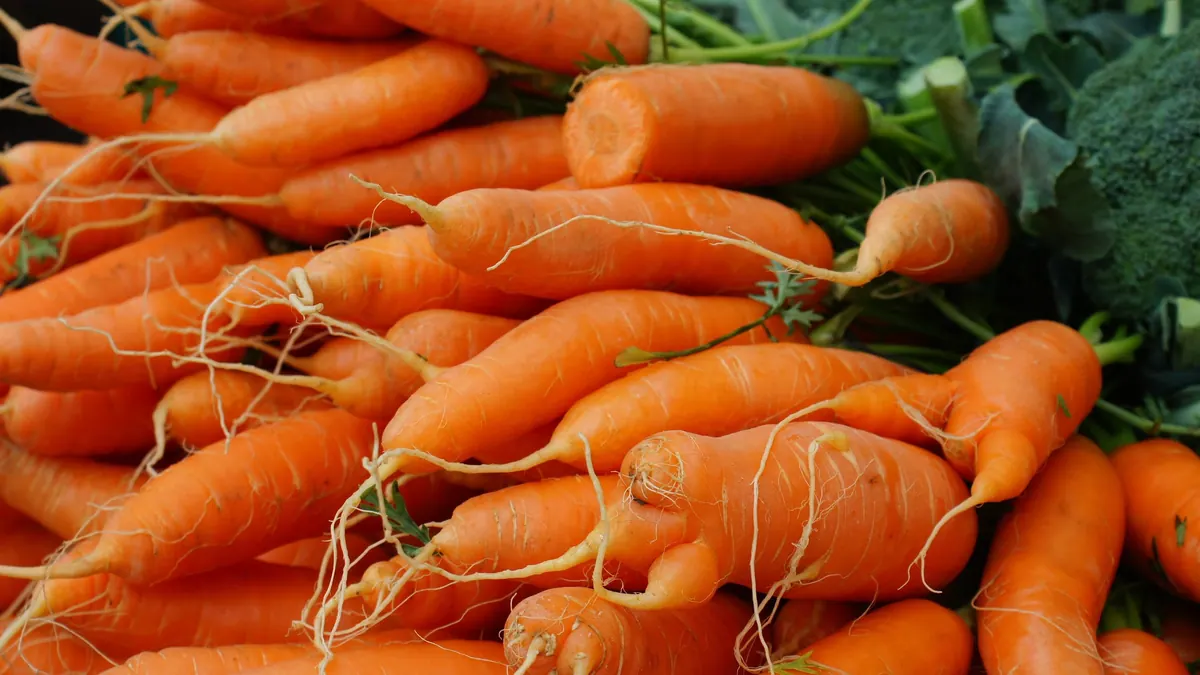
Carrots (roots) — BMP: 4 studies, weighted mean 341 m³ CH₄/t VS
341 m³ CH₄/t VS weighted mean from 4 studies
≈52 %