

BMP testingAlgae and aquatic plants
Water hyacinth — BMP: 3 studies, weighted mean 191 m³ CH₄/t VS
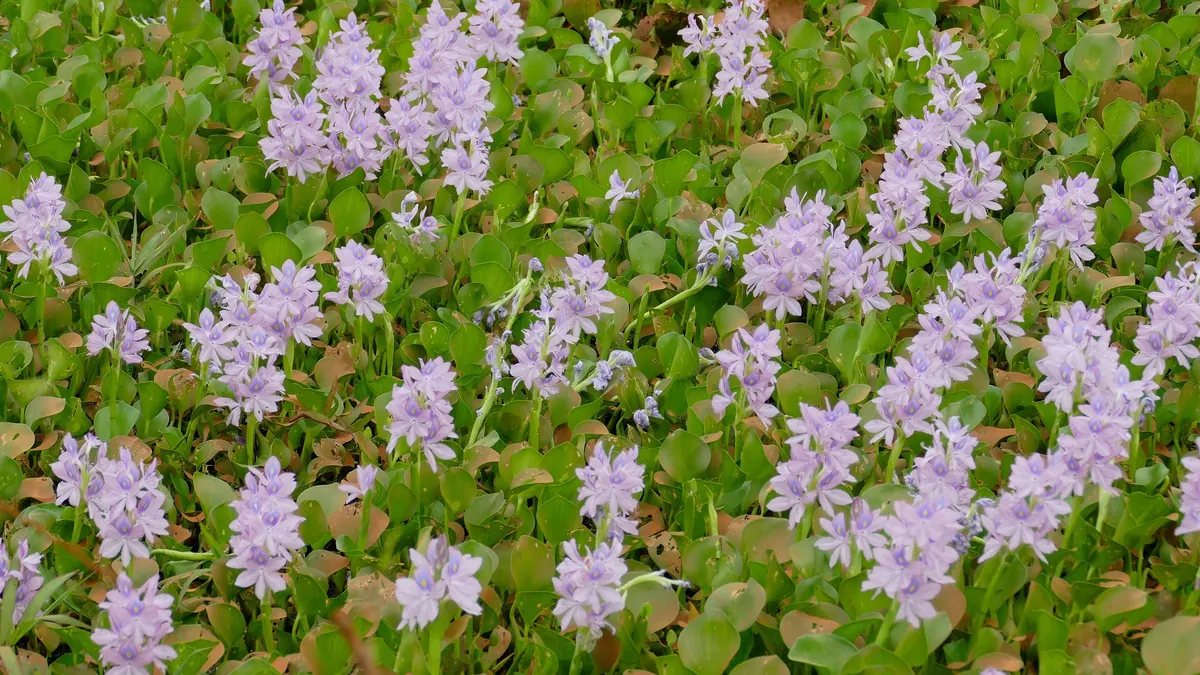
Water hyacinth (Eichhornia crassipes) is a floating invasive plant of very high moisture content; its methane potential depends on the lignin content of the tissues.
Photo Bernard DUPONT / Wikimedia Commons, licence CC BY-SA 2.0, source file; changes: cropping

- Weighted mean
- 191m³ CH₄/t VS
- Range
- 178–213m³ CH₄/t VS
- Records
- 3studies
- Publications
- 2sources
- Temperatures
- 35 °Cof the test
Methane in biogas
Medium methane content · ≈ 5.2 kWh/m³ of biogas
estimate from the substrate type The collected studies contain no measurement. The interval follows from the approximate composition (carbohydrate-dominated (no protein or fat characteristics)) and the yields of compound groups according to FNR.
Rating for biogas plants
not rated — editorial rating for biogas plants
Not rated: no dry matter or volatile solids in the data. We calculate the rating when the dry matter and volatile solids of the material are known.
Add to the co-digestion calculator CSV data
BMP curves from 3 studies
Weighted mean Individual records
Dashed lines are a model curve (first-order kinetics, B(t) = B₀·(1 − e−kt)); the end point comes from the publication. All curves are model curves.
Cumulative methane production over the test [m³ CH₄/t VS]. The thick line is the weighted mean of all records (191); dots mark the end values given in the publications. Point at the chart to read values; click a legend item to hide or show a record.
Records and sources
Download CSV| Source | BMP m³ CH₄/t VS | Temperature | Sample | Curve |
|---|---|---|---|---|
| Ahou et al. (2021) DOI | 178 | — | Water hyacinth (Benin) | end point (model curve) |
| Chynoweth et al. (1993) · 1 DOI | 196 | 35 °C · mesophilic | Water hyacinth (high lignin) | end point (model curve) |
| Chynoweth et al. (1993) · 2 DOI | 213 | 35 °C · mesophilic | Water hyacinth (low lignin) | end point (model curve) |
| Weighted mean | 191 | arithmetic mean 196, SD 18 | ||
Process properties
Advantages
- Methane yield in the compendium: median 196 (range 178-213) m³ CH₄/t VS, 3 records from 2 studies (weighted mean 191).
- Water hyacinth is a nitrogen-rich plant; co-digestion with sheep waste has been studied (Ahou et al. (2021); Patil et al. (2014))
Drawbacks and risks
- The transport of heavy metals during hyacinth digestion has been the subject of separate studies: for plants from polluted waters, monitor metals (Ilangovan and Noyola (1990))
- Co-digestion with cassava peel gave less methane than the sum of the mono-digestions of the two substrates (Ahou et al. (2021))
- Aquatic plants with a high lignocellulose share have a lower methane potential than easily degradable substrates (Labatut et al. (2011))
- Theoretical methods overestimated methane yields if biodegradability was not taken into account: a plan based on composition requires confirmation by a BMP test (Labatut et al. (2011))
Co-digestion — what to combine it with, what to watch out for
- combines well
group: Animal excreta (slurry, manure, poultry litter)
Co-digestion of hyacinth with sheep waste has been studied.[1]
- caution
The mixture with hyacinth gave less methane than the sum of the mono-digestions.[2]
Dosing
The sources do not give a safe share of this substrate in the feed.
Sources of the process data
- Anaerobic Co-digestion of Water Hyacinth and Sheep Waste
- Lab-scale anaerobic digestion of cassava peels: the first step of energy recovery from cassava waste and water hyacinth
- Biochemical methane potential of biomass and waste feedstocks
- Transport of heavy metals during anaerobic digestion of water hyacinth
- Biochemical methane potential and biodegradability of complex organic substrates
- Effects of size and thermophilic pre-hydrolysis of banana peel during anaerobic digestion, and biomethanation potential of key tropical fruit wastes
- Effect of particle size on biogas generation from biomass residues
The co-digestion calculator will assess a specific mixture containing this substrate.
What it is and where it comes from
Water hyacinth (Eichhornia crassipes, now also Pontederia crassipes) is a free-floating aquatic plant native to South America, which has spread across tropical and subtropical water bodies worldwide. It forms dense mats that restrict navigation, the inflow of light and oxygen, and hinder fishing and the operation of hydroelectric plants. In Poland it does not persist, because it does not tolerate frost, and in the European Union it is on the list of invasive alien species of Union concern (Regulation (EU) No 1143/2014), which entails, among other things, a ban on its import, transport, keeping and release into the environment.
Properties relevant to digestion
Fresh biomass consists of over 90% water, and the dry matter is mainly cellulose, hemicelluloses, protein and ash. The lignin content is moderate and differs between leaves, petioles and roots. The plant absorbs heavy metals and nutrients from the water, so biomass from polluted water bodies may contain elevated amounts of metals. The large water content hinders transport and dosing, and the breakdown of proteins releases ammonia, although usually in amounts that do not dominate in mixtures.
How to read the spread of results
The dataset contains several records from several sources, including some distinguished as biomass of higher and lower lignin content. Such a difference shows the main factor of variability: the age of the plant, the season, the availability of nutrients in the water and the share of the individual organs affect the composition. In addition there are size reduction, the method of preservation (fresh, dried, ensiled), temperature and the substrate-to-inoculum ratio. With a small number of records the spread does not allow a typical range for the whole species to be determined.
In biogas plant practice
Water hyacinth is considered as a substrate mainly in countries where it is a serious environmental problem, and its harvesting is linked to the clearing of water bodies. In European conditions it is not available. Where it occurs, before digestion it is worth size-reducing it, dewatering it (pressing) or mixing it with drier substrates. The heavy metal content and the effect on the digestate should be checked. Legal requirements include the regulations on invasive species, which may restrict the movement of live plants.
It is also worth remembering that floating plants such as hyacinth grow very fast, so under favourable conditions the biomass can be harvested several times a year. This is one of the reasons why it is sometimes seen as a potential energy source, despite its low dry matter.
Methodology in brief
BMP is the amount of methane obtained from volatile solids (VS) in a batch test, given in m³ CH₄ per tonne of VS (numerically the same as NmL CH₄/g VS in the publications) and converted to normal conditions (0 °C, 101.325 kPa). The weighted mean gives each publication a total weight of 1, split equally between its results for the substrate — a paper testing twenty varieties does not outweigh a paper with a single sample. In inter-laboratory programmes the unit is the laboratory (total weight 1), and within it the weight of a test grows with the number of bottles (replicates). Results after pretreatment (e.g. thermal, chemical, enzymatic) are shown separately and are not included in the mean.
Solid lines are curves measured in the tests. Where a publication gives only the final result, we draw a first-order kinetic model, B(t) = B₀·(1 − e−kt): only the end point comes from the publication, and the shape of the curve serves purely as visualisation — do not read the production on a particular day from it. For this substrate k = 0.102 d−1 was assumed (median of rate constants k reported in the sources and/or fitted to the mean measured curves).
The statistics describe the spread of published results — a descriptive compilation, not a meta-analysis or a guarantee of plant yield.
Bibliography
- Ahou, Y.S.; Bautista Angeli, J.R.; Awad, S.; Baba-Moussa, L.; Andres, Y. (2021). Lab-scale anaerobic digestion of cassava peels: the first step of energy recovery from cassava waste and water hyacinth. Environmental Technology 42(9), 1438–1451. DOI: 10.1080/09593330.2019.1670266 DOI
- Chynoweth, D.; Turick, C.; Owens, J.; Jerger, D.; Peck, M. (1993). Biochemical methane potential of biomass and waste feedstocks. Biomass and Bioenergy 5(1), 95–111. DOI: 10.1016/0961-9534(93)90010-2 DOI
All sources of the site: bibliography.
Other substrates in the group “Algae and aquatic plants”
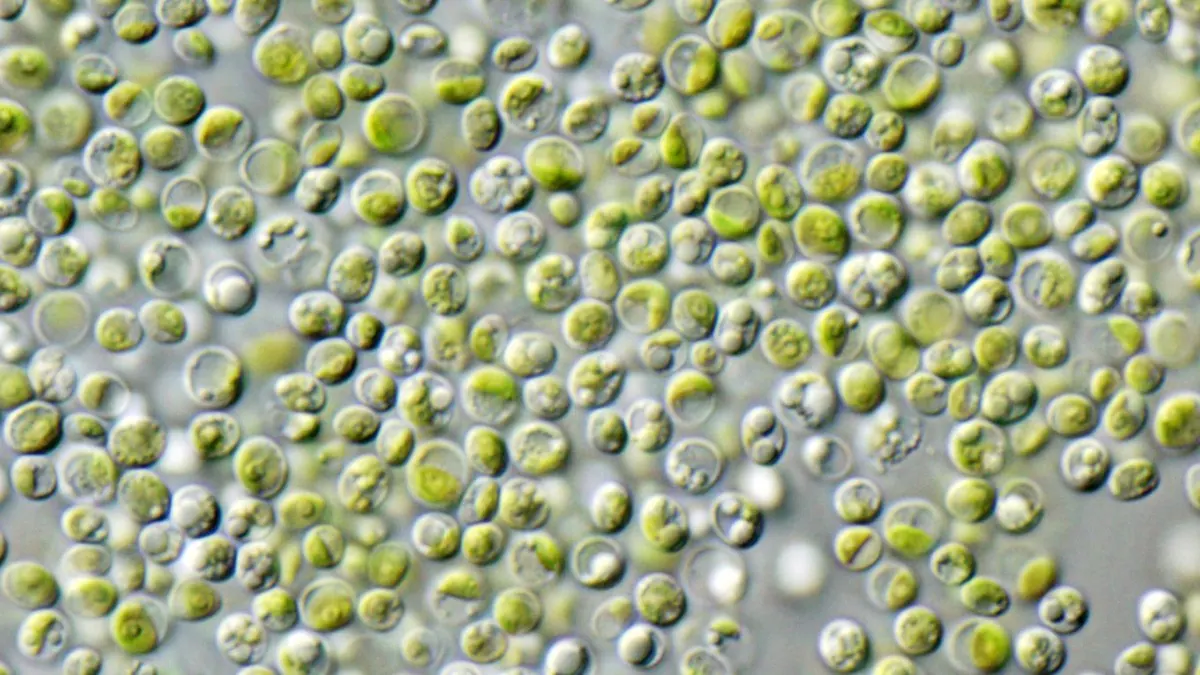
Chlorella vulgaris — BMP: 9 studies, weighted mean 278 m³ CH₄/t VS
278 m³ CH₄/t VS weighted mean from 9 studies
≈58 %
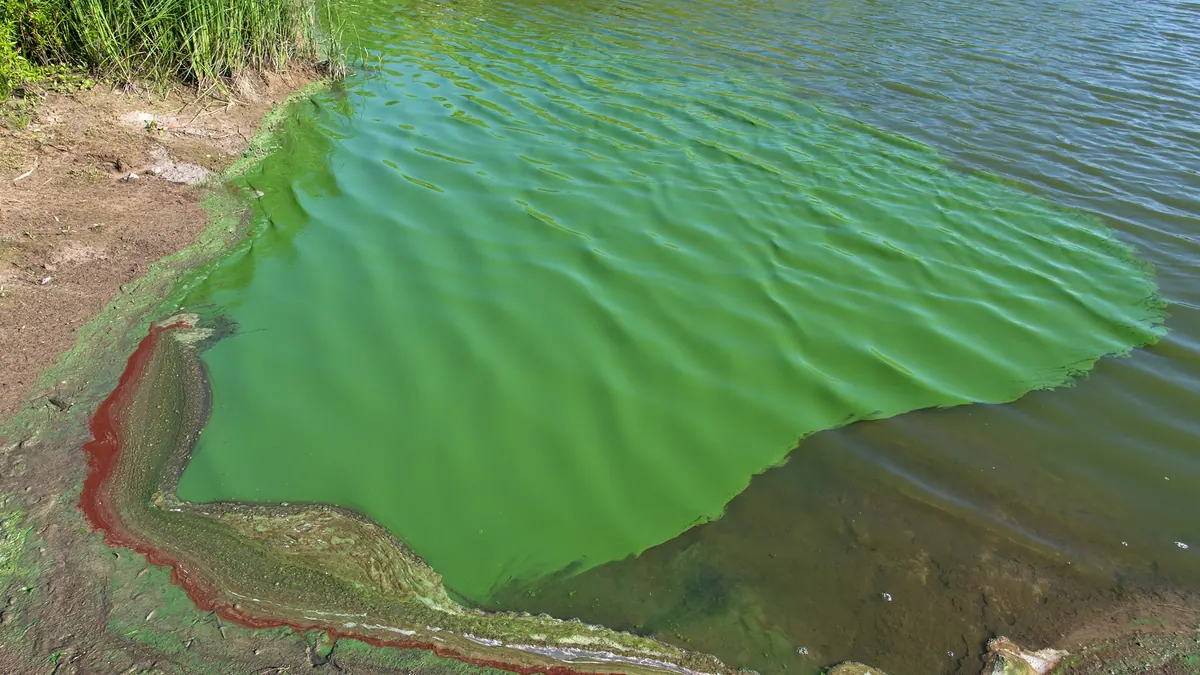
Cyanobacteria (Phormidium, Desertifilum, Anabaena, Nostoc) — BMP: 4 studies, weighted mean 152 m³ CH₄/t VS
152 m³ CH₄/t VS weighted mean from 4 studies
≈58 %
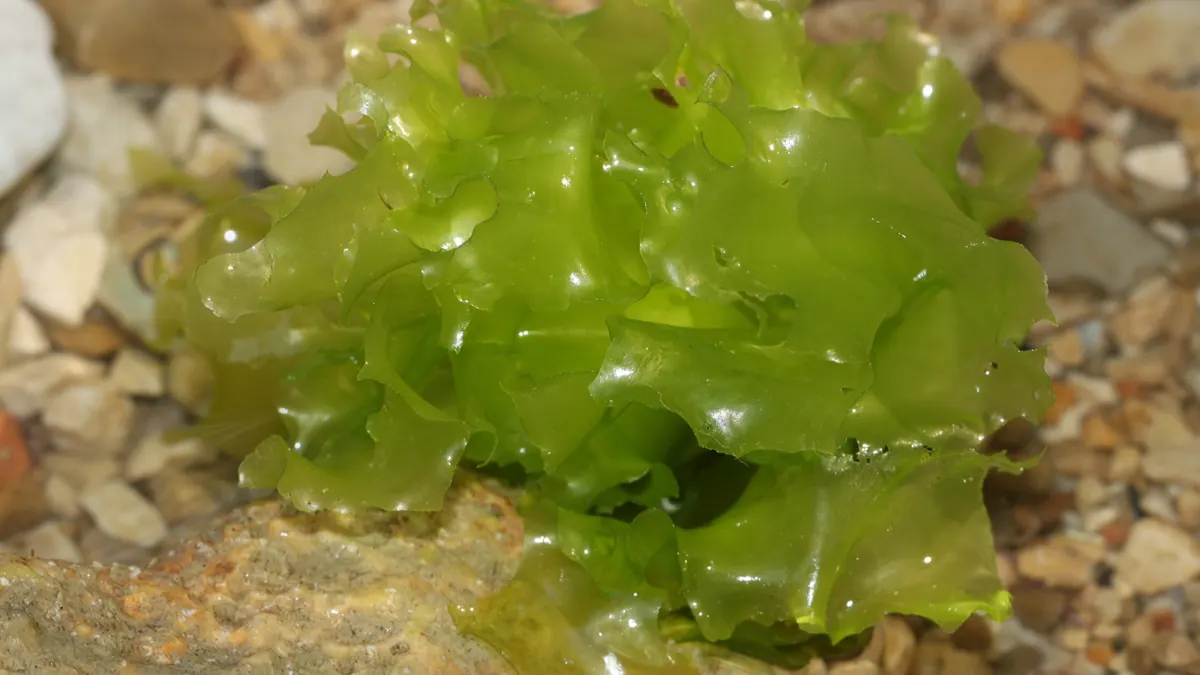
Sea lettuce (Ulva lactuca) — BMP: 2 studies, weighted mean 247 m³ CH₄/t VS
247 m³ CH₄/t VS weighted mean from 2 studies
≈52 %
Nannochloropsis salina — BMP: 8 studies, weighted mean 417 m³ CH₄/t VS
417 m³ CH₄/t VS weighted mean from 8 studies
≈58 %