Waste and circular economyEvent
Mexico: 46% of municipal waste is the organic fraction — potential for anaerobic digestion
A 2020 SEMARNAT assessment, cited in a UGTO paper, indicates that 46.42% of the waste generated in Mexico is organic waste — a large stream for digestion and composting.
Other language versions: polski.
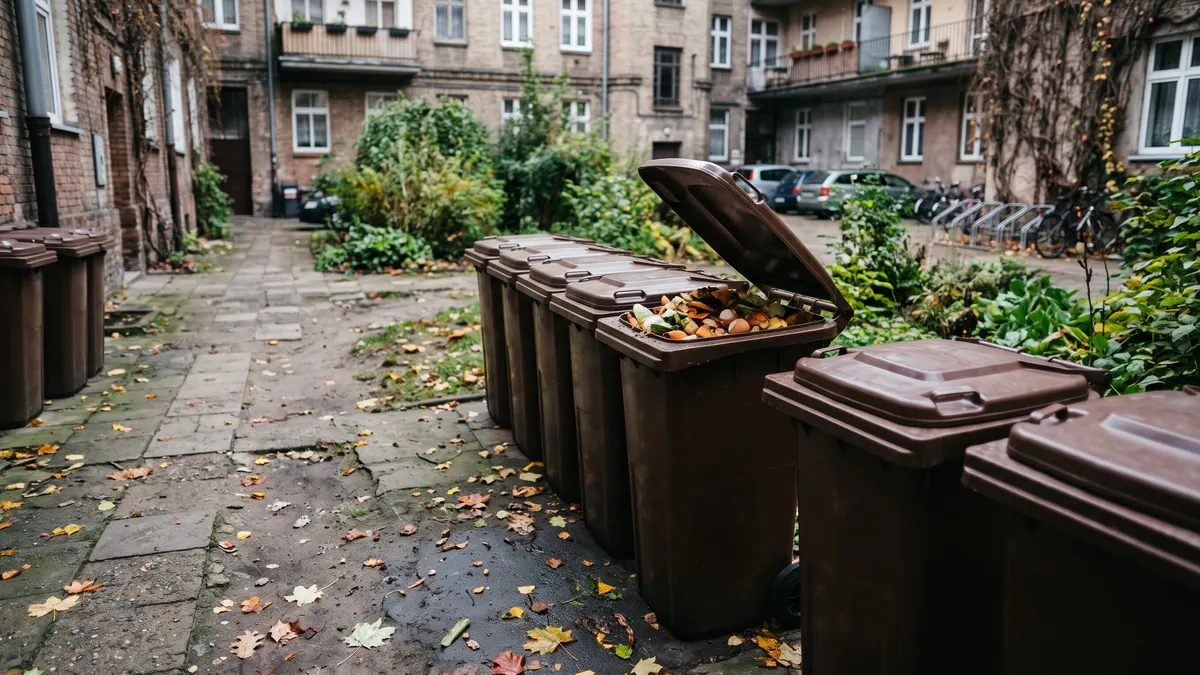
According to the 2020 assessment by the Secretaría de Medio Ambiente y Recursos Naturales (SEMARNAT), cited in a study by the University of Guanajuato, 46.42% of the waste generated in Mexico is organic waste. That is almost half of the municipal waste stream, and at the same time the fraction which, once landfilled, decomposes anaerobically and emits methane.
Why the organic fraction is key
Anaerobic digestion produces biogas and digestate, and composting produces an organic fertiliser. Both pathways reduce the amount of waste going to landfills, and emissions.
According to the cited study, organic waste going to landfills decomposes, increasing the level of methane in the atmosphere, and its management in biological reactors (biogas, biomethane) is one of the proposed methods of reducing the environmental impact. In countries with a high share of organic waste, separate collection and processing of biowaste are among the most effective ways of reducing methane emissions from landfills.
A practical example: Naucalpan
Garrigues describes the project "Manejo y aprovechamiento de residuos orgánicos de Naucalpan" in the State of Mexico: the scope covers the design, construction, operation and maintenance of a supplementary landfill to the existing one and a system for valorising the organic fraction of municipal solid waste (FORSU). The plant is to sort waste, direct biowaste to anaerobic biodigestion with methane capture for electricity generation, and in addition recover recyclable materials and refuse-derived fuel (CDR) to be sold as an industrial feedstock. The project takes the form of a 22-year federal public-private partnership, and its value is given as about USD 57 million; the contracting authority is the municipal government, and the status according to the law firm is "pre-investment". We have not established whether the project came to fruition.
Landfill gas: an example from Monterrey (2008)
Where biowaste still goes to landfills, capturing and using landfill gas for energy reduces methane emissions. The best-documented Mexican example is the power plant at the Simeprode landfill in Salinas Victoria near Monterrey. According to Renewable Energy World of 19 September 2008, it was expanded with five GE Jenbacher J320 GS engines (5 MW) alongside the first phase of 7 MW, giving a total of 12 MW. The electricity powers the landfill facilities, the Monterrey light rail during the day and street lighting at night, and is sold at a reduced price to seven municipalities of the conurbation; the operator is Bioelectrica de Monterrey, a subsidiary of SEISA and Gentor. We have not verified the current state of the installation.
Limitations
The development of biowaste processing requires separate collection at source, without which organic waste is contaminated with plastics and glass. The cited study also draws attention to the problem of illegal and poorly administered landfills, where fires and uncontrolled methane emissions occur.
What this means for Poland and Europe
Poland and the EU are obliged to collect biowaste separately, and its processing in biogas plants and composting plants is part of the circular economy. The Mexican data are a reminder that without a combination of collection, infrastructure and a market for the products (compost, biogas), the potential remains unused.
Sources
Related articles