Waste and circular economyEvent
New South Wales: mandatory FOGO collection for households by 2030
In February 2025 NSW passed a statutory FOGO collection obligation: councils must provide the service to all households with a red bin by 1 July 2030, and businesses in stages from July 2026.
Other language versions: polski.
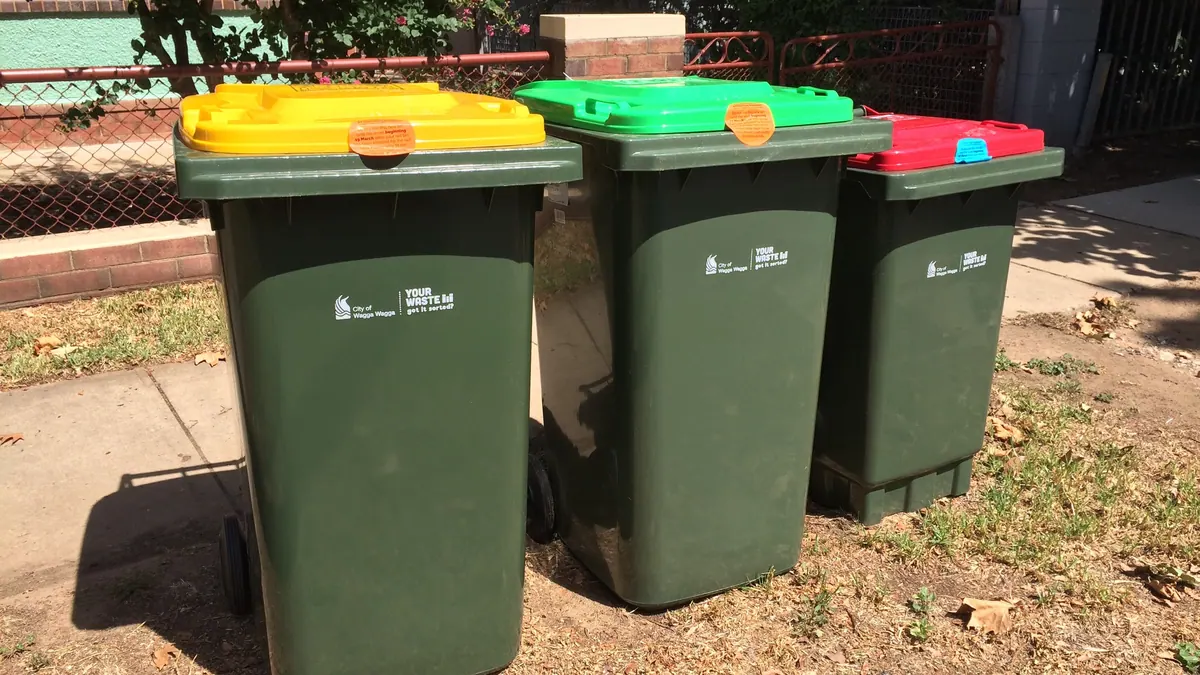

New South Wales, Australia's most populous state, has introduced a statutory obligation to collect FOGO (food organics and garden organics) waste. The bill was introduced to the Legislative Council on 21 November 2024, and parliament passed it on 20 February 2025 (the Governor's assent: see the update). According to the NSW Environment Protection Authority (EPA), councils must provide a FOGO service to every household that uses general waste collection (the red bin) by 1 July 2030. Businesses and institutions have obligations that are being implemented in stages from July 2026.
What the obligation covers
The mandate concerns two groups:
- households – deadline 1 July 2030; councils may decide whether food and garden waste are collected together or separately,
- business – the obligation is being introduced in stages, depending on the size and type of activity, from July 2026.
Why it matters
Food waste makes up a significant part of the general waste stream. Under the Waste and Sustainable Materials Strategy 2041 the state intends to halve the amount of organic waste (including food) sent to landfill. The state government also stresses methane emissions from the decomposition of organics in landfills; it announced AUD 81 million to support councils in moving to FOGO by 2030.
Processing: composting or digestion
The rules specify that waste must be collected separately but do not directly dictate the processing technology. Green fractions most often go to composting plants, while those collected together with food may be directed to composting or to anaerobic digestion facilities, if available. The development of processing capacity will be a key success factor: collection alone without facilities will mean the feedstock finds no market.
Implementation by business
Obligations for businesses and institutions are being introduced in stages by size, measured by the weekly capacity of the general waste bin: according to press reports, businesses with a capacity of at least 3,840 litres per week must comply from 1 July 2026. Enforcement is mainly by councils, and the EPA announced that initially the emphasis would be on education and support.
What this means for Poland
Poland has introduced an obligation of separate biowaste collection, but the quality of the kitchen fraction is sometimes low, and digestion facilities are few. The Australian example shows that a legal mandate at state level, with a deadline for municipalities and for business, can be an incentive to invest in processing infrastructure. At the same time it requires education campaigns and quality control, because contaminants (e.g. plastic in food waste) reduce the value of the digestate.
Stream quality and contamination
Experience from other Australian states shows that the quality of FOGO collection depends on education and inspection. Contaminants (plastic bags, packaging) hinder composting and anaerobic digestion, and some facilities may reject batches with too high a content of foreign materials. Councils therefore use information campaigns, bin inspections and warnings to residents. In a state with a population as large as NSW, the scale of these activities will be a significant cost of the programme.
Sources
Related articles