Technology and operationExplainer
Thermal hydrolysis: how it works, for which substrates and what its energy balance is
Thermal hydrolysis breaks down cell structures at elevated temperature and pressure. We explain the principle, typical parameters, the benefits for sludges and the heat balance.
Other language versions: polski.
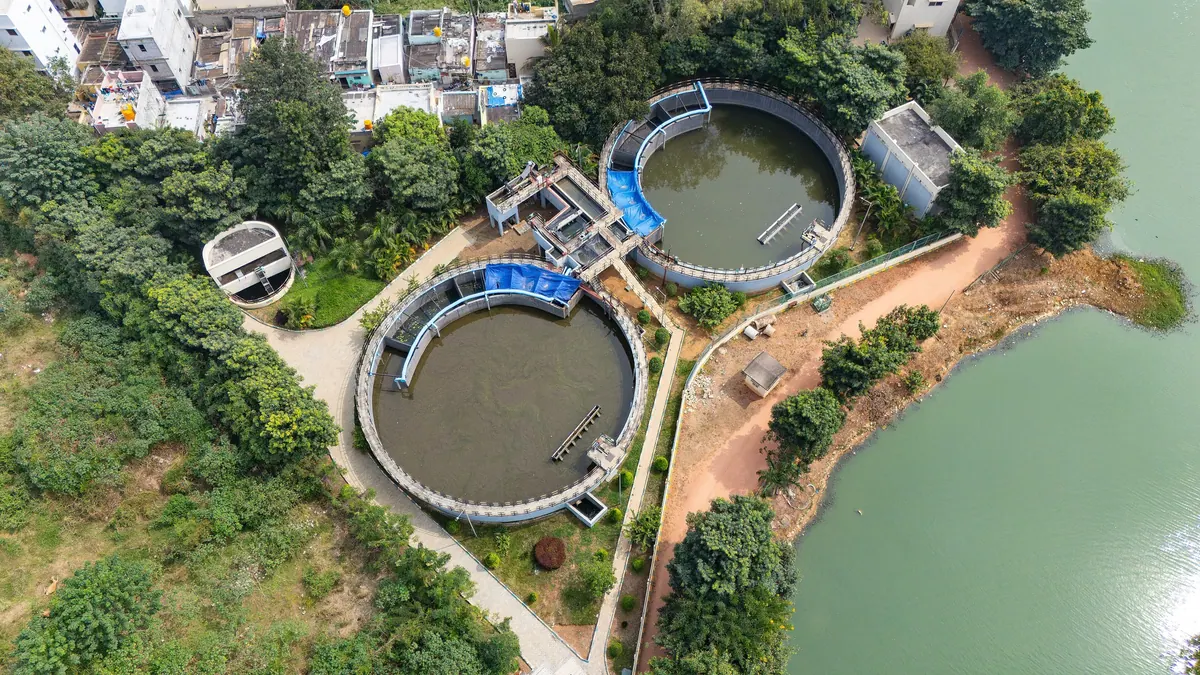

Thermal hydrolysis consists of heating the substrate at a temperature usually of approx. 130–180 °C under saturated steam pressure, for a dozen to several dozen minutes, followed by an abrupt pressure drop. It ruptures cell structures and dissolves part of the organic matter, which speeds up the subsequent digestion. It is most often used for sewage sludge and some biowaste, less often for agricultural substrates.
Principle of operation
The substrate is heated with steam in a pressure reactor. The high temperature destroys the cell walls of microorganisms, dissolves proteins and part of the polysaccharides and reduces the viscosity of the slurry. After the cycle is complete the mixture is cooled (with steam recovery) and directed to the digester. In batch arrangements several reactors work alternately; in continuous arrangements flow reactors are used.
Parameters and effects
| Parameter | Typical range (literature) | Notes |
|---|---|---|
| Temperature | approx. 130–180 °C | higher values increase the risk of forming hard-to-degrade compounds |
| Time | approx. 15–60 min | depends on the substrate |
| Pressure | saturated steam pressure (approx. 2.7 bar(a) at 130 °C to approx. 10 bar(a) at 180 °C) | pressure equipment — technical inspection requirements |
| Dry matter at inlet | usually a dozen or so % | too low increases steam use |
Effects: greater dissolution of organic matter, lower viscosity (a higher dry matter in the digester is possible), improved dewatering of the digestate, hygienisation, and sometimes a higher methane yield. In the case of waste activated sludge the increase in yield is reported in the range of a dozen to several dozen per cent, but the result depends on the sludge and the parameters.
Substrates
- Waste activated and mixed sludges — the most common application, because the cell walls are a barrier.
- Biowaste — improved homogeneity and hygienisation.
- Straw and grasses — the effect is limited by lignin, sometimes a steam explosion variant is used.
- Maize silage — usually not profitable.
Heat balance example
Assumptions: 100 m³/d of sludge with a dry matter of 12%, heating from 15 °C to 160 °C, specific heat as for water (4.18 kJ/(kg·K)), density 1000 kg/m³, heat recovery 60%. Gross energy: 100,000 kg × 4.18 × 145 K ≈ 60.6 GJ/d, that is approx. 16,800 kWh/d. After 60% recovery the net is approx. 6,700 kWh/d (approx. 280 kW). The additional methane must cover this: at a calorific value of approx. 9.97 kWh/m³ CH₄ and a boiler thermal efficiency of 90%, approx. 750 m³ CH₄/d is needed to cover the heat from gas. The technology therefore makes sense when the heat is waste heat or when the benefits (dewatering, higher feed rate) outweigh. The balance should always be verified for a specific project.
Advantages and disadvantages
| Advantages | Disadvantages |
|---|---|
| better hygienisation | high heat use |
| lower viscosity, higher possible dry matter | pressure equipment, inspection requirements |
| better dewatering of the digestate | possible formation of inhibitors (Maillard compounds, phenols) |
| possibility of increasing the digester load | investment and servicing costs, corrosion, deposits |
| foam reduction in some cases | increased ammonia concentration (breakdown of proteins) |
A note on ammonia
The breakdown of proteins releases ammonium nitrogen; in arrangements with a high share of proteins an elevated TAN can inhibit digestion. This must be taken into account in the design (dilution, a cascade of digesters, stripping).
Risks and safety
A pressure reactor is equipment subject to technical inspection regulations and safety requirements (safety valves, inspections). Steam and hot media create a risk of scalding. In zones with gas, the explosion hazard must be assessed. Operating instructions, training and periodic inspections are required.
When to consider
- The sludge or biowaste has a low potential because of a difficult structure.
- Dewatering of the digestate is costly.
- High-temperature waste heat is available.
- The digesters are limited in volume, and the load needs to be increased.
It does not pay to install hydrolysis "just in case": before deciding, carry out tests with your own substrate and verification of the heat balance on data from the whole year.
Comparison with other sludge treatment methods
In wastewater treatment plants thermal hydrolysis competes with ultrasonic, mechanical and enzymatic disintegration. Its strength is simultaneous hygienisation and viscosity reduction, and its weakness — the cost of heat and pressure equipment. In practice it is chosen where a product of high microbiological quality is required or where the digesters are heavily loaded. For small agricultural plants the investment usually does not pay back.
Data to collect before a decision
- composition and dry matter of the sludge or biowaste on an annual basis,
- BMP of the raw and treated material under conditions close to those planned,
- availability and cost of heat,
- the cost of dewatering and managing the digestate before and after,
- technical inspection requirements for pressure equipment.
Sources
Related articles