Technology and operationAnalysis
Disintegration and pretreatment of substrates: an overview of methods and when it pays off
Mechanical, thermal, chemical, enzymatic, ultrasonic. We compare pretreatment methods in terms of effect, energy cost and application in agricultural biogas plants.
Other language versions: polski.
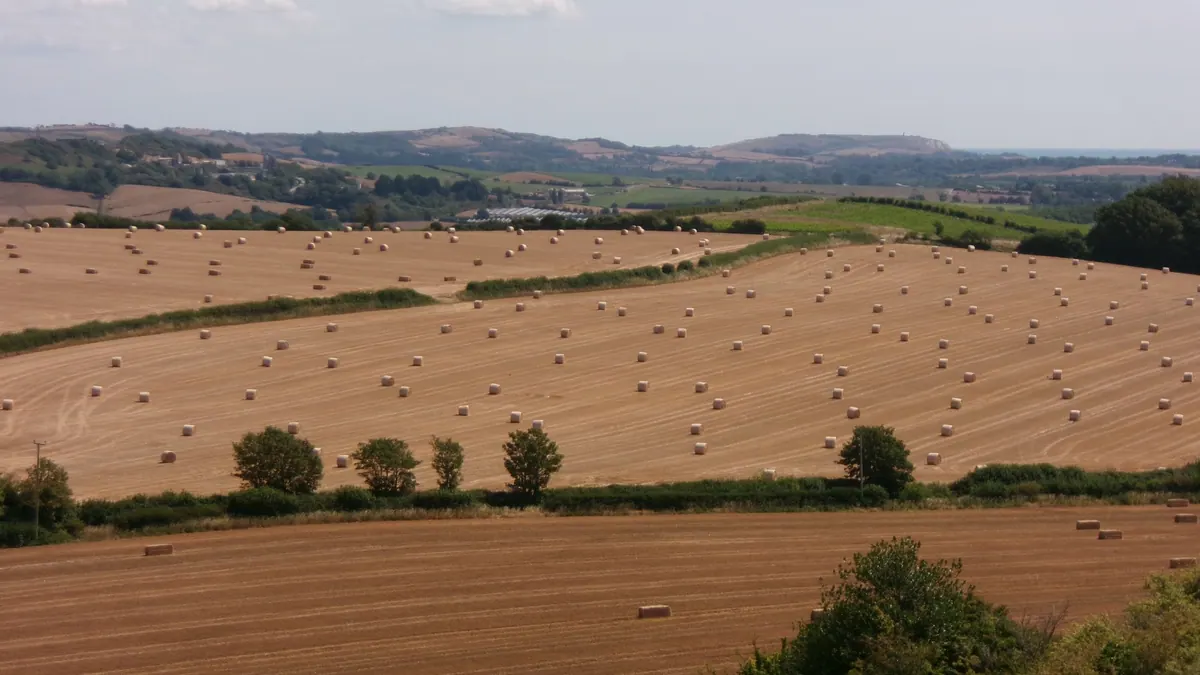

Substrate pretreatment (disintegration) is meant to speed up or increase the degradation of material that is hard for microorganisms to access, that is, to reduce the hydrolysis barrier. It gives the best results for lignocellulosic biomass (straw, grasses, haulm) and waste activated sludge from treatment plants; for maize silage the gain in methane is usually small, so it rarely pays off. The decision is worth basing on a BMP test before and after treatment and on a balance of energy and costs.
Why hydrolysis is a barrier
In plant cell walls, cellulose and hemicelluloses are shielded by lignin and organised into crystalline structures. Bacterial enzymes have difficult access. In sewage sludge the barrier is the walls of bacterial cells. Pretreatment breaks up these structures, increases the surface area and releases the cell contents.
Groups of methods
| Group | Examples | Mechanism | Typical application |
|---|---|---|---|
| Mechanical | size reduction, milling, homogenisation, extrusion | reduction of particle size, destruction of structure | straw, grasses, organic waste |
| Thermal | boiling, thermal hydrolysis (140–180 °C), steaming | rupture of structures, dissolution | sludges, organic waste, straw |
| Chemical | alkalis (NaOH, lime), acids, oxidation | dissolution of hemicelluloses and lignin | straw, grasses |
| Biological | enzymes, fungi, pre-incubation | breakdown of polymers | fibrous substrates, waste |
| Physical | ultrasound, electric pulses, cavitation | rupture of cells | sludges, microalgae |
The temperatures of thermal hydrolysis are discussed in a separate article.
What experience says
Effects depend on the substrate and the parameters. The literature reports an increase in methane yield from lignocellulosic materials after treatment on the order of a dozen to several dozen per cent, but the scale of the effect varies, and some studies concern laboratory conditions. Conclusions from laboratory-scale studies do not translate directly to the technical scale, where energy costs and capital outlay come in. It is therefore important to use data that correspond to real substrates.
Energy balance — an example
Assumptions: straw 5 t/d (TS 90%, VS 90% of TS), BMP without treatment 200 NmL CH₄/g VS, after treatment 250 NmL CH₄/g VS (a hypothetical increase of 25%, for illustration). VS per day: 5,000 × 0.9 × 0.9 ≈ 4,050 kg. Additional methane: (250 − 200) × 4,050 ≈ 202,500 NL ≈ 203 m³ CH₄/d, which at a calorific value of approx. 9.97 kWh/m³ gives approx. 2,020 kWh/d of chemical energy. With a CHP electrical efficiency of 40% this is approx. 810 kWh/d of electricity. If the treatment uses 500 kWh/d of electricity and heat worth approx. 300 kWh/d, the net balance is small; profitability depends on prices and on whether the heat is waste heat. The calculation should be repeated for your own data.
Criteria for choosing a method
- Type of substrate — first check whether it is lignocellulosic and has limited degradability.
- Lignin content — high lignin limits the effect, and some methods (alkalis) can create inhibitors.
- Availability of cheap heat — thermal methods make sense with waste heat.
- Scalability and reliability — whether the equipment works stably with fibres and foreign bodies.
- Effect on later stages — e.g. salt after chemical treatment, formation of phenolic compounds, viscosity.
- Legal requirements — some chemical agents affect the status of the digestate.
Common errors in assessment
- comparing results after treatment with a literature value instead of with a control of the same material,
- omitting energy and servicing costs,
- transferring the result from one batch to the whole campaign,
- underestimating the effect of moisture and size reduction on the same test,
- no analysis of the effect on foaming, viscosity and gas composition.
Implementation plan
- Collect samples representative of the season.
- Carry out BMP for the raw material and after several variants of treatment.
- Calculate the energy and cost balance for the scale of the plant.
- Carry out a trial at pilot scale, recording energy use and yield.
- Decide on the scale only after several months of data.
Pretreatment is a tool for exceptional substrates, not a universal improvement; it brings the greatest gain where the material is cheap, hard to degrade and available in large quantities.
Profitability ranking — tips
In simple terms: the more difficult and cheap the substrate, the greater the sense of treatment. For waste from wastewater treatment and straw, thermal or mechanical methods are sometimes justified; for maize silage, which degrades almost fully in a typical HRT, the gain is minimal; for food waste the main aim is homogeneity and hygienisation, not an increase in yield. A good habit is to compare the cost of treating 1 tonne with the value of the additional methane obtained from that tonne.
Effect on emissions
A higher degree of degradation in the digester means a smaller residual potential of the digestate, and therefore lower methane emissions from storage. This is an additional benefit, harder to put a price on, which is worth taking into account in the analysis, especially in plants with open digestate tanks.
Sources
Related articles