NCBR to support biomethane production from waste: the "Innovative Biogas Plant" competition
The National Centre for Research and Development has launched, as pre-commercial procurement, the "Innovative Biogas Plant" and "Wastewater Treatment Plant of the Future" initiatives. Aim: automated biomethane technology from waste and new solutions for sludge management.
Other language versions: polski.
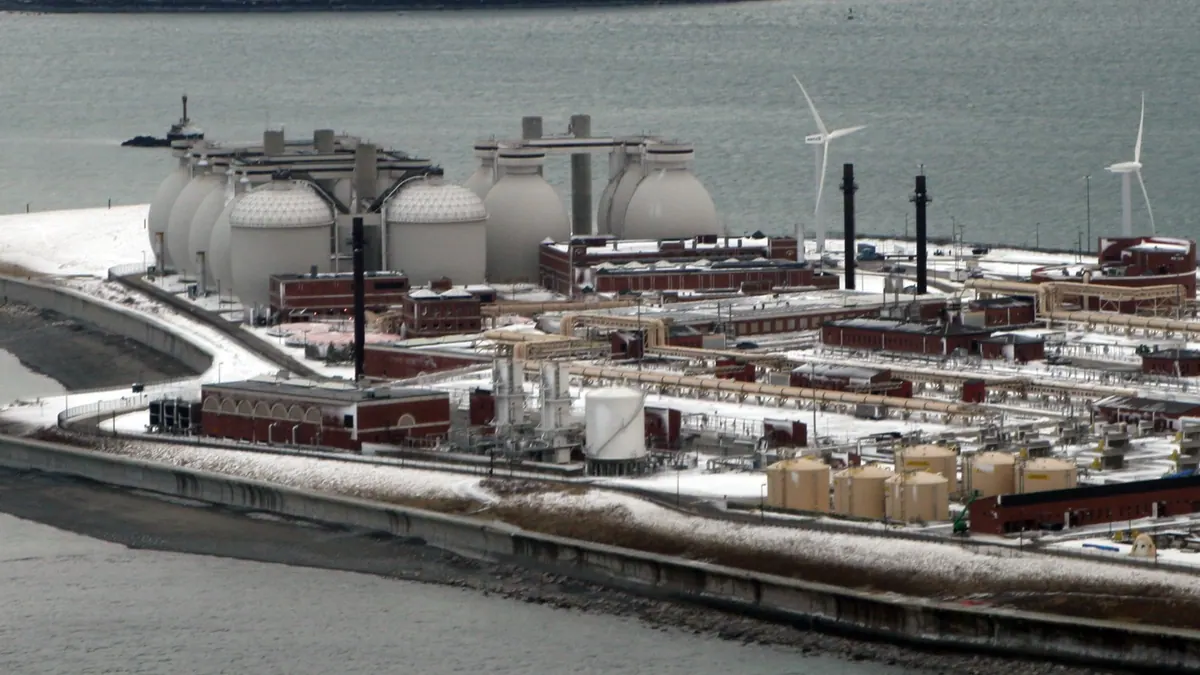

The National Centre for Research and Development (NCBR) is running, under the Smart Growth programme, two initiatives in the form of pre-commercial procurement (PCP): "Innovative Biogas Plant" and "Wastewater Treatment Plant of the Future". As announced on 31 December 2021, the first of them is to lead to an automated technology for producing biomethane from waste, which can be injected into the gas grid or compressed for transport.
What pre-commercial procurement involves
In the PCP model NCBR acts as the contracting authority: it defines the problem to be solved, announces a competition and finances the stages of research and development work, and then assesses the resulting prototypes. In this way a market is created for new products before they are commercially available. The competitions also cover other areas, such as energy storage, heating and energy-efficient construction.
Two initiatives
- Innovative Biogas Plant – an automatic installation producing biomethane, whose recipients may be the gas grid or refuelling stations;
- Wastewater Treatment Plant of the Future – solutions for water reuse, nutrient recovery, removal of micropollutants, energy recovery and sewage sludge management.
No budget amounts were given in the announcement.
Numerical context
The justification of the programmes rests on several data points. Poland consumes more than 21 billion m³ of natural gas a year, of which about 18 billion m³ is imported. Scientists from the Poznań University of Life Sciences estimated that methane with an equivalent of almost 8 billion m³ a year can be obtained from agri-food industry waste. As regards sewage sludge, Statistics Poland (GUS) data show a rise from 447 thousand tonnes of dry matter fifteen years earlier to 583.1 thousand tonnes in 2018.
Significance for biogas technology
For the industry it is important that work on the automation and scalability of biomethane installations is being financed. In Polish conditions, where small agricultural installations dominate, a simplified, repeatable technology could reduce costs. "Wastewater Treatment Plant of the Future", in turn, concerns sludge, which is an important and often underestimated source of biogas in cities.
What next
The results of the programmes will be known after subsequent prototyping stages are completed. For contractors – technology companies and institutes – this is a chance to develop products, and for municipalities and water utilities – to gain access to solutions proven in pilot conditions.
Significance for wastewater treatment plants
Wastewater treatment plants produce biogas from sludge digestion, which is often used in cogeneration for their own needs. Growing quantities of sludge and tightening rules on its management increase interest in recovering energy and nutrients such as phosphorus. The "Wastewater Treatment Plant of the Future" programme is meant to support solutions combining these goals with savings of water and energy.
Why pre-commercial procurement
The PCP formula allows the risk to be reduced for the contracting authority and for contractors: funding covers successive development stages, and only the best solutions move on to later stages. As a result, new technologies can appear on the market faster than with traditional research competitions.
Sources
Related articles