BMP testingAnalysis
BMP of sugarcane vinasse: the F/M ratio, scatter of results and conclusions from the 2023 review
We analyse Brazilian BMP studies of vinasse: optimisation of the F/M ratio (95% of theoretical BMP), a review range of 215–324 L CH₄/kg organic matter, and warnings about comparing units.
Other language versions: polski.
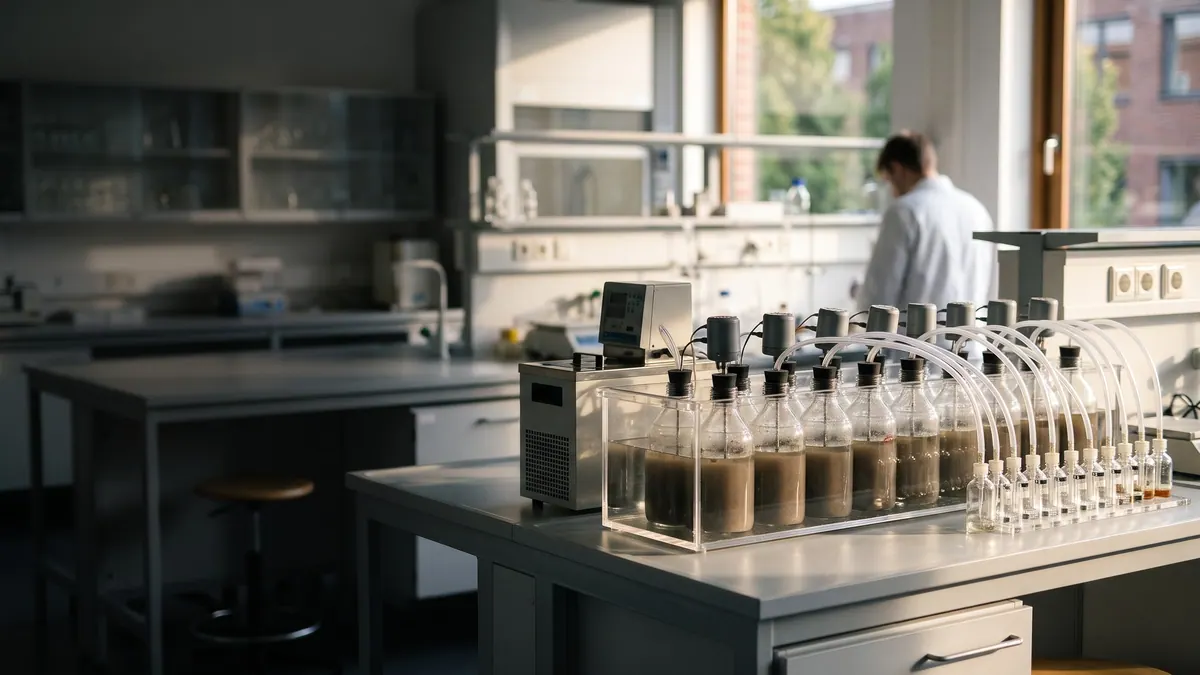
Sugarcane vinasse – the liquid residue from ethanol distillation – is among the most abundant biogas substrates in Brazil, and its BMP (biochemical methane potential) test results depend strongly on measurement conditions, especially on the substrate-to-inoculum ratio (F/M). A study published in the Brazilian Journal of Chemical Engineering in 2022 achieved, after optimising F/M, a methane conversion efficiency of 95 ± 2.55% of theoretical BMP (at an F/M of 1.34–1.42 g SCOD per g VSS), but the authors advise against setting a single standard F/M for vinasse.
What was done in the study
The work concerns vinasse of mixed origin. The authors optimised the F/M ratio, that is, the relationship between the amount of substrate (expressed as organic matter) and the amount of microbial biomass in the inoculum. An F/M that is too high risks overloading and inhibiting the process (acidification, accumulation of volatile fatty acids), and one that is too low understates the result because of an excess of inoculum and measurement difficulties.
Why not standardise F/M
The authors' conclusion is important: the composition of vinasse changes depending on the feedstock, the distillation process and the season, so a single F/M will not work for all samples. In laboratory practice this means the need for preliminary tests to match F/M to the specific sample, and for describing it in the report, so that results from different laboratories can be compared.
The range of values from the review
A review published in Fermentation in April 2023 states that the methane potential of vinasse lies in the range of 215–324 L CH₄ per kilogram of organic matter and notes that implementation of the technology in Brazil is limited. The range of 215–324 shows how great the importance of experimental conditions and sample composition is.
The units trap
BMP results for vinasse are reported in the literature in different ways: in litres of CH₄ per gram of VS, per gram of COD removed, per tonne of fresh mass. For example, a kinetic study of sugar cane wastes (vinasse, filter cake, bagasse, straw) published in Int. J. Mol. Sci. gives methane yields from 5 to 181 Nm³ per tonne of fresh mass, with very different properties of the materials. Comparing numbers without reducing them to a common unit leads to wrong conclusions.
How to interpret the scatter
The scatter is affected by: the composition of the vinasse (organic matter and COD content), pH, the presence of sulphates and potassium, the test temperature, the activity and adaptation of the inoculum, the duration of the test and the gas measurement method. For new projects one should therefore rely on measurements of one's own samples and treat literature values as an indicative range.
Vinasse as a substrate
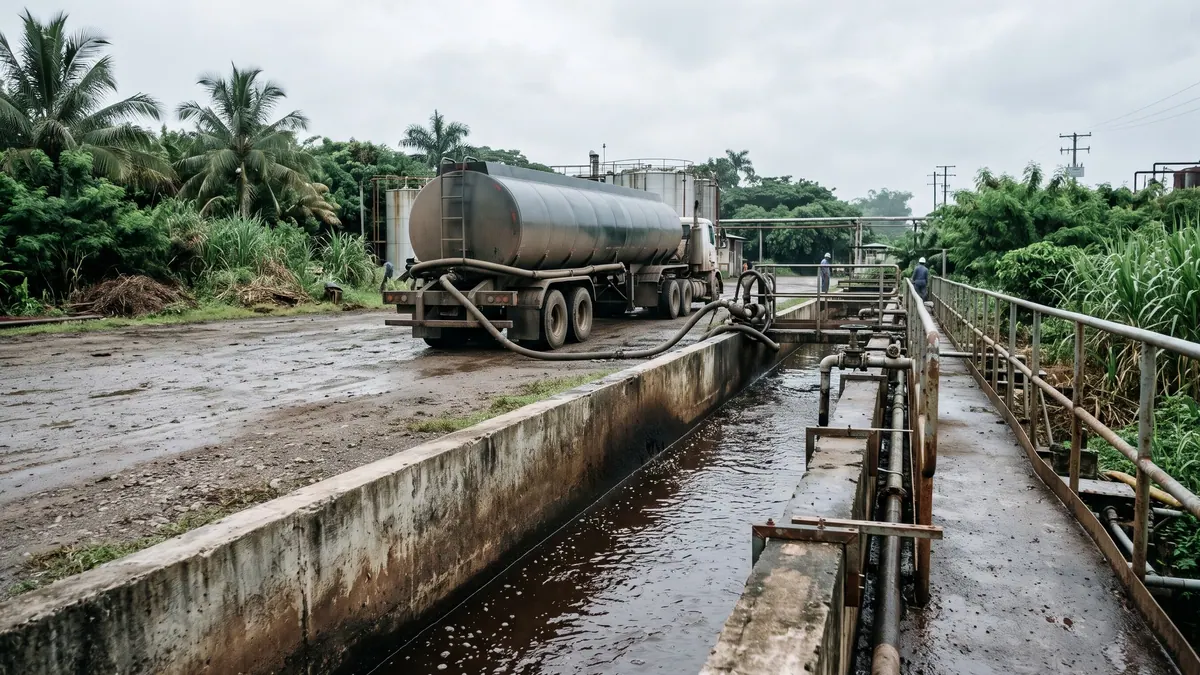
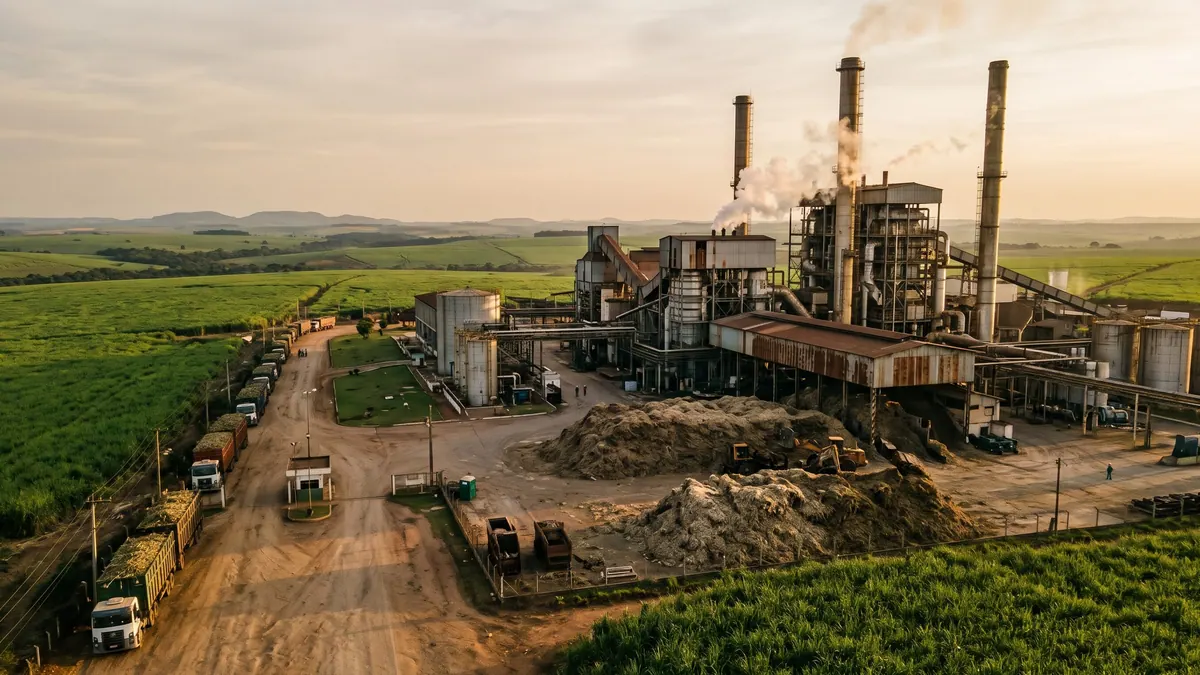
According to the review in Fermentation, vinasse arises in ethanol production in quantities of the order of 360 billion litres, has an average COD of about 46,000 mg/L and still contains about 11% of the original energy of the cane juice, but in diluted form. It is usually managed as a fertiliser (fertigation) or discarded, and anaerobic digestion is a technology which, according to the authors, only about 3% of Brazilian bioethanol plants have used in the past, most of which have stopped using it. The results in Int. J. Mol. Sci. indicate that, owing to its low dry matter content, systems with biomass immobilisation are recommended for vinasse, and filter cake can supplement biogas production from vinasse outside the sugar mill season.
Good reporting practice
- state the F/M ratio (expressed as VS) and the way it was determined,
- describe the origin and adaptation of the inoculum and its activity (a control run with cellulose or another reference substrate),
- state the temperature, the duration of the test and the number of replicates, and the blanks,
- specify how the gas volume was normalised (Nm³ or NmL at standard conditions),
- state clearly the unit of the result (per g VS, per g COD, per tonne of fresh mass).
From BMP to project
BMP is the maximum potential under laboratory conditions, and actual production in a reactor depends on retention time, loading, temperature and inhibition. The BMP value therefore serves for comparisons and preliminary balances, and designing an installation requires additional continuous or pilot tests. For vinasse, whose composition changes over the season, it is worth planning measurements at different times of the campaign.
What this means for Poland and Europe
The methodological lesson is universal: even for a single substrate such as vinasse, BMP results depend on F/M, the inoculum and units. For Polish laboratories it is an argument for using recommended protocols (e.g. VDI 4630) and reporting the full test conditions, to make it easier to compare data from different countries.
Sources
- Food-to-microorganism ratio as a crucial parameter to maximize biochemical methane potential from sugarcane vinasse (Braz. J. Chem. Eng., 2022)
- Fermentation 9(4):349 (kwiecień 2023) — Biomethane Production from Sugarcane Vinasse in a Circular Economy: Developments and Innovations
- Biogas Production from Sugarcane Waste: Assessment on Kinetic Challenges for Process Designing — Int. J. Mol. Sci. 16(9), 20685 (2015)
Related articles