Maize silage for biogas: harvest date, ensiling quality and losses
How harvest date, dry matter, chop length and compaction affect silage quality and biogas yield. Quality indicators, typical mistakes and ways of reducing losses.
Other language versions: polski.
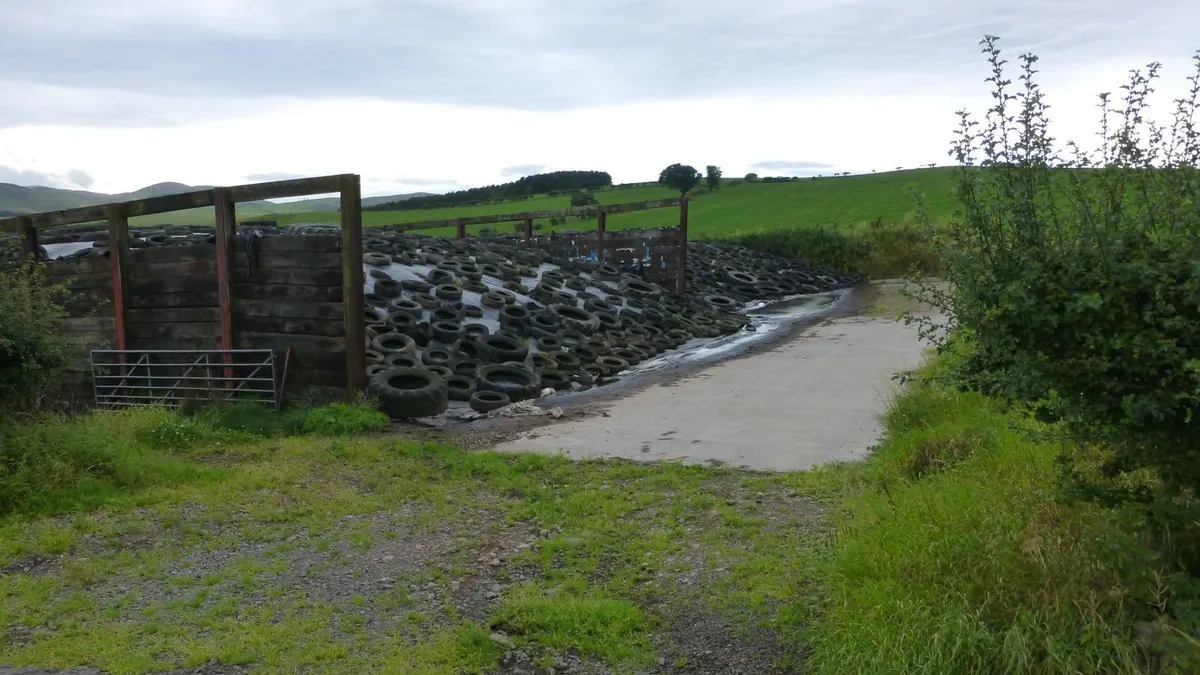
Maize silage is the most popular energy substrate in Central Europe, and its quality depends on harvest date, chop length, compaction and the tightness of the cover. The optimum whole-plant dry matter at harvest is usually about 30–35%; good-quality silage has a pH of about 3.8–4.2, a predominance of lactic acid and small amounts of butyric acid and ammonia. Badly managed ensiling destroys part of the energy potential and lowers the stability of the fermentation process.
Harvest date
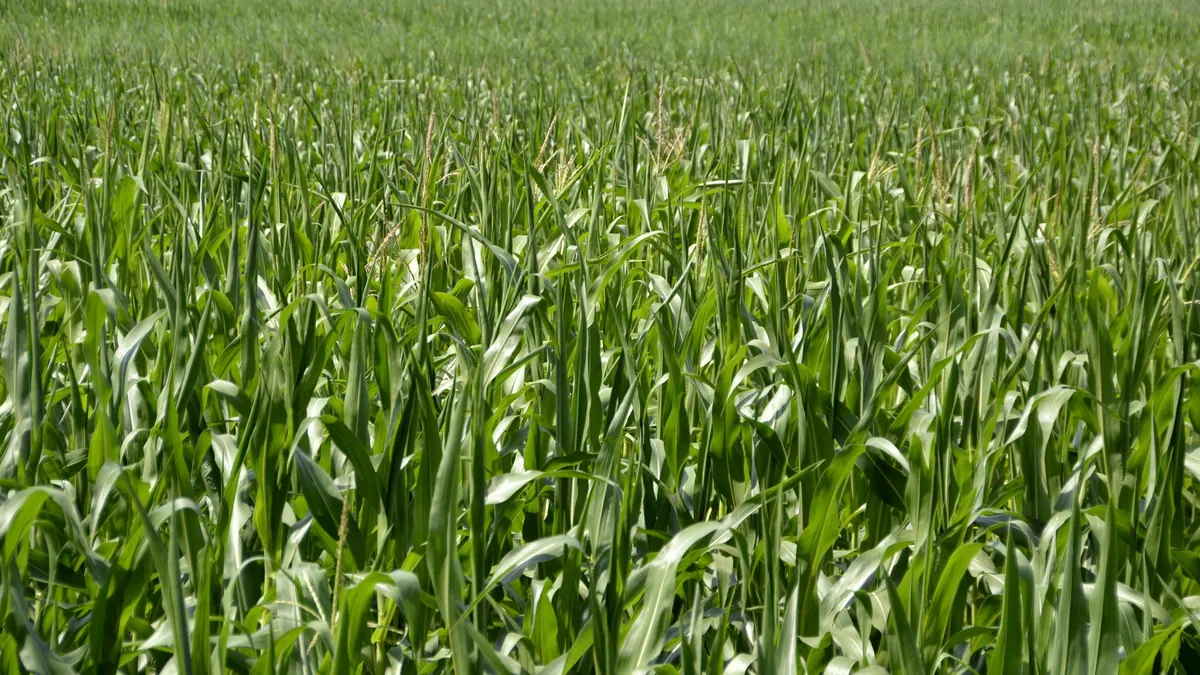
The moment of harvest is determined by the dry matter content and the stage of grain maturity (usually from milk to wax ripeness). Harvesting too early (TS below about 28–30%) gives juice effluent, loss of nutrients and a risk of acidification. Harvesting too late (TS above about 36–38%) makes compaction harder, increases the amount of oxygen in the mass, causes fermentation losses and poorer fibre digestion. It is advisable to assess maturity in the field, e.g. with the indicative squeeze method, and to determine dry matter in the laboratory.
| Parameter | Indicative value |
|---|---|
| TS at harvest | approx. 30–35% |
| Chop length | approx. 4–8 mm (with crushed grain) |
| Density after compaction | depends on TS; the higher, the less oxygen |
| pH after fermentation has finished | approx. 3.8–4.2 |
Chop length
A shorter chop improves compaction, increases the surface area for lactic acid bacteria and makes pumping or feeding into the digester easier. Too fine a chop, however, can reduce structure and increase the harvester's energy consumption. The grain should be crushed (cracker), which improves the availability of starch to microorganisms in the digester.
The ensiling process
- Harvest and fast transport to the silo.
- Spreading in thin layers and careful compaction with a heavy tractor; the higher the density, the less oxygen and fewer losses.
- Additives: lactic acid bacteria inoculants (homo- and heterofermentative), acids or salts if needed — they will not replace good compaction.
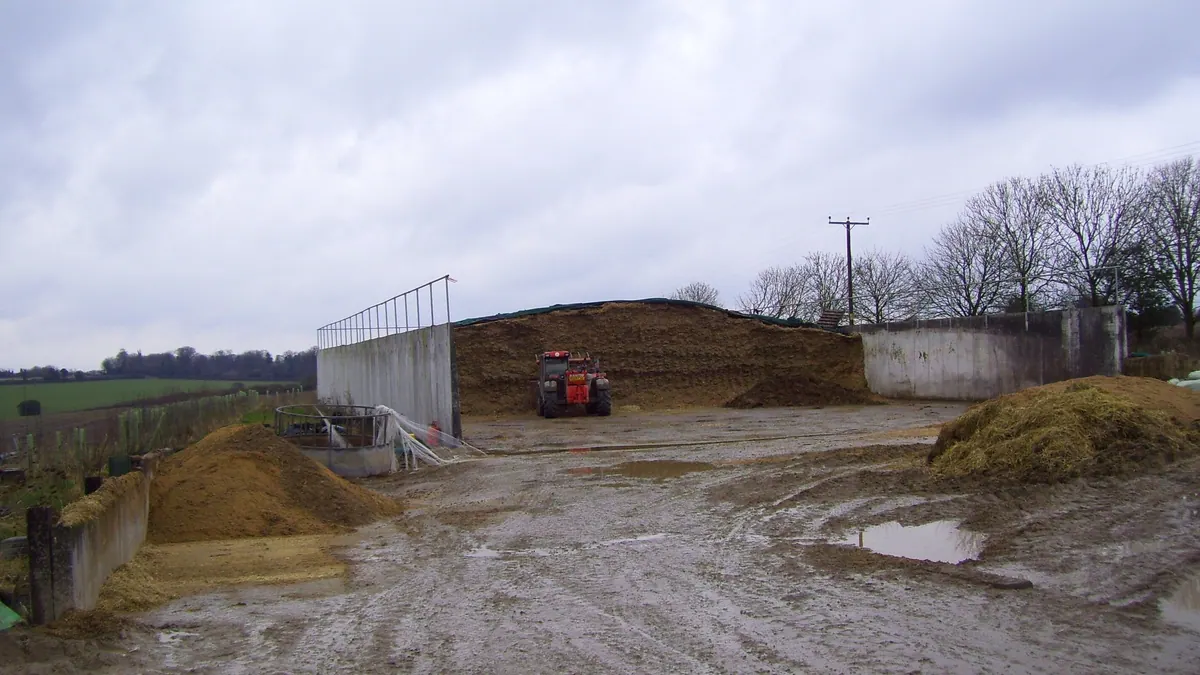
- A tight cover of film (best double, with an underlay film) and weighting with tyres or bags.
- Fermentation period: a few weeks; do not open the silo until it has finished.
Quality indicators
| Indicator | Good silage | Sign of a problem |
|---|---|---|
| pH | approx. 3.8–4.2 | above approx. 4.5 |
| Lactic acid | high share | low, acetic acid dominates |
| Butyric acid | low, a trace | clear, "rancid" smell |
| Ammonia (% of total N) | low | elevated — protein breakdown |
| Ethanol, yeasts | low | high — energy losses, aerobic instability |
| Smell | sour, fruity | butyric, mouldy, putrid |
Losses
Losses include: effluent (at low TS), fermentation losses (conversion of sugars into CO₂, ethanol and acids), surface losses and losses during removal (oxygen), and losses during heating after opening. Typically together they reach a few to a dozen or so per cent of dry matter with good practice, and with poor practice — several dozen. The energy losses in biogas are correspondingly higher, because the easily available sugars are lost.
Example: starting with 1,000 t of fresh silage, TS 33%, VS 95%. A loss of 10% of dry matter is 33 t TS, or about 31 t VS. At a yield of 0.34 m³ CH₄/kg VS this means about 10,600 m³ less CH₄, or about 105 thousand kWh of chemical energy. The value depends on the assumptions made, but it shows the scale.
Varieties and cultivation
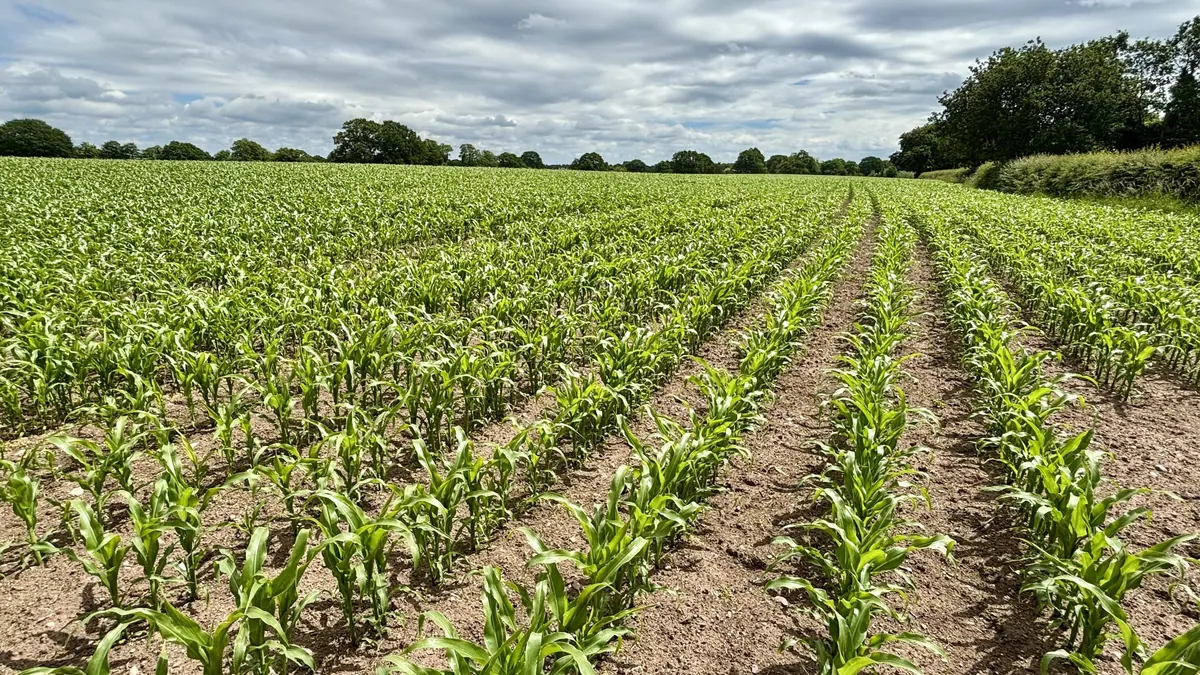
The choice of variety affects yield and composition. For biogas, what counts is the dry matter yield per hectare, not just the starch content. Late, high-yielding varieties may not ripen in cool regions, which increases the risk of harvesting at low TS. Plant health (fusarium, mycotoxins) must be taken into account, which also matters for the digestate.
Season checklist
- Harvest plan: successive fields according to maturity, not according to the calendar.
- Equipment: sharp knives, cracker set, a sufficient number of transport vehicles.
- Compaction: sufficient tractor weight, continuous compaction.
- Cover: immediately on completion, without gaps.
- Documentation: analysis of TS, pH and acids after 6–8 weeks.
- Removal: a smooth face, no less than a dozen or so to several dozen cm a day (more in summer than in winter).
The quality of silage is decided in spring and autumn, in the field and at the silo. Mistakes made at harvest cannot be put right in the digester.
Mycotoxins and plant health
Maize infected with fusarium can contain mycotoxins, which in the literature are linked mainly to animal health problems; the effect on methane fermentation is limited, but it is worth avoiding clearly mouldy material and not mixing it with high-quality silage. Moulds signal oxygen in the mass and losses, so in themselves they point to management that needs improving.
What to do with poor-quality silage
Silage that is too acidic or has a lot of butyric acid can be used, but in a limited share and with VFA monitoring. Silage that has heated or gone mouldy in the surface layers should be excluded from the feed or sent for separate disposal in line with risk assessments. Document batches and analysis results, because it makes it easier to look for the causes of process disturbances.