Silage storage at a biogas plant: silos, covering, losses and logistics
How to design and run a silage store: silo construction, covering, removal, effluent drainage, protection against heating and planning a year-round stock.
Other language versions: polski.

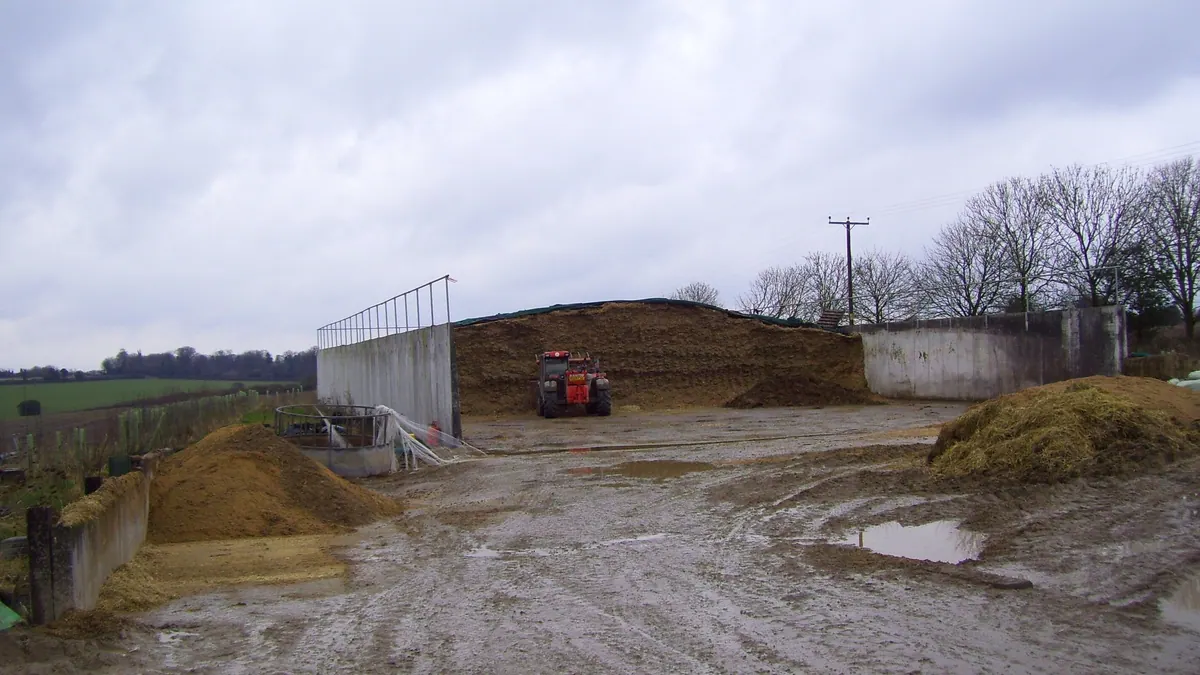
Silage storage at a biogas plant relies on drive-over silos with a hard-surfaced floor, effluent drainage, a tight film and regular removal of the face. The greatest losses arise from insufficient compaction, a leaky cover and too slow removal, and limiting them comes from discipline in execution, not from expensive additives. A well-run silo loses a few to a dozen or so per cent of dry matter, poor practice — much more.
Construction of the store
| Element | Requirement |
|---|---|
| Base | sealed, hard-surfaced (concrete), sloping towards the drain |
| Walls | strong, tight, height adapted to compaction |
| Effluent drainage | channels and a sealed tank; storage of effluent |
| Access | hard-surfaced, wide, safe for tractors and loaders |
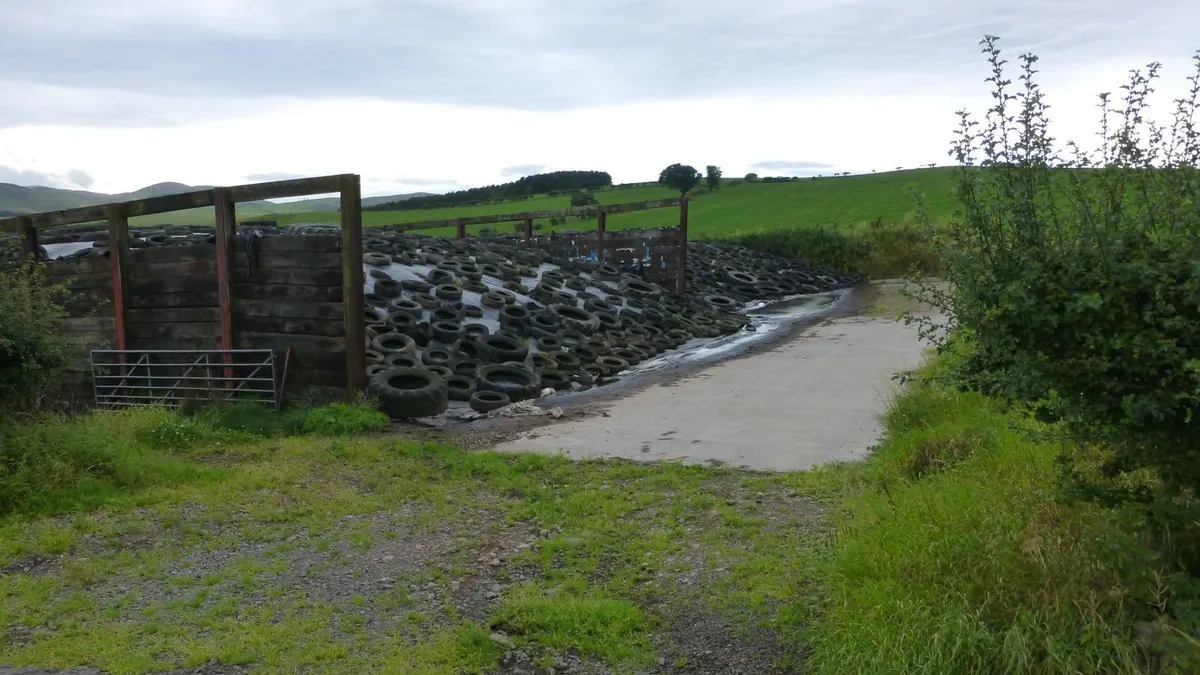
| Cover | film (often double), protective net, weighting |
| Rainfall drainage | rainwater carried away from the sides |
Location and tightness are subject to water protection and building regulations — before building, check the requirements and permits in force.
Covering and tightness
Oxygen is silage's main enemy: it gets in through a leaky film, gaps at the walls and after the face is opened. Recommendations:
- Double film (a thin one lying against the mass plus a thick, UV-resistant one).
- Side films folded under the top cover.
- Even weighting (tyres, sandbags), laid densely, without large gaps.
- A net protecting against birds and rodents.
- Inspections after storms and strong winds.
Removal of the face
A smooth, vertical face limits the ingress of air into the depth of the mass. The recommended rate of removal depends on the season, usually at least several dozen centimetres a week in the cool season and more in summer, when heating is faster. Use a loader with a grab or a cutter for removal, not a bucket, which loosens the mass. After removing material, cover the face with film quickly or use the material the same day.
Silage effluent
The effluent contains organic acids and sugars, has a very high COD and poses a threat to water and soil. It must be collected in a sealed tank and managed, e.g. as an additive to the digester or as a fertiliser after dilution (in line with the requirements). The quantity depends on TS: the lower it is, the more. The best way to limit effluent is to harvest at the right TS.
Losses and balance
Storage losses are calculated as the difference between the mass of dry matter put in and taken out. Example: 5,000 t of fresh mass, TS 33% → 1,650 t TS. With a loss of 8% you lose 132 t TS, and with 18% — 297 t TS. The difference of 165 t TS is about 157 t VS, which at a yield of about 0.34 m³ CH₄/kg VS gives about 53 thousand m³ of methane. It therefore pays to spend money on good-quality covering.
Stock planning
- Calculate the annual requirement: daily feed × 365 + reserve.
- Add storage losses (e.g. 8–12%).
- Add a reserve for a poorer yield: a few to a dozen or so per cent.
- Consider a second type of substrate (e.g. grasses, GPS) as a safeguard.
- Plan rotation: use the older silage first (FIFO), if the design of the silos allows it.
| Balance element | Example (t of fresh mass) |
|---|---|
| Annual requirement (25 t/d) | 9,125 |
| Storage losses (10%) | 913 |
| Yield reserve (8%) | 730 |
| Required stock | approx. 10,770 |
Safety
Work at a silo involves the risk of a tractor overturning, falls from a height, collapse of the mass and fermentation gases (CO₂, nitrogen oxides) in the first days after ensiling. Walls and edges should have safeguards, and removal should be carried out keeping a distance from a high face. The risk of fire in heated silage and protection against rodents should also be remembered.
Checklist
- a sealed slab and a working effluent drain,
- film without holes, weighted evenly,
- a smooth face, removed quickly,
- a register of deliveries and removal (mass),
- samples for analysis (TS, pH, acids) every few weeks,
- a procedure for responding to heating and mould.
Silage is the fuel of a biogas plant; its storage is an element of operation just as important as servicing the engine.
Internal logistics
The yard by the digester should allow efficient feeding: the feeder hopper, fixed loader routes, no conflict with delivery traffic. Weighing on a scale before feeding is important, because the accuracy of the feed affects all the indicators. Consider a second hopper or a reserve method of feeding in case of a feeder failure, and in winter take care of snow clearing and protecting the face from freezing.
Effect of weather and season
In summer heating happens faster and the face should be removed faster; in winter the risk is freezing of the edge layers. Intense rainfall requires efficient drainage. After storms and gales, check the films. It is worth having the operating plan for the store written down and assessing it after each season.