Solid substrate feeders in a biogas plant: types, selection and operation
Silage, manure and straw enter the digester through a feeder. We compare screw, piston, conveyor and feed-wagon feeders and show how to choose capacity and avoid failures.
Other language versions: polski.
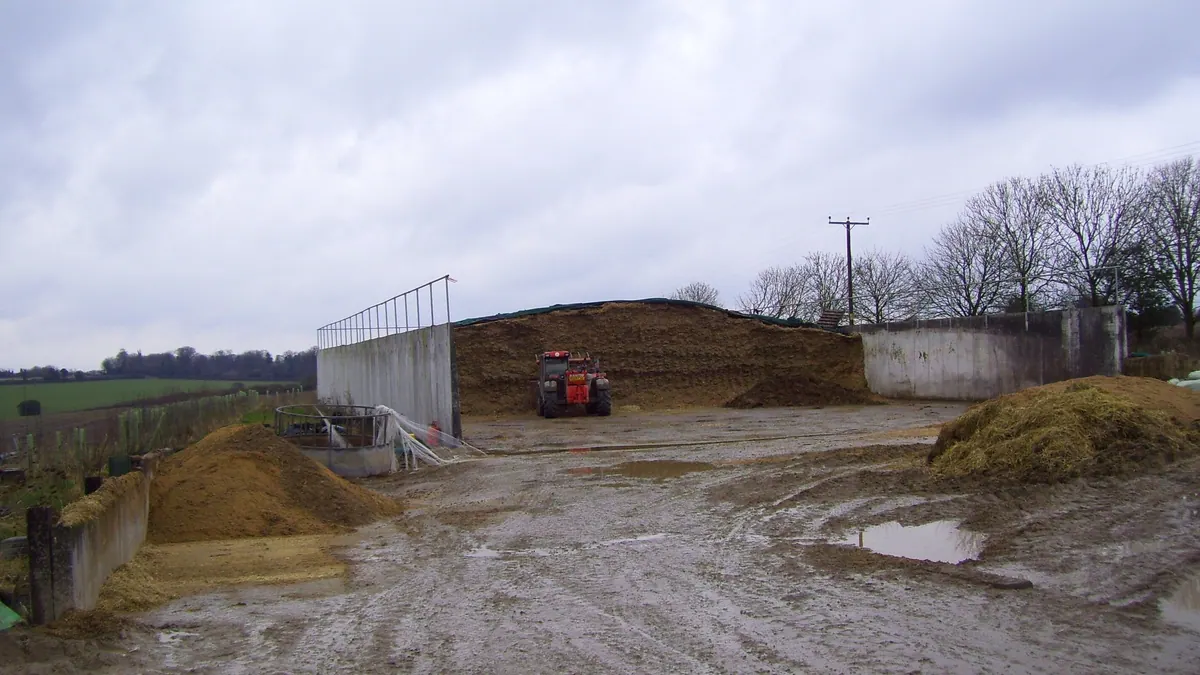

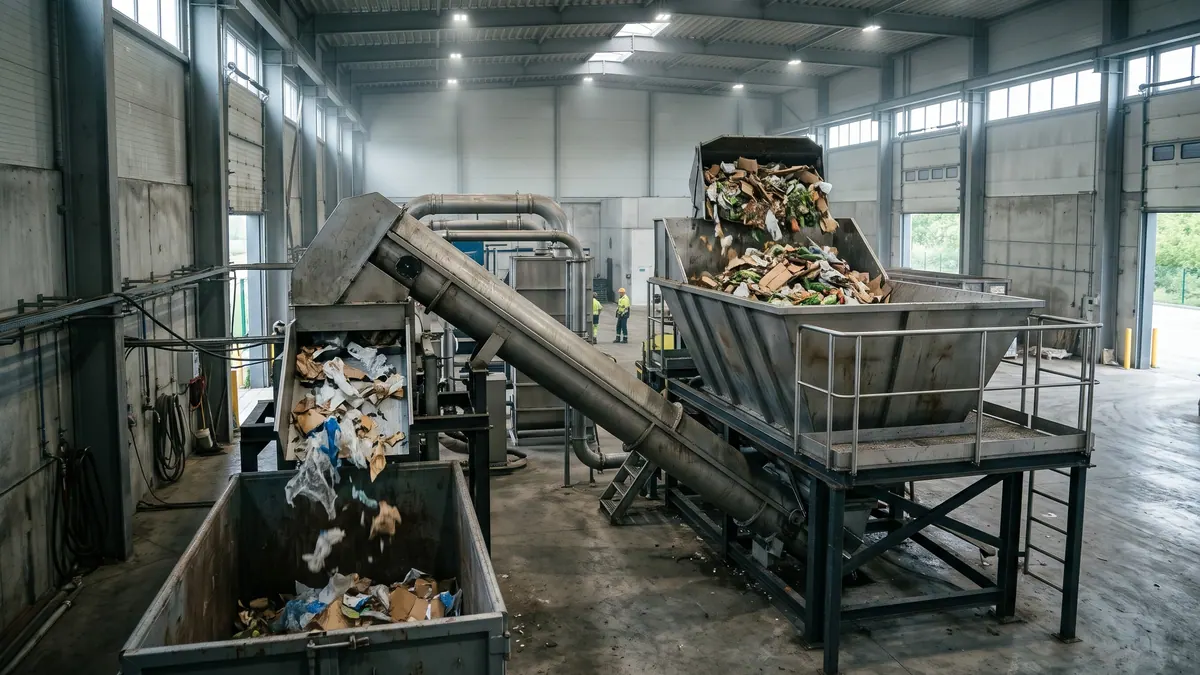
A solid substrate feeder is a device that takes material from the feed hopper (trough) and introduces it into the digester or a pre-mixer. In agricultural biogas plants screw feeders with a hopper dominate; where manure, straw or very dry material is dosed, piston feeders and conveyor arrangements are also used. Selection is based on the type of substrate, the daily feed, the method of loading and the requirements for tightness and safety.
Main types of feeders
| Type | Principle of operation | Application | Advantages | Disadvantages |
|---|---|---|---|---|
| Screw with hopper | screws in the hopper move material to the feed screw | maize silage, grasses, moist manure | simple construction, good capacity | wear of screws, wrapping of fibres |
| Piston (hydraulic) | a piston pushes material into the digester | manure, straw, materials of low flowability | effective with dry, compacted materials, closes the inlet | higher cost, the hydraulic system requires servicing |
| Belt or chain conveyor with doser | transport from store to mixer | large plants, automated dosing | high capacity, weighing dosing | requires space, sensitive to contamination |
| Feed wagon discharging into the digester | mixing and loading in one | small plants | low capital outlay | greater share of manual work |
Capacity selection — a calculation example
Assumptions: a daily feed of solid substrates of 30 t of silage and 6 t of manure, bulk density of silage approx. 0.6 t/m³, of manure approx. 0.7 t/m³ (indicative values, depending on size reduction and compaction). Daily volume: 30/0.6 + 6/0.7 ≈ 50 + 8.6 ≈ 58.6 m³. The feed hopper should hold at least half of this quantity for the comfort of the loader's work, and even better the whole daily feed if loading is to take place once or twice a day. With a 60 m³ hopper a single loading with a margin is enough; with 30 m³ two loadings are needed.
Dosing over time
Dosing in small portions throughout the day evens out the load and reduces the risk of acidification. Modern feeders have a control system with a schedule (e.g. a dose every 30–60 minutes), often with a scale that records the mass of each dosing. A record of quantities is also needed for reporting and for energy settlements.
Typical problems and their prevention
| Problem | Cause | Solution |
|---|---|---|
| Bridging in the hopper | compacted, long fibres, material that is too dry | agitators in the hopper, size reduction, loosening |
| Wrapping of the shaft | strings, film, long stalks, tapes | quality control of loading, knives, regular cleaning |
| Screw wear | sand, soil in the silage | cleaning the clamp, sand removal, hard-surfaced areas |
| Motor overload | stones, metal | magnet, visual inspection, torque protections |
| Gas leak through the feeder | no hydraulic seal | sealing by a layer of material, gate, piston |
Safety
The feeder is a device with rotating elements and a point close to an explosion hazard zone. Rules: guards compliant with regulations, power cut-off and lock-out before cleaning, no entry into the hopper while the screw is running, appropriate marking of ATEX zones where gas can accumulate. The feeder should have protection against gas flowing back into the hall or hopper — usually provided by a layer of material or a mechanical closure.
Operating checklist
- Daily: visual inspection, removal of wrapped fibres, checking the hydraulic oil level (if applicable).
- Weekly: lubrication in accordance with the manufacturer's documentation (DTR), checking bolt tightness, checking level sensors and the scale.
- Monthly: measurement of operating current, checking bearing clearances.
- Every half year: checking the degree of wear of screws and wear plates, calibration of the scale.
- Continuously: a register of failures and downtimes.
Wear costs
The elements of screws working with silage contaminated with soil can wear out within a season. A cheaper method than frequent replacement is therefore to improve the quality of loading: hard-surfaced areas, careful cutting of the clamp, removal of the top layer with mould and soil. Good practice is a supplier who ensures access to spare parts, and a stock of key working parts in the store.
Effect of the feeder on the process
The evenness of dosing translates directly into the stability of fermentation. A feeder that introduces material in a few large portions creates load peaks: within an hour after dosing acid concentrations rise, and in the period between doses the digester is underloaded. It is therefore worth checking in the operating log how many doses were actually made in a day and whether their mass was similar. Deviations indicate bridging, failures or improper settings of the operating time.
Questions for the supplier when buying
- what is the guaranteed capacity for material with the moisture and density of my plant, not for "reference" material,
- what is access to the screws and the motor during servicing like,
- what protections guard against gas flowing back into the hopper,
- does the arrangement have a scale and an interface to the control system,
- what are the costs of typical wearing parts and the delivery time.
The answers are worth comparing across several manufacturers, and information on actual wear after several seasons of operation should be obtained from reference users.
Sources
Questions and answers
How many times a day should the feeder run?
The more often and in the smaller portions, the better for the process. In practice, from a dozen or so to several dozen doses per day are used, controlled by time or by weight, to avoid load peaks.
Related articles