BioLNG and bioCNGEvent
Biokraft selects Wärtsilä to double bioLNG liquefaction capacity in Skogn to 50 tonnes per day
The Norwegian company Biokraft ordered a liquefaction installation from Wärtsilä that will double the capacity of the bioLNG plant in Skogn from 25 to 50 tonnes per day. Delivery is planned for May 2022.
Other language versions: polski.
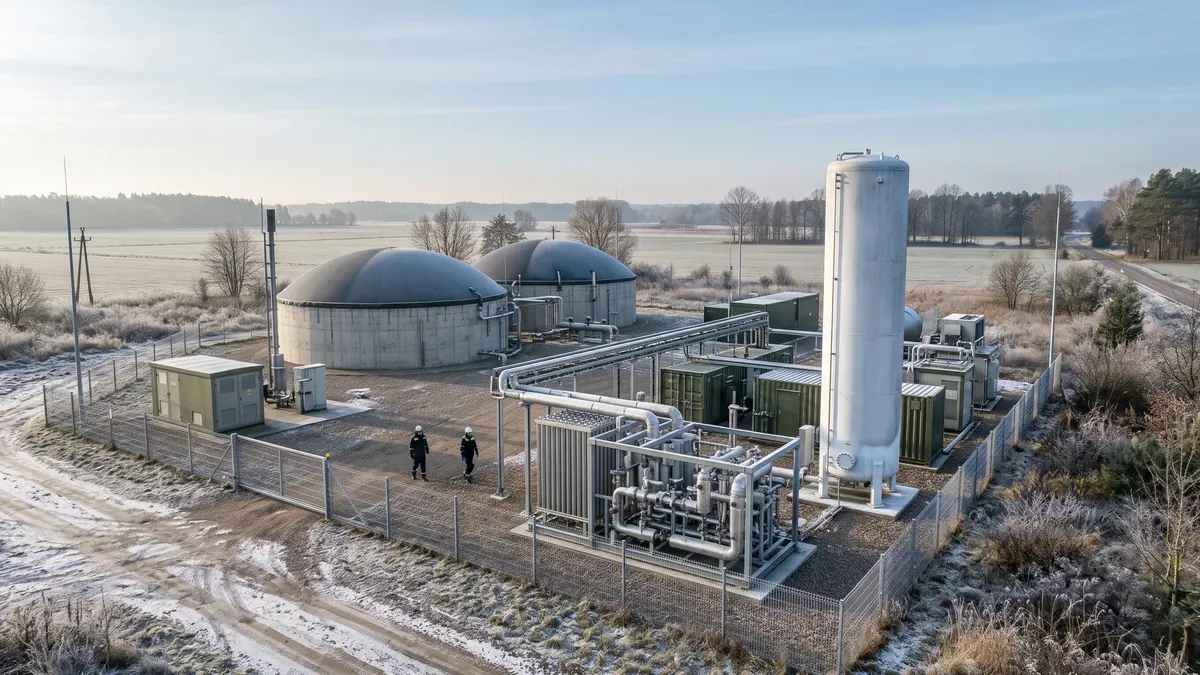
The Norwegian company Biokraft, part of the Scandinavian Biogas group, has selected Wärtsilä to deliver a biomethane liquefaction installation that will double the capacity of the bioLNG plant in Skogn from 25 to 50 tonnes per day. The information was announced in May 2021. Equipment delivery is planned for May 2022, and after the expansion the plant is to be the largest bioLNG production plant in the world.
What is changing
The plant in Skogn in central Norway was commissioned in June 2018 and officially opened on 2 September of that year. It was originally to produce about 12.5 million Nm³ of renewable methane per year, which corresponds to about 125 GWh of energy. The company announced a doubling of capacity to about 250 GWh per year. The installation was built on a turnkey basis by the Swedish company Purac, and the first liquefaction line with a capacity of 25 tonnes per day was also supplied by Wärtsilä.
In October 2020, Andion Global was selected as the key contractor for building the expansion (Skogn II). The contract with Wärtsilä now concerns the second liquefaction line.
What bioLNG is
BioLNG is biomethane liquefied at a low temperature (about −162°C), which reduces its volume about six hundred times and makes it possible to transport it by truck or ship without a gas grid. Applications are mainly heavy transport, shipping and industry. The liquefaction process requires biogas first to be upgraded to biomethane, with CO₂, water and other impurities removed, and then cooled in a cryogenic system.
Significance for the market
The expansion in Skogn shows that the bioLNG market in Northern Europe is developing thanks to demand from maritime and road transport and support for renewable fuels. For Polish investors it is an example of an alternative path: biomethane does not have to be injected into the grid if there is a market for it in the form of liquefied fuel. At the same time, this requires an advanced cryogenic installation and stable biomethane supplies.
What next
The next stages are installing the liquefaction line and commissioning it. The industry is watching whether large bioLNG installations will achieve the assumed reliability and costs. For projects in other countries, the experience from Skogn may show how to scale up production and how to combine it with the use of biogas from agriculture or industry.
Why liquefaction changes project economics
Liquefying biomethane makes it possible to sell it to customers located away from the gas grid: truck fuel stations, shipping and industry. This is usually associated, however, with higher capital expenditure and energy consumption. Profitability depends on scale, on biomethane prices in the transport fuel market, and on mechanisms that reward the renewable character of the fuel. Growing interest in lower-emission fuels in maritime shipping increases demand for liquefied biomethane in port regions.
Disclaimer
Data on capacity and deadlines come from company communications and industry reports. In practice, the commissioning of large cryogenic installations is often delayed, so schedules should be treated as a plan, not a guarantee.
Sources
Related articles