BioLNG and bioCNGEvent
HAM opens South America’s first bio-LNG plant in Chile
On 2 December 2025 it was announced that HAM Group had opened South America’s first bio-LNG plant in the Ñuble region of Chile. Biogas from meat industry waste is liquefied in a modular installation.
Other language versions: polski.
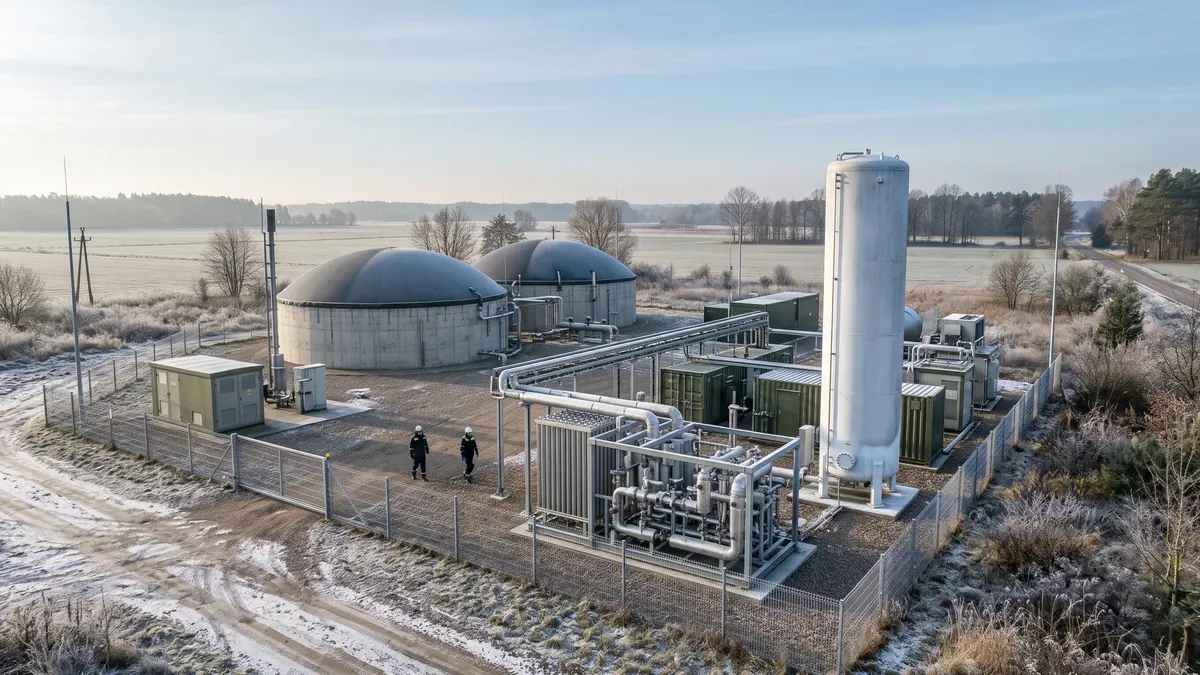
HAM Group announced on 2 December 2025 the opening of South America’s first plant producing bio-LNG, that is, liquefied biomethane. The installation operates in the Ñuble region of Chile and uses biogas from a co-digestion facility for meat industry waste, specifically pork processing. It is an example of how biomethane liquefaction is ceasing to be the preserve of large projects.
Parameters
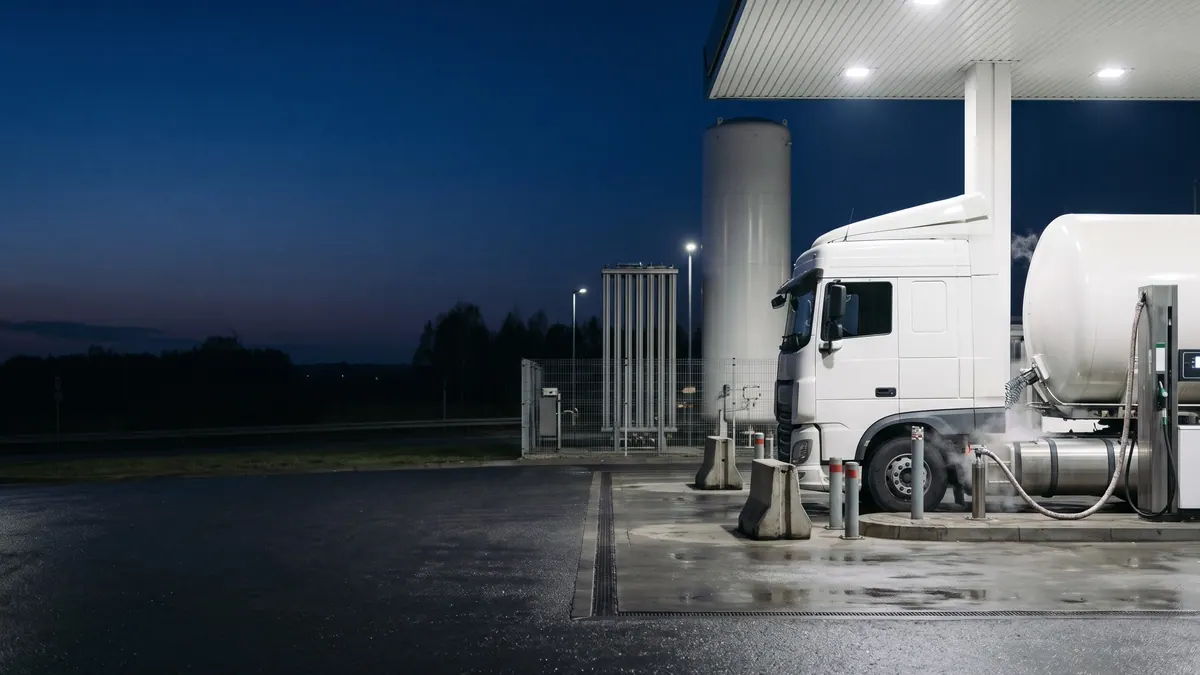
The initial capacity is 7,500 m³ of biogas per day, with a plan to increase it to 16,500 m³ per day. The technology was designed as a modular, containerised "plug and play" construction: six connected units, three of which carry out biogas cleaning and liquefaction, and three of which provide auxiliary functions, such as the supply of water and dry air. The offtaker is Lipigas, which will distribute bio-LNG to transport companies and industry and sell it at its own stations for truck fleets. The cost of the investment has not been disclosed.
In the same year HAM presented a compact bio-LNG installation for local production, aimed at small and medium-sized biogas producers.
Why it matters
Conventional biomethane liquefaction requires large gas flows to recover the outlay. Modular units on a scale of several hundred to several thousand cubic metres of biogas per day open this market to agricultural and industrial biogas plants without access to the gas grid. In such places, bio-LNG transported by tanker is an alternative to injection, and its customers are heavy transport, mining and industry.
Significance for the industry in Poland
In Poland biomethane liquefaction is only just emerging; installations with a bioLNG module are planned (including Orlen in Głąbowo), and the NFOŚiGW (National Fund for Environmental Protection and Water Management) biomethane programme of July 2024 provided for support for bioLNG and bioCNG. The example from Chile shows a model that may be attractive in regions without a dense gas grid: an industrial or agricultural biogas plant, a liquefaction plant and a local fuel distributor. In Polish conditions, adaptation to existing LNG stations and to sustainability certification requirements will be important.
For equipment manufacturers the signal is growing demand for containerised solutions, which shorten commissioning time and lower installation costs.
What to watch
Bio-LNG from meat industry waste has a favourable emissions footprint, but in the EU this requires confirmation by a sustainability certificate and accounting in tracking systems. In Chile and other South American countries the requirements may differ; for export to the EU, compliance with RED will be needed. Information on the cost of producing bio-LNG in Chile has not been provided.
Sources
Related articles