Waste-to-energyAnalysis
Chinese waste incinerators: overcapacity, a shortage of waste and the end of subsidies. An analysis
China already incinerates about 79% of urban waste in about 1000 plants, but over 40% of capacity stands idle. Why the expansion of incinerators collided with a shortage of waste and a lack of money.
Other language versions: polski.
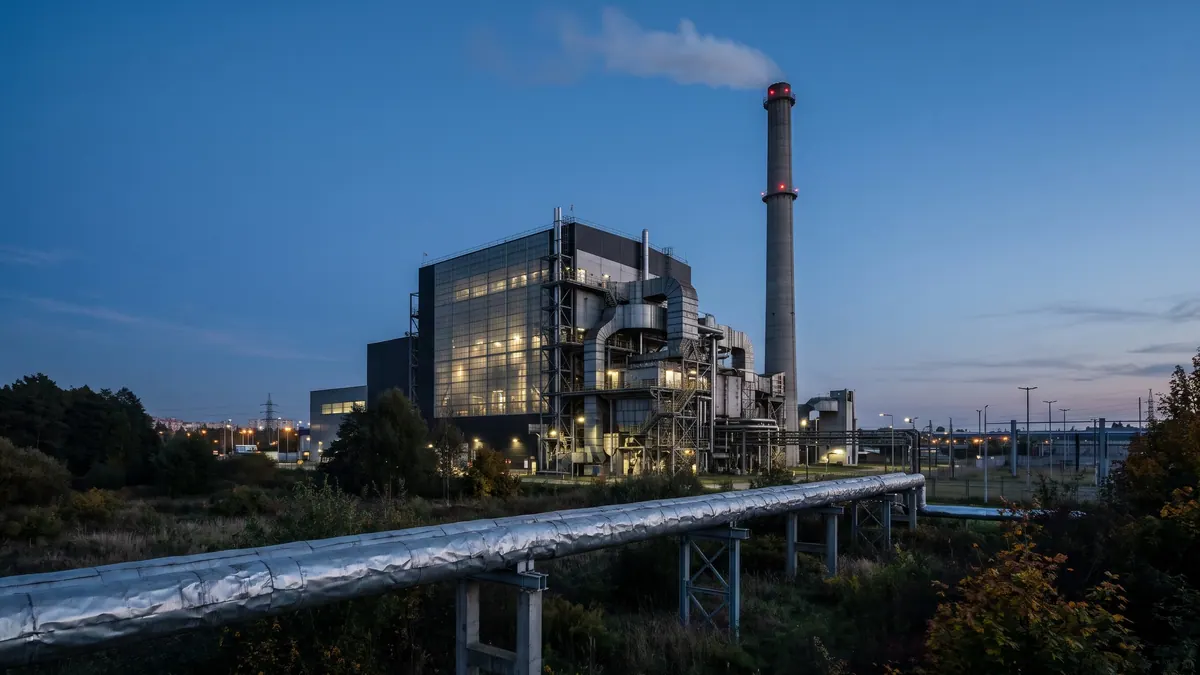
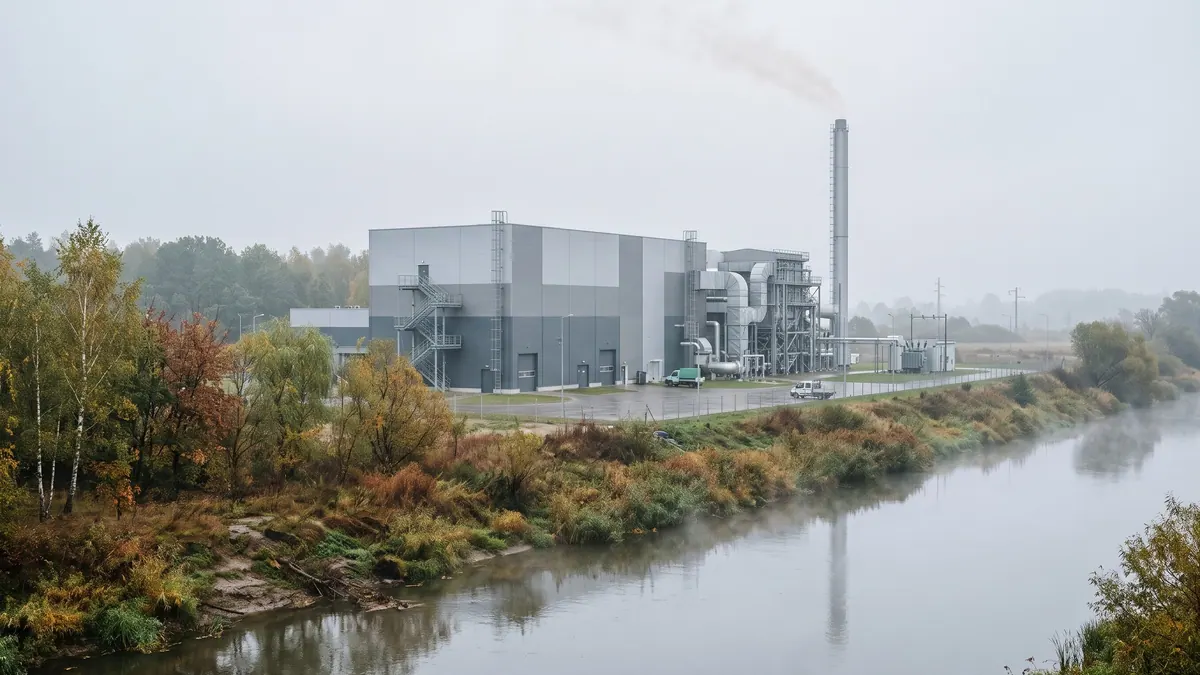
China's expansion of municipal waste incinerators is one of the largest infrastructure programmes in waste management in the world — and at the same time an example of overbuilding capacity. According to an analysis by Dialogue Earth of 13 November 2025 (reprinted by Eco-Business on 25 November), incineration capacity reached about 1 million t of waste a day in June 2024, 34% more than the target of the 14th five-year plan assumed, but over 40% of that capacity is not used. Incinerators do not have enough waste, and their revenues are shrinking.
Scale of growth
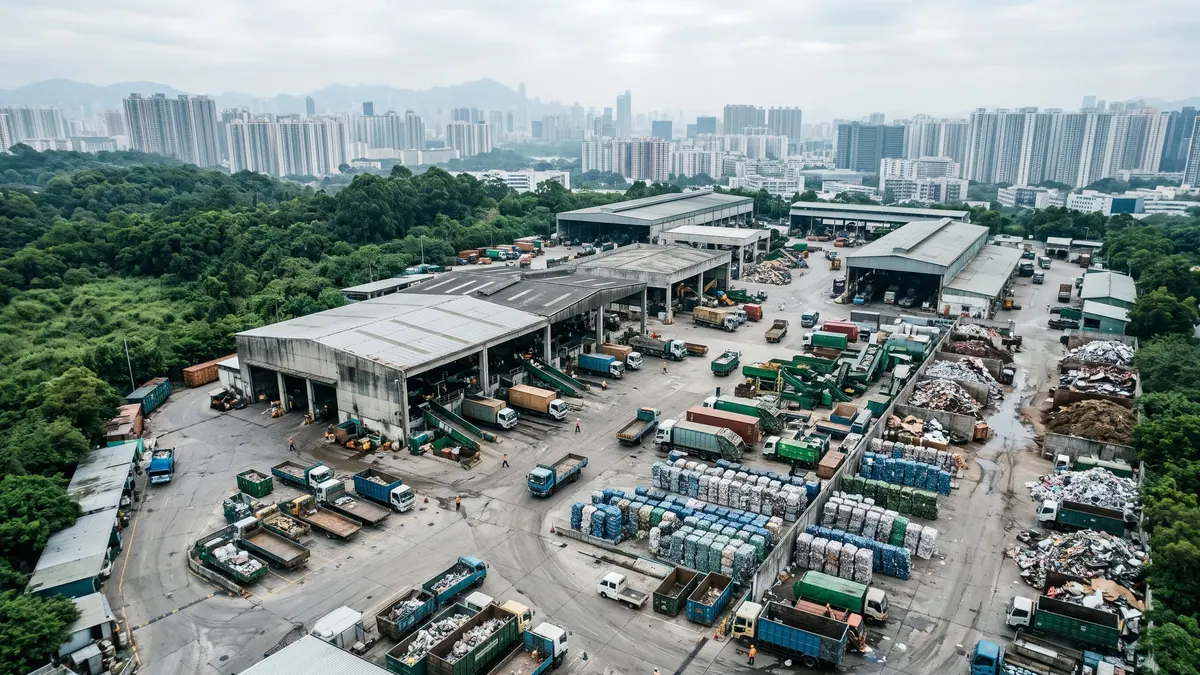
The amount of waste incinerated rose from 102 million t in 2018, which corresponded to 45% of urban waste, to 206 million t in 2024, i.e. 79%. The number of incinerators increased from 104 in 2010 to about 1000. China has about two thirds of the world's waste-to-energy capacity. Growth was driven by a lack of space for new landfills, public-private partnerships and financing with local government bonds. The amount of municipal waste collected in Chinese cities rose from over 200 million t in 2016 to 262 million t in 2024.
Why the surplus arose
Chinese authorities announced in 2021 (Xinhua/China Daily, 14/05/2021) that by the end of 2025 municipal waste incineration capacity was to reach 800,000 t a day. Dialogue Earth, on the other hand, states that capacity of 1 million t a day is 34% higher than the target of the 2021–2025 plan; the two values cannot be reconciled without knowing the exact basis of the target, so we quote them separately. The distribution of capacity is also uneven: cities in the eastern part of the country (east of the so-called Hu Line) have an excess of incinerators, while less populated areas lack them. In the west and part of the north-east, less than 30% of waste from small towns is properly managed, against a national target of 70% from the 2016–2020 plan. Existing and planned facilities in the ten western provinces can handle waste from about 210 million people, while these provinces have about 300 million residents.
Money: the end of subsidies and arrears
Incinerators relied on three sources of revenue: gate fees paid by local governments, sales of energy (with a premium in the form of subsidies) and emission credits. All three are weakening:
- plants connected to the grid from 2023 do not receive central subsidies, and the burden has been shifted to local governments,
- payments are delayed: listed environmental sector companies (mainly solid waste and wastewater treatment) had receivables of 350 billion yuan in the first half of 2024, which was 114% of their operating revenue; the author describes the problem as systemic,
- from 2024 waste incineration ceased to qualify for CCER credits, so income from this source fell to zero (a new methodology reduced the emission reductions attributed to incinerators, and there were also concerns about pollution in the background),
- green electricity certificates, which are now used to settle the “green” attributes of energy, usually sell for only a few fen per kWh, because in 2024 supply rose sharply and demand did not keep up.
The response of industry and policy
Subsidies were phased out gradually: in 2019 the Ministry of Finance announced a reduction in the share of new facilities eligible for support, and since 2020 the Ministry of Ecology and Environment has been cutting them for installations with non-compliant emissions or weak management. The author of the analysis points out that the industry should ensure waste is delivered to existing incinerators (better transport of municipal waste), bring into the system waste that is thrown away outside it, and diversify the stream by turning to industrial waste. Everbright Environment wrote in its 2024 annual report that it must change its orientation to cope with the mismatch between waste supply and demand.
How sorting affects incinerators
An earlier Dialogue Earth analysis from September 2023 shows the mechanism using the example of Shanghai, where mandatory sorting took effect in July 2019. In 2018 the city's incinerators, working above their nominal capacity of 2.81 million t a year, burned 3.86 million t, and a similar amount (3.87 million t) went to landfill. In 2021 the city separated 6.46 million t of recyclable and wet (organic) waste, that is 54% of the stream against 21% in 2018; the incinerators then had a capacity of 7.65 million t a year and burned 6.652 million t. In May 2023 the Laogang company recorded 88 days of downtime across 12 furnaces, that is 24% of capacity that month. According to the same text, across China in May 2023 there were 8,499 “planned shutdowns” (cases in which at least one furnace at a plant was not operating). Sorting, whose aim is to reduce the stream to be burned, thus collides with the need to fill installed capacity.
Caution in interpretation
The data come from two journalistic studies by Dialogue Earth based on Chinese statistics and company data; we did not verify them in the official yearbook. Capacity utilisation indicators depend on the definition (nominal versus available capacity) and on the region, and the discrepancy between the target of 800,000 t a day and “34% above the target” remains unresolved.
Alternatives to incineration
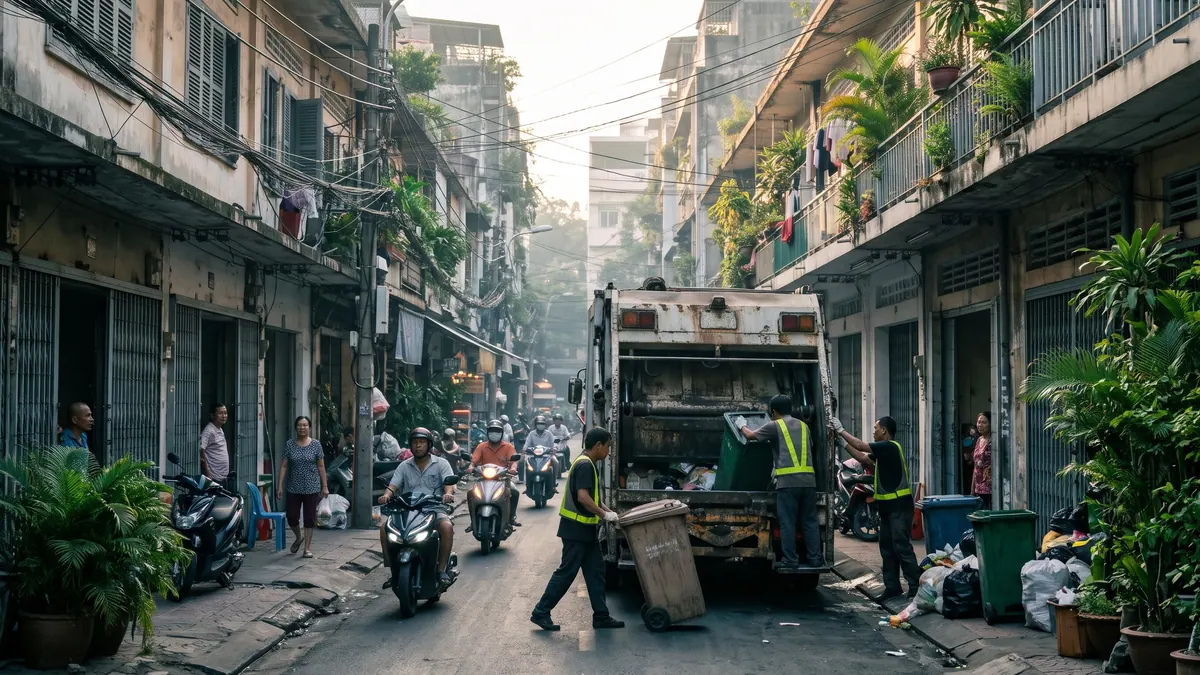
Dialogue Earth points out that outside the big cities many villages still use uncovered dumps or primitive incinerators, and collection in sparsely populated areas is expensive. With excess incineration capacity, the question therefore arises whether to keep building further units or to shift funds to collection outside cities, recycling and processing of the organic fraction, e.g. in biogas plants. The answer depends on the quality of sorting and on stable financing of gate fees, because revenue from energy does not cover costs — this is our conclusion from the described structure of incinerator revenues, not a thesis of the source.
What this means for Poland/Europe
Polish and European discussions about incinerators often concern a lack of capacity, but the Chinese example shows the opposite risk: with growing sorting and recycling, demand for incineration may fall below installed capacity. When planning new installations, it is worth running scenarios of sensitivity to a shrinking stream of mixed waste and taking into account the priority for biowaste, which should go to biogas plants and composting plants, not to incineration.
Sources
- Dialogue Earth (Xu Nan, 13.11.2025), przedruk Eco-Business 25.11.2025 — What's behind China's waste incineration overcapacity?
- Dialogue Earth (Li Jiacheng, 4.09.2023) — Four years of waste sorting leaves China's incinerators short of fuel
- China Daily / Xinhua — China to improve urban garbage treatment (14.05.2021)
Related articles