Waste and circular economyEvent
Beijing introduces mandatory waste sorting from 1 May 2020. Four categories and fines for businesses
Beijing has joined the cities with mandatory waste sorting. Residents divide waste into kitchen, recyclable, hazardous and residual, and violations can cost from 50 to 50,000 yuan.
Other language versions: polski.
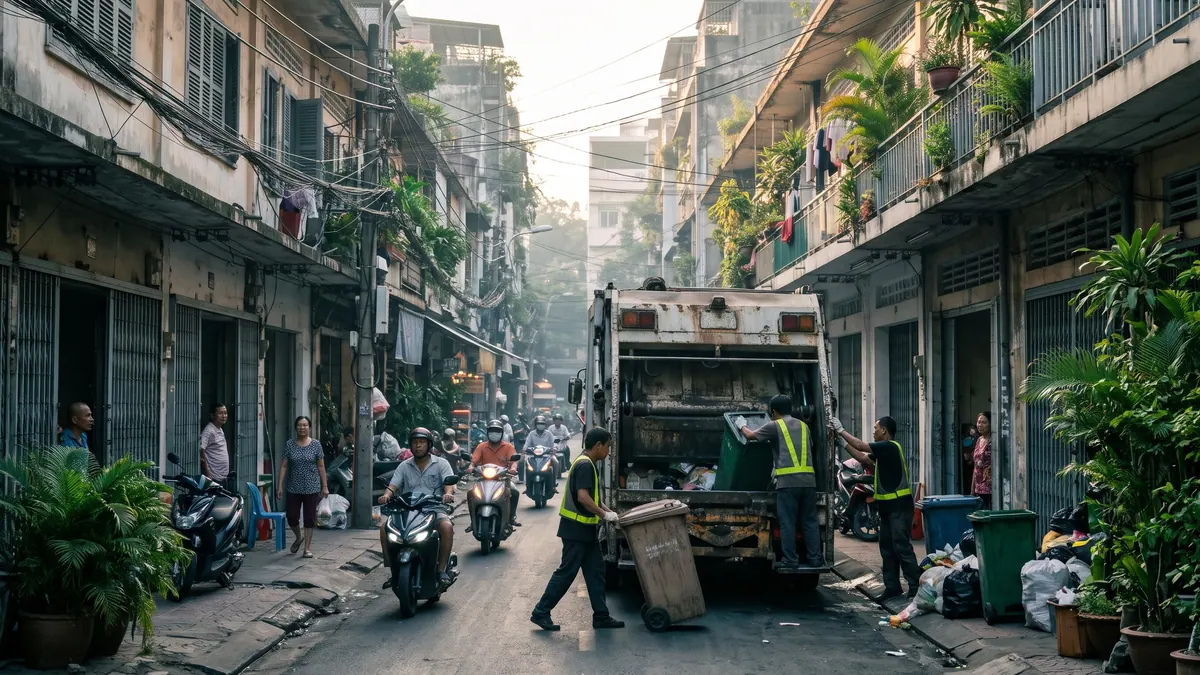
Since 1 May 2020 Beijing has been subject to the amended regulation on municipal waste, which introduces mandatory sorting into four categories and sanctions for violating it. The capital has thus joined Shanghai and other cities in which sorting has ceased to be recommended and has become required.
Four categories
Residents are to separate waste into: kitchen, recyclable, hazardous and residual. The division is similar to Shanghai's, and kitchen waste is separated so that it can be processed biologically, e.g. in anaerobic digestion plants. With the start of the rules, refuse trucks in four colours took to the streets, and containers for the four categories were placed at residential compounds.
Fines
According to the Xinhua agency, the municipal enforcement authority can impose fines of 1000 to 50,000 yuan on organisations and 50 to 200 yuan on individuals. Earlier reports on the draft rules gave different amounts for businesses, so when quoting figures one should rely on the official text of the regulations, which we did not verify here. Enforcement begins with education and persuasion, followed by written warnings and fines. A three-month inspection campaign began with the entry into force of the rules.
Scale of the system
According to Xinhua, over 113,000 container stations were set up in Beijing and 980 enclosed cleaning and transfer stations were in operation. Municipal waste collected and removed from households in 2019 amounted to 10.116 million t, that is an average of 27,700 t a day. The rules also came with a ban on thin plastic bags in supermarkets (below 0.025 mm). For comparison, Xinhua reports that in Shanghai, where the obligation has applied since July 2019, sorting has covered 90% of residential compounds.
Why this matters for the biogas sector
Separating kitchen waste in such a large conurbation creates a feedstock stream with high energy potential, but one that requires unpacking, removal of contaminants and hygienisation. At Beijing's scale (several tens of thousands of tonnes of municipal waste a day), the system's success depends on building processing facilities in parallel with changing residents' behaviour.
What this means for Poland/Europe
Polish municipalities are introducing mandatory separation of biowaste, but rarely announce penalty ranges so clearly. The Beijing approach — clearly defined penalty ranges, a launch inspection campaign and gradual application of sanctions (education, warning, fine) — can serve as a model of pragmatic enforcement.
Sources
Related articles