BiohydrogenEvent
Namibia and Hyphen signed a green hydrogen agreement worth USD 10 billion
The Namibian government and Hyphen Hydrogen Energy signed a Feasibility and Implementation Agreement on 26 May 2023 for a USD 10 billion green hydrogen project in the Tsau ǁKhaeb National Park.
Other language versions: polski.
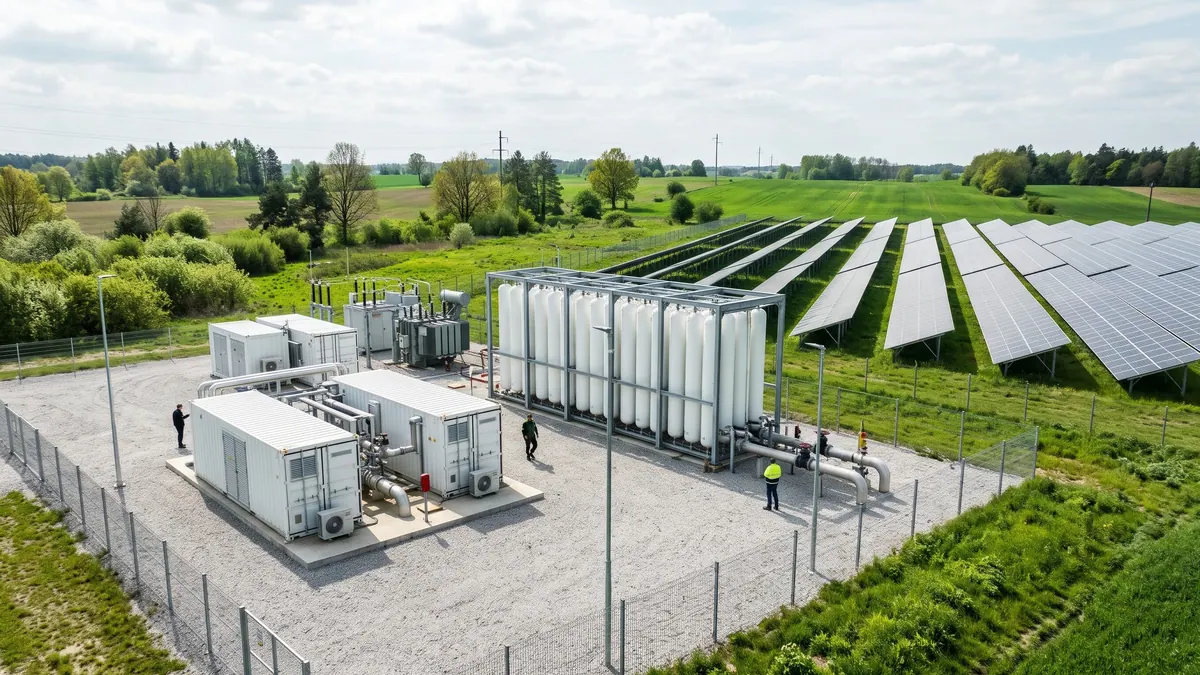
The Namibian government and Hyphen Hydrogen Energy signed a Feasibility and Implementation Agreement on 26 May 2023 for a green hydrogen project worth about USD 10 billion. The installation is to be built in the Tsau ǁKhaeb National Park in the Namib Desert.
What was signed
Miningmx (25 May 2023, citing Reuters) reported that the feasibility and implementation agreement would be officially signed on Friday, and Zawya described the signing of an agreement worth USD 10 billion. Hyphen was named preferred bidder as early as 2021. The plant is to be built in stages and to convert green hydrogen into ammonia: according to Zawya the target is 1 million t of ammonia a year by the end of 2027, and according to Reuters the full scale of 2 million t a year is to be reached before 2030. These are the company's declarations, not guarantees.
Why Namibia
Namibia is among the sunniest and most sparsely populated countries in the world, and the government wants to use its solar and wind potential to become a regional renewable energy hub. The project's attraction for European buyers lies in the possibility of exporting ammonia as an energy carrier. Reuters, cited by Miningmx, pointed out, however, that the country suffers from water scarcity and lies far from key sales markets, so it is not certain that it will be able to deliver a cost-competitive product.
Significance for biogas and biomethane
Renewable hydrogen from electrolysis is not "biohydrogen", because it is not produced from biomass, but it affects the renewable gas market. In the EU the RFNBO rules apply to renewable fuels of non-biological origin, and the costs of producing hydrogen in regions with very good renewable resources are compared with the costs of biomethane. We discuss the differences between these pathways in the article Electrolysis versus biohydrogen: RFNBO and why electricity from biogas is a different category.
Risks and open questions
- Financing: projects of this scale require equity investors and banks as well as offtake contracts.
- Water: electrolysis requires water; in an arid region the solution is seawater desalination.
- Infrastructure: a port, transmission lines, an ammonia plant and supporting facilities are needed.
- Impact on nature: a location next to a national park requires careful environmental assessments.
The agreement is an important formal step, but years of work and negotiations still separate it from the final investment decision.
Sources
Questions and answers
Does the agreement with Hyphen mean construction has started?
No. The Feasibility and Implementation Agreement sets the legal framework and the design stage. Construction still requires an execution contract and financing of the investment.
Related articles