H. Cegielski-Poznań enters biogas: containerised Dynamic Biogas plants
The company H. Cegielski-Poznań holds a licence to produce Dynamic Biogas plants. A 0.5 MW pilot is operating at the experimental farm of the Poznań University of Life Sciences in Przybroda.
Other language versions: polski.
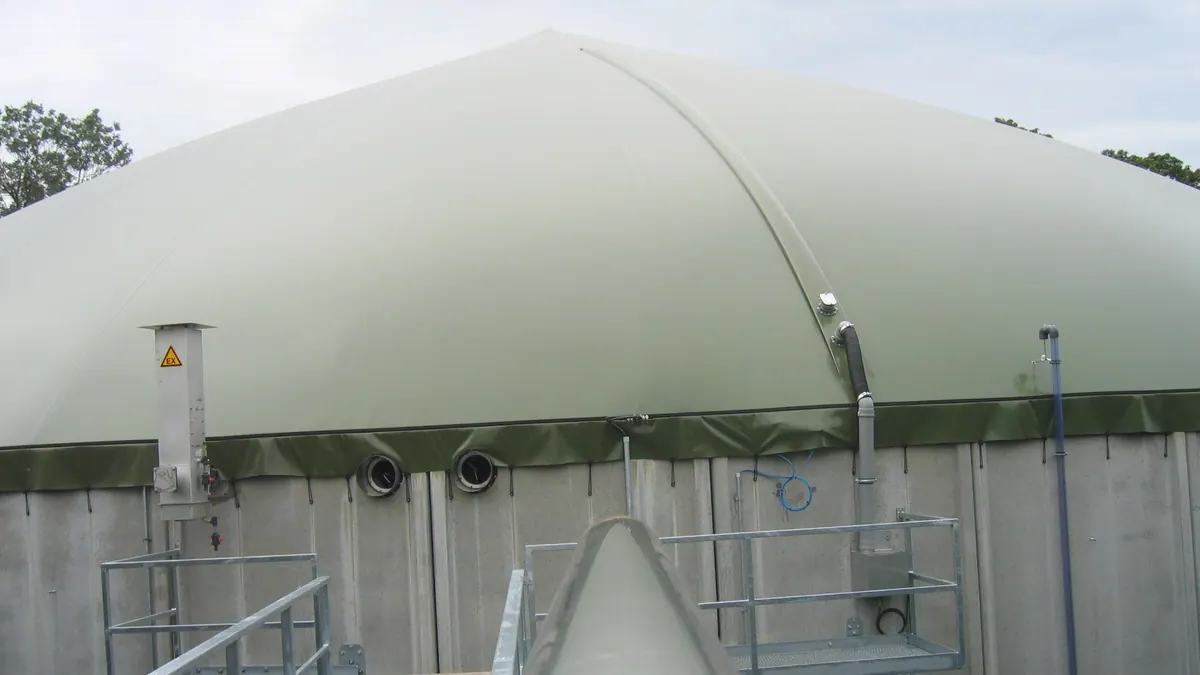

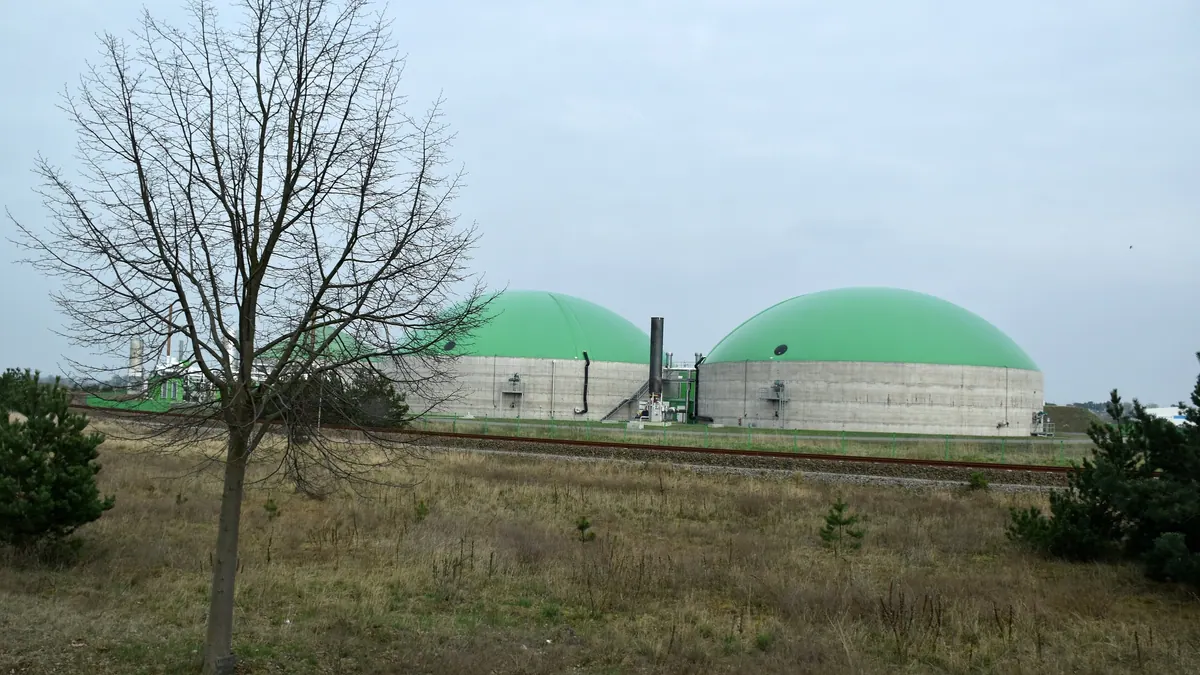
The company H. Cegielski-Poznań announced in May 2020 its entry into the agricultural biogas plant market. As reported by Gramwzielone.pl on 29 May, the company holds a licence to produce Dynamic Biogas installations, developed in cooperation with the Poznań University of Life Sciences (Uniwersytet Przyrodniczy w Poznaniu). A pilot installation with a capacity of 0.5 MW is operating at the experimental farm in Przybroda.
What the technology involves
According to the manufacturer's description, the Dynamic Biogas plant differs from typical installations used in Poland and Europe. The most important features:
- separation of the fermentation phases — at the inlet works a so-called biotechnological accelerator, which is meant to speed up the initial stages of the decomposition of organic matter;
- a single central agitator per digester, which according to the manufacturer limits the formation of a scum layer;
- a shorter fermentation time, and therefore a smaller footprint and smaller tanks;
- a wide range of feedstocks — almost all agricultural products and agri-food waste, except materials with a very high concentration of antibiotics or aggressive chemicals;
- container-based construction — construction takes from several to a dozen or so weeks, and start-up from a few days to a few weeks.
These are the manufacturer's declarations; an independent comparison of efficiency and costs with other technologies would require long-term operation.
The pilot in Przybroda
The installation in Przybroda mainly processes manure and by-products from the farm. The assumed annual production is around 4250 MWh of electricity and 4000 MWh of heat, which according to the manufacturer corresponds to the energy from about 850 tonnes of hard coal (with a typical calorific value of approx. 25 MJ/kg, 850 t of coal is approx. 5.9 GWh, which is less than the sum of 8.25 GWh of electricity and heat, so the manufacturer's comparison is approximate). The company's president argued that the installations can reduce farms' costs and generate additional revenue from energy sales, and that scientific supervision of the biotechnological part is exercised by Prof. Jacek Dach of the Ecotechnology Laboratory of the Poznań university.
Significance for the market
The entry of a large industrial machinery manufacturer into the biogas segment is a signal that in Poland local technology suppliers are being sought, and not only imported solutions. The company estimated the national potential at over 3.5 GW of capacity in biogas plants, which is its own assessment and not an official forecast. The first commercial units could be built as early as 2020, if interested investors appear.
What next
The new technology will be assessed on the results of operation: conversion efficiency, process stability, service costs and the availability of parts. For potential investors, references from operating installations, contractor guarantees and compliance with environmental requirements will be key.
What an investor should check
When assessing such an offer it is worth asking about the permits required for an installation with a capacity of 0.5 MW, the list of permitted substrates, the requirements for digestate storage and guarantees concerning efficiency. Technologies that are new on the market are sometimes cheaper to buy, but their operation is sometimes associated with greater risk until they have been proven at many locations and with different substrate mixes.
Sources
Related articles