Law and regulationAnalysis
Denmark: what was paid for electricity from biogas — from 74.5 øre/kWh to subsidies in gas
Since the 2008 energy agreement, Denmark has paid a premium of 40.5 øre/kWh or a fixed price of 74.5 øre/kWh for electricity from biogas. In 2013 a value of 79.3 øre/kWh appeared in legislation.
Other language versions: polski.
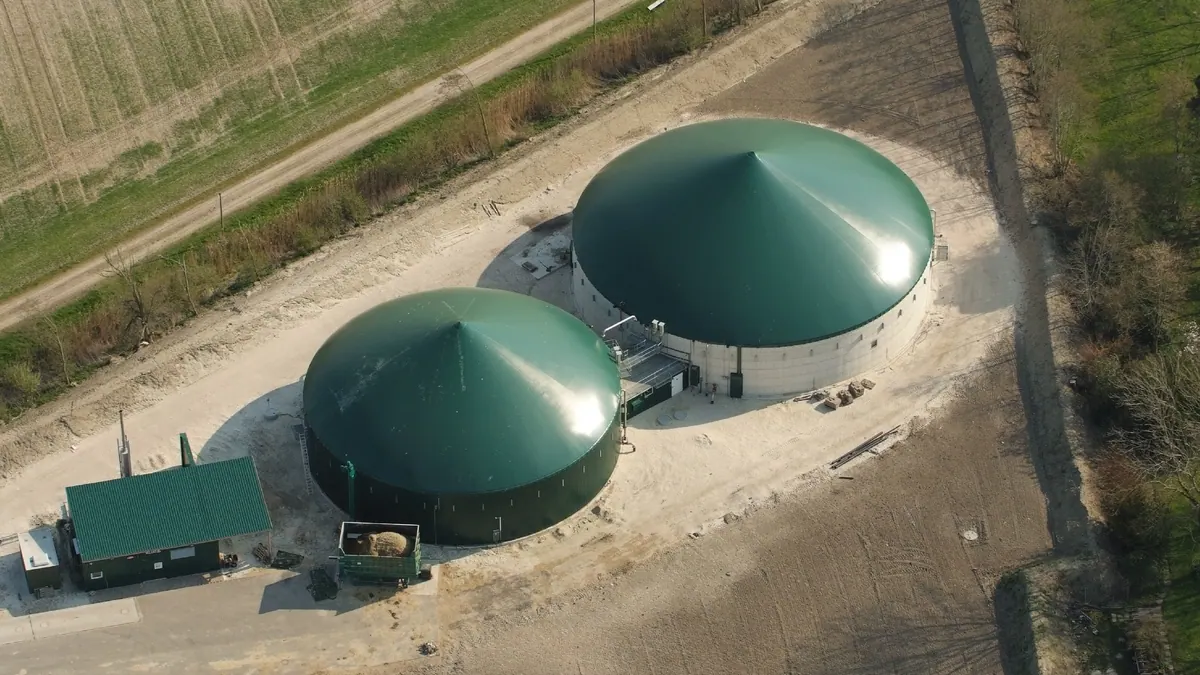

For over a decade Denmark paid generators of electricity from biogas clearly more than the market price of power: under the energy agreement of 21 February 2008, biogas plants received either a fixed settlement price of 74.5 øre/kWh or a premium of 40.5 øre/kWh added to the market price. The support was financed from the PSO levy paid by energy consumers.
The 2008 agreement
The minister's reply to the Folketing shows that, following the February 2008 agreement, new and existing biogas plants could choose one of two forms. The first was a fixed settlement price of 74.5 øre per kWh of electricity, the equivalent of a feed-in tariff. The second was a premium of 40.5 øre/kWh added to the market price of energy (a feed-in premium), with annual indexation. The premium is not directly comparable with the fixed price, because its final value depends on the market price in a given year. Biogas was also exempt from energy taxes, and support for energy from biogas came from PSO subsidies.
Converted, the fixed price of 74.5 øre/kWh is 0.745 DKK/kWh. At a rate of about 7.46 DKK per euro (the Danish krone is closely pegged to the euro) this gives about €0.10/kWh, or about €100/MWh. This is well above wholesale electricity prices in 2008–2019, so the subsidy made up the larger part of revenue.
The 2013 Act
The amendment to the Act on the promotion of renewable energy (No. 900 of 2013) gives a value of 79.3 øre/kWh for electricity from biogas and gas from biomass gasification. This corresponds to about 0.79 DKK/kWh, or about €106/MWh. The description of the Act in the InforMEA database does not explain directly how this figure is applied, so we treat it as a reference level from the legislation, not as a guaranteed total rate for every installation.
In its 2019 country report, EA Energianalyse states that for thermal gasification of biomass, support for electricity can reach 1.15 DKK/kWh above the market price (the report equates gas from gasification with biogas, which receives the same support; this is a top-up to the market price, so it is not comparable with 79.3 øre/kWh, for which it is unknown whether it describes the total price). Different technologies for generating energy from renewable gas were thus supported at different rates.
- Support level
A change of direction: from electricity to gas in the grid
The available studies indicate that support shifted from electricity generation in small units to injecting upgraded biomethane into the gas grid. In assessing the direction of change, it should be borne in mind that none of the sources for this entry describes in detail the timetable for phasing out subsidies for electricity from biogas after 2020.
For completeness: Denmark also supports upgraded biogas with a separate price premium (pristillæg til opgraderet biogas), and in May 2020 the Commission approved a separate scheme for existing biomass power plants (see the entry on decision SA.55891).
How to read this
- The Danish rate of 74.5 øre/kWh was clearly higher than the wholesale price of energy, which allowed many farm-scale biogas plants to develop but burdened consumers with the PSO levy.
- The premium of 40.5 øre/kWh required the generator to sell energy on the market; the fixed price removed that risk.
- Subsequent changes in the law shifted the centre of gravity to biomethane, so the Danish experience is, for Poland, above all an example of the development of a market for gas from biogas.
Conversion into zloty and euro
When comparing rates from different countries, it is worth keeping to the original currency and converting only indicatively. The Danish krone is pegged to the euro in a narrow band around about 7.46 DKK/EUR, so the conversion into euro is stable over time: 40.5 øre/kWh is about €54/MWh, 74.5 øre/kWh is about €100/MWh, and 79.3 øre/kWh is about €106/MWh. Any comparison with other countries, however, requires checking whether a value means the total price or a top-up to the market price, because the difference runs to several tens of euro per megawatt-hour.
Why the rates were high
Danish biogas plants were built mainly as farm-scale and centralised installations, processing slurry together with waste from the food industry. Such a configuration has high investment costs per unit of energy, but at the same time brings benefits beyond the energy itself: it reduces emissions from slurry storage and improves its fertiliser value. The high rate for electricity was a tool intended to factor these positive effects into the investor's calculation. For the same reason, support was financed from the PSO levy and not from a tax that would be levied on fuels.
For a reader in Poland, the conclusion is practical. A direct comparison with domestic prices from renewable energy auctions requires conversion into zloty and taking account of other revenue elements, such as heat and certificates. The figure in øre alone is not enough to judge whether Danish conditions were "better" than Polish ones.
Sources
Questions and answers
How much is 74.5 øre/kWh in euro?
That is 0.745 DKK per kWh. At a rate of approx. 7.46 DKK/EUR (the krone's fixed peg to the euro) this gives approx. €0.10/kWh, that is, approx. €100/MWh.
Related articles