BiomethaneEvent
China: ten institutions announce guidelines for “bio natural gas” — a target of 10 billion m³ by 2025
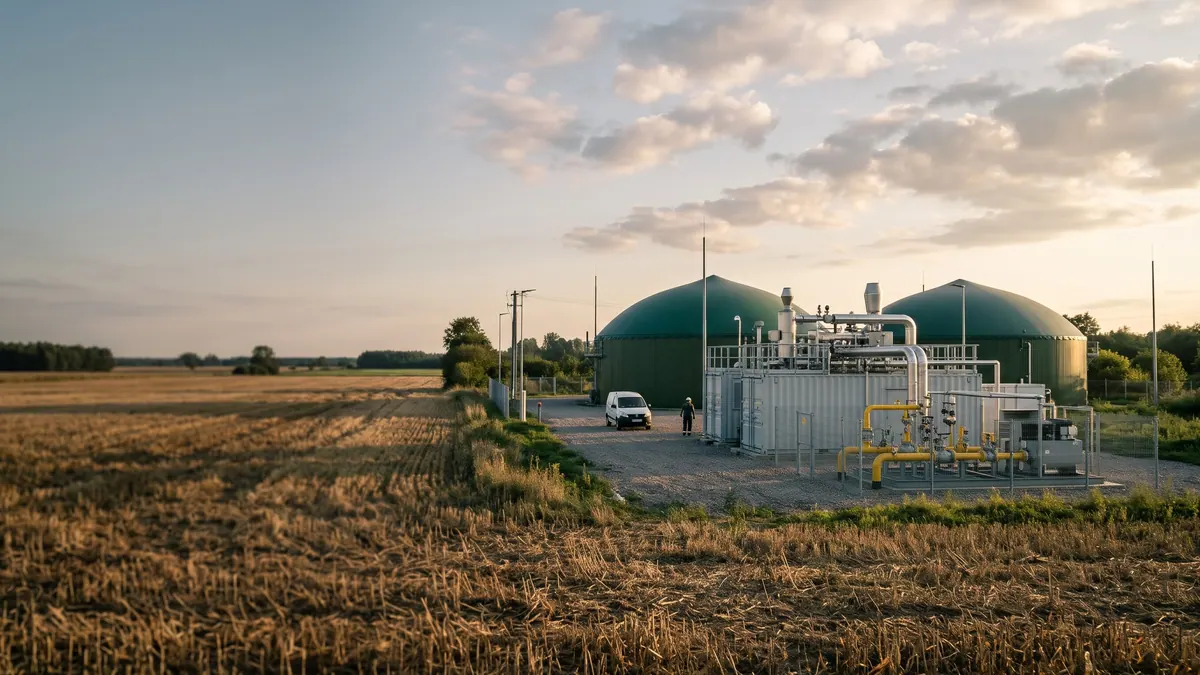
Chinese authorities published guidelines on the industrialisation of bio natural gas, i.e. biomethane: over 10 billion m³ a year by 2025 and over 20 billion m³ by 2030.
Other language versions: polski.

At the end of 2019 Chinese authorities published guidelines on the industrialisation of “bio natural gas” (生物天然气), i.e. biomethane: annual production is to exceed 10 billion m³ in 2025 and 20 billion m³ in 2030. The document, numbered 发改能源规〔2019〕1895号, is dated 4 December 2019. According to the Xinhua agency it was issued by the National Energy Administration together with nine other central institutions, and the first reports about it appeared on 20 December.
Who issued the document
The unofficial translation published by China Energy Portal lists as issuers: the National Development and Reform Commission (NDRC), the National Energy Administration and the ministries of finance, natural resources, ecology and environment, housing and urban-rural development, agriculture and rural affairs, and emergency management, as well as the central bank and the State Taxation Administration. Altogether this makes ten bodies, in line with Xinhua's account.
What exactly was set out
The document sets two thresholds: in 2025 bio natural gas is to reach a “certain scale” with production above 10 billion m³ a year, and in 2030 production is to exceed 20 billion m³, which according to the document is to place China among the world leaders. Press reports describe the feedstocks as straw, animal manure and kitchen waste; the intended system is one in which the feedstock is collected and the gas processed and consumed within a short distance. As for tools, the translation of the guidelines lists, among others:
- replacing coal in heating on the consumer side, with priority for scattered coal use in rural areas, and including bio natural gas in clean winter heating plans in the north of the country,
- examining a “green gas” quota mechanism and a policy of priority use of bio natural gas,
- priority in annual land use plans for projects consistent with spatial planning,
- tax relief (including for resource recycling and environmental protection) and the possibility of customs and import VAT exemptions for equipment,
- preferential “agricultural” electricity tariffs for the pretreatment of plant residues and the production of organic fertilisers,
- linking bio natural gas allocations to conventional gas limits, credit incentives for banks and the possibility of injection into urban gas networks.
Why terminology matters
Some English-language outlets, including China Daily, described the document as guidelines for “biogas”. Yet 生物天然气 in Chinese literally means “biological natural gas”. At the scale of 10 billion m³ a year we are therefore talking about a grid-compatible fuel, not raw biogas for cogeneration. The original of the document was written in Chinese, and the wording quoted here comes from an unofficial translation, so the exact wording of the provisions should be checked in the original.
What this means for Poland/Europe
The Chinese approach — preferences for projects linked to the management of manure and straw, the possibility of green gas quotas and grid access — is close to the European logic, where biomethane competes on price with natural gas thanks to support or obligations. Volume targets, however, are only a direction; their delivery is decided by financial mechanisms and gas offtake.
Sources
- China Daily / Xinhua — China vows industrial development of biogas in new guideline (23.12.2019)
- China Energy Portal — Guiding opinions on promoting the industrialization of bio natural gas (tłumaczenie nieoficjalne)
- Xinhua (english.gov.cn) — doniesienie o wytycznych dla przemysłu biogazowego z 20.12.2019
Questions and answers
Is Chinese “bio-natural gas” the same as biomethane?
In practice, yes: the term 生物天然气 refers to biogas upgraded to natural gas quality, which can be directed, among other places, to city gas networks. The English-language press can be imprecise and simply writes “biogas”.
Related articles