Technology and operationExplainer
Covered slurry lagoons in the US: how the most popular type of farm biogas plant works
We explain what a covered digester lagoon is, when it works, how it differs from a complete-mix reactor and why it is the most numerous type of installation in AgSTAR listings.
Other language versions: polski.

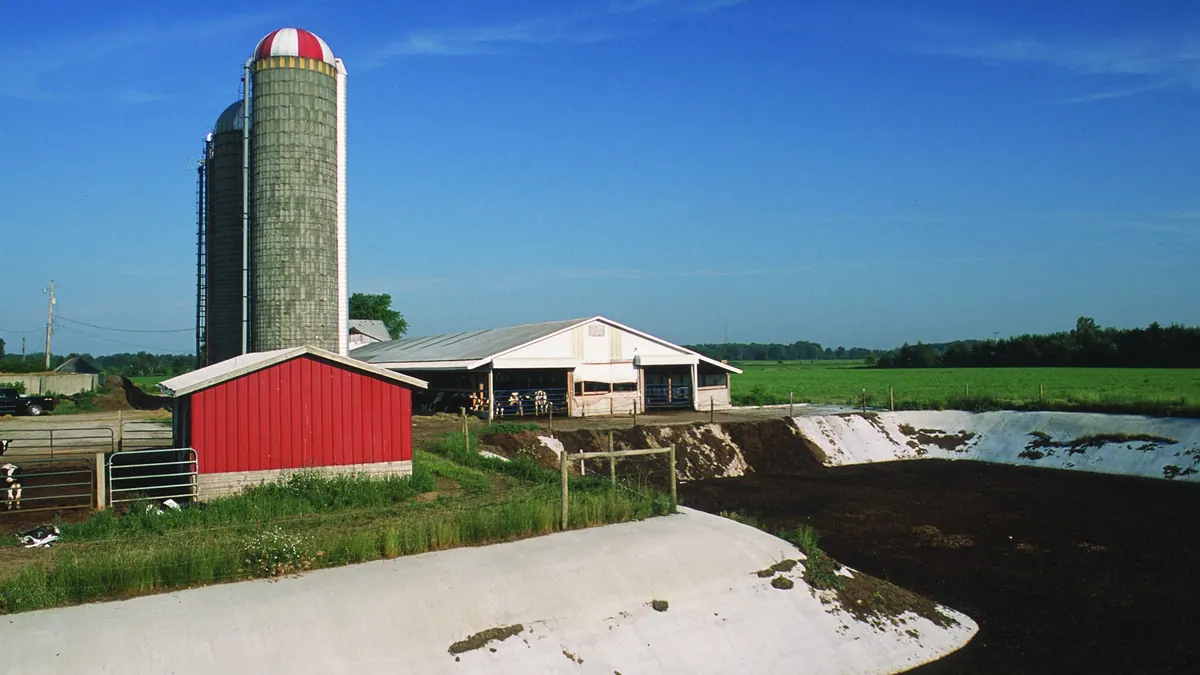
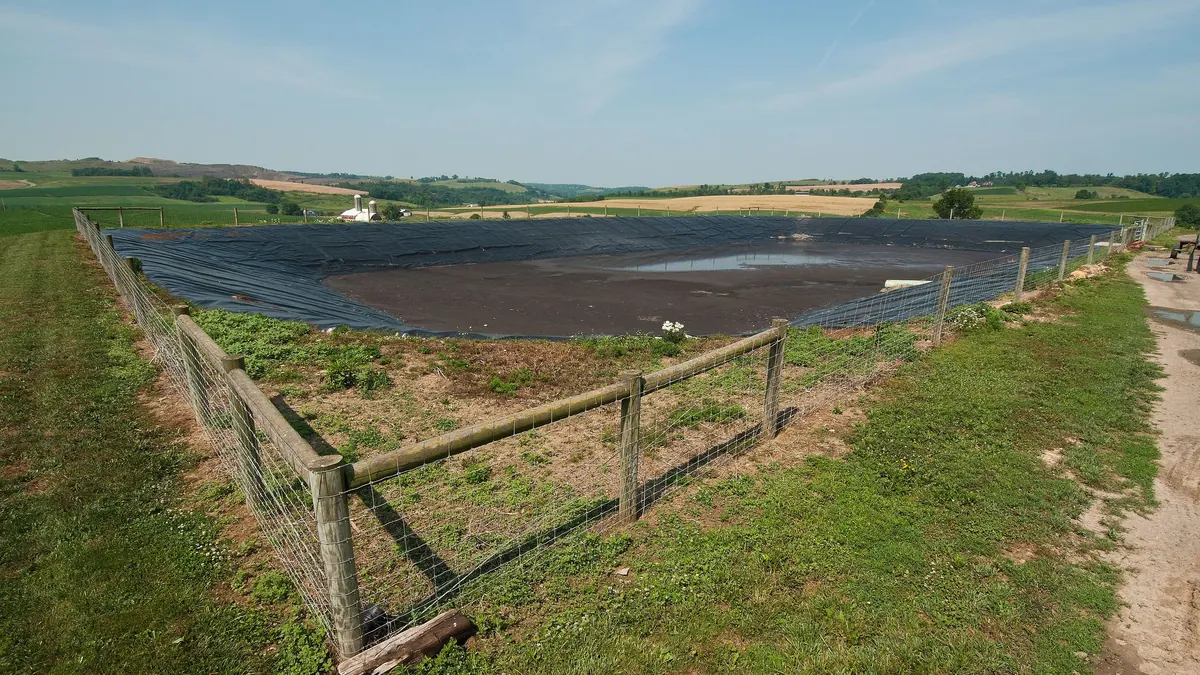
A covered digester lagoon is an earthen slurry basin, covered with a sealed, usually flexible membrane, under which biogas is formed under anaerobic conditions. In the EPA AgSTAR listing it is the most numerous type of biogas plant at farms in the US: covered lagoons (174 installations) outnumber plug flow reactors (107) and complete-mix reactors (105), while the remaining technologies — induced blanket reactors (5), sequencing (3), fixed film (2) and others — are single units. According to the EPA, a covered lagoon is classed as a "standard-rate" installation, because it is neither heated nor mixed.
How it works
Slurry goes into a deep lagoon with a suitably shaped bottom and banks. The surface is covered with a durable geomembrane, under which the biogas collects. The gas is drawn off through pipes to a treatment system — moisture and, where necessary, hydrogen sulphide are removed — and then to a flare, a cogeneration engine, a boiler or an upgrading installation producing biomethane. Fermentation takes place at close to ambient temperature (usually in the psychrophilic or lower mesophilic range), so the lagoon needs no heating, but the rate of biogas production depends on the season.
For what kind of slurry
Covered lagoons are suitable for dilute slurry, that is, the kind obtained on farms that flush the barn with water. With thicker manure, complete-mix reactors (mixed and heated) or plug flow reactors are more suitable; according to the AgSTAR guidebook, conventional digestion applies to slurry with a dry matter content of up to 10–12%. The choice of installation type therefore follows from the livestock housing technology — the more water, the more sense a lagoon makes.
Advantages
- Low capital cost — an earthen basin with a cover is cheaper than a reinforced concrete or steel reactor with agitators and heating.
- Simple operation — fewer mechanical devices, fewer breakdowns.
- Effective methane reduction — capturing gas from a place that in a conventional system would be a source of emissions to the atmosphere.
Limitations
- Sensitivity to climate — in cooler zones fermentation slows or stops in winter, so lagoons are more popular in warmer regions.
- Large area and volume per unit of gas production — the slower process requires a longer retention time.
- Settling of solids — requires periodic cleaning.
- Tightness hazards — damage to the membrane (e.g. from wind, animals or stress) leads to gas leaks and a fire risk.
Comparison with complete-mix
| Feature | Covered lagoon | Complete-mix |
|---|---|---|
| Type of slurry | dilute, liquid | thicker, containing more dry matter |
| Heating | usually none | yes, usually in the mesophilic range |
| Mixing | none | mechanical or hydraulic |
| Capital cost | lower | higher |
| Gas yield per unit of volume | lower | higher |
Operation and safety
When covering a lagoon, the key points are: proper anchoring of the membrane, control of the slurry level (changes in volume raise or lower the cover), drainage of rainwater from the surface of the cover, and safeguards against air entering the gas space. Biogas contains methane, so the site requires explosion hazard zones, a suitable emergency flare installation and procedures for dealing with damage to the cover. In addition, hydrogen sulphide is toxic and corrosive, which makes measurements and proper selection of materials in the gas installation necessary.
Role in emission reduction
For a farm with an open lagoon, covering it with gas recovery is one of the simplest ways to reduce methane emissions, because it does not require rebuilding the system for removing slurry from the livestock buildings. At the same time, fermentation in a lagoon does not in itself solve the problem of nutrients — the residue after fermentation still contains nitrogen and phosphorus, which must be managed in accordance with fertilisation rules.
When to choose a lagoon and when another type
The decision is worth basing on three questions: what the dry matter content of the slurry is, what the ambient temperature is over the year, and whether the gas is to feed a simple system (flare, boiler) or one requiring upgrading. The answers "dilute, warm, simple system" favour a lagoon; the opposite favour a heated reactor.
Where to look for data
The EPA maintains the AgSTAR database (Livestock Anaerobic Digester Database) with data on installations, and the operator guidebook (AgSTAR Operator Guidebook) describes the operating practice of farm installations. The listings of installation types on EPA pages differ in date and scope, so when citing figures one should always check the current state of the database.
What this means for Poland and Europe
In a temperate climate such as Poland's, covered lagoons without heating have limited application, and most agricultural installations are heated tank reactors. Even so, the idea of covering slurry tanks and capturing biogas remains an important direction for reducing methane emissions from existing storage tanks.
Sources
Related articles