EBA: biogenic CO₂ from biomethane plants could cover more than a quarter of the EU capture target
EBA report of September 2025: by 2040 biomethane installations in the EU could capture up to 89 million tonnes of biogenic CO₂ a year. Today 125 installations capture about 1.17 million t.
Other language versions: polski.
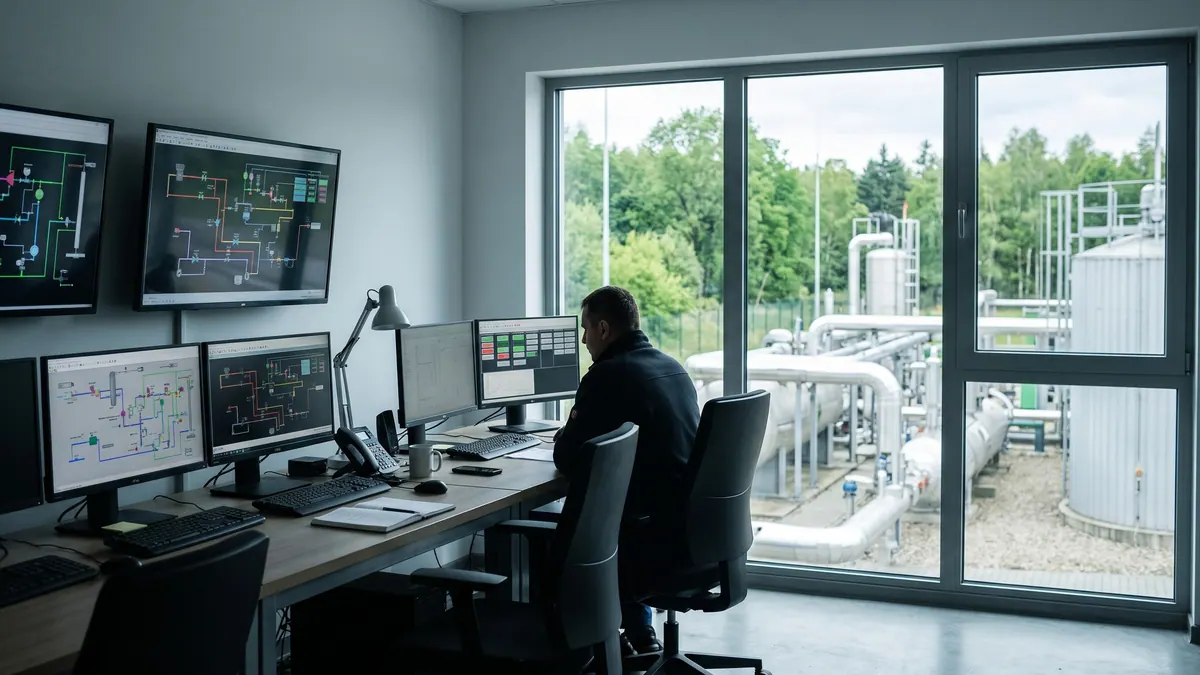
The European Biogas Association (EBA) presented in September 2025 a report according to which by 2040 biomethane installations in the EU could capture as much as 89 million tonnes of biogenic CO₂ a year. This is more than a quarter of the carbon capture needed to meet the climate law targets, which total 344 million tonnes a year. The theme changes the picture of a biogas plant from an energy producer into a source of a CO₂ stream that can be stored or used.
Where biogenic CO₂ comes from
Biogas after fermentation consists roughly of methane and carbon dioxide. In the process of upgrading to biomethane the CO₂ is separated and until now has mostly been released into the atmosphere. Because it comes from biomass, it is biogenic – its emission does not increase the amount of carbon in the atmospheric cycle in the way that the emission of fossil CO₂ does. Captured CO₂ can be used or stored, and in the latter case carbon removal arises (BioCCS).
Figures from the report
- Today 125 biogas installations in Europe capture about 1.17 million t of CO₂ a year – about 14% of market demand for liquid and solid CO₂.
- By 2027 capture is to exceed 2 million t a year.
- By 2040 the potential is up to 89 million t a year.
Applications include underground storage, feedstock for synthetic fuels (e-methane, e-methanol), chemicals and building materials, CO₂ fertilisation in greenhouses, and the food and beverage industry. Further capture routes are gasification, biohydrogen production and flue gas cleaning. The EBA has launched an interactive map of installations capturing CO₂, available to members. Director General Harmen Dekker stated that the sector can fully support the EU carbon strategy "with appropriate standardisation and a policy framework".
Significance for the industry in Poland
For Polish biomethane plants, biogenic CO₂ is a potential second product. The Ambassador project (a planned 20 km pipeline) declares, for example, production of about 4 million m³ of liquid CO₂ a year for the food industry. Such a stream improves the economics of the investment, but requires a liquefaction installation, logistics and a market. In the context of the EU carbon removal certification framework (CRCF) and the e-fuels market, the value of biogenic CO₂ is rising.
What next
Delivery of the potential depends on standards (certification, emissions accounting), on CO₂ transport infrastructure and on whether regulations recognise biogenic CO₂ in emissions trading systems. The EBA is lobbying for renewable gases to be included in global emissions accounting standards, which also affects valuation. For investors this means that when planning a biomethane plant it is worth considering from the start space for a CO₂ liquefaction installation and potential off-takers.
Sources
Related articles