Law and regulationEvent
Germany: European Commission approves the biomass package. Flexibility premium of €100 per kW
On 18 September 2025 the European Commission approved the German package for biomass and biogas, which increases support by €7.9 billion. The new rules apply from the tender of 1 October 2025.
Other language versions: polski.
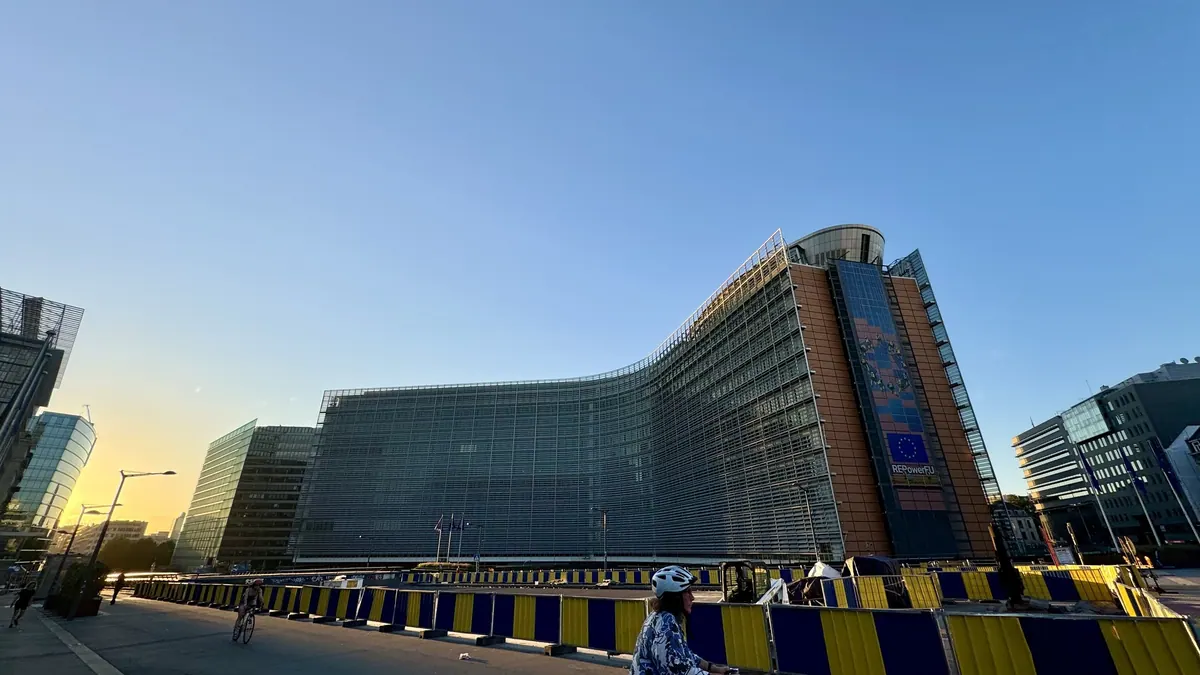

On 18 September 2025 the European Commission approved the German biomass package (Biomassepaket) under EU state aid rules. As a result Germany can increase support for biomass and biogas by €7.9 billion, and the new rules already apply from the tender with a deadline of 1 October 2025. The most important change for operators is the premium for flexible operation, raised to €100 per kW of installed capacity.
What was approved
The approval concerns the amendment of the EEG of February 2025. The package had been agreed in parliament in early 2025, but almost all of its content was subject to a reservation of Commission consent. Until the decision the tenders applied the previous rules, which limited the volume of the April tender to 187 MW — we describe this in the article Germany: biomass tender of 1 April 2025.
The key elements according to industry reports:
- Flexibility premium (Flexibilitätszuschlag) — raised to €100 per kW of installed capacity. It applies to installations that add engine capacity and run in peak mode rather than continuously.
- Quota for installations connected to a heating network — a separate quota in the tender for biomass power plants that already supply heat to a network.
- Limit on operating hours — the number of hours per year for which support for electricity from biogas is available is limited, which forces operation in line with system demand.
- Shortened transition period — a shorter deadline for older installations to move to the new support system.
- Volumes — the compromise provided for 1,300 MW for 2025, but according to the Bundesnetzagentur 813 MW can be announced in the October tender (the Solarserver report does not explain the difference).
The aim: flexibility instead of baseload operation
The whole package follows from the assumption that biogas should be a dispatchable source: operating when energy prices are high and resting when sun and wind flood the market. The premium of €100 per kW is therefore in essence a subsidy for additional engines and gas storage. The industry estimates that in a short time about 3 GW of flexible capacity could be created in this way. The changes correspond to the direction announced in 2024 and described in the article Germany announces a comprehensive biomass package.
What about installations from 2004–2005
The industry association HBB points out that installations first connected to the grid in 2004 and 2005, whose 20-year support period is just ending, were overlooked. A transitional solution is needed for them, because they may not make it in time to take part in subsequent tenders.
What this means in practice
For a biogas plant operator in Germany the decision means three things. First, a bid in the tender of 1 October 2025 can take into account the higher flexibility premium. Second, a modernisation plan (additional engines, a gas storage tank) becomes more profitable. Third, selling electricity in high-price hours becomes more important. Energy prices are not fixed, however, so income depends on the ability to operate in the right hours.
Converted, €100 per kW is approx. PLN 425 per kW (exchange rate approx. PLN 4.25 per euro, indicative for September 2025). The premium is calculated per kW per year, so if a full 1 MW of capacity qualified for it, it would correspond to €100 thousand per year; in practice the amount depends on the size of the capacity made available flexibly.
Sources
Related articles