BiogasEvent
EBA: biomethane production in Europe rose by 20% to 4.2 billion m³ in 2022
On 5 December 2023 the European Biogas Association published a new statistical report: biomethane production in 2022 rose by 20% to 4.2 billion m³, and biogas and biomethane together supply 21 billion m³ of gas.
Other language versions: polski.
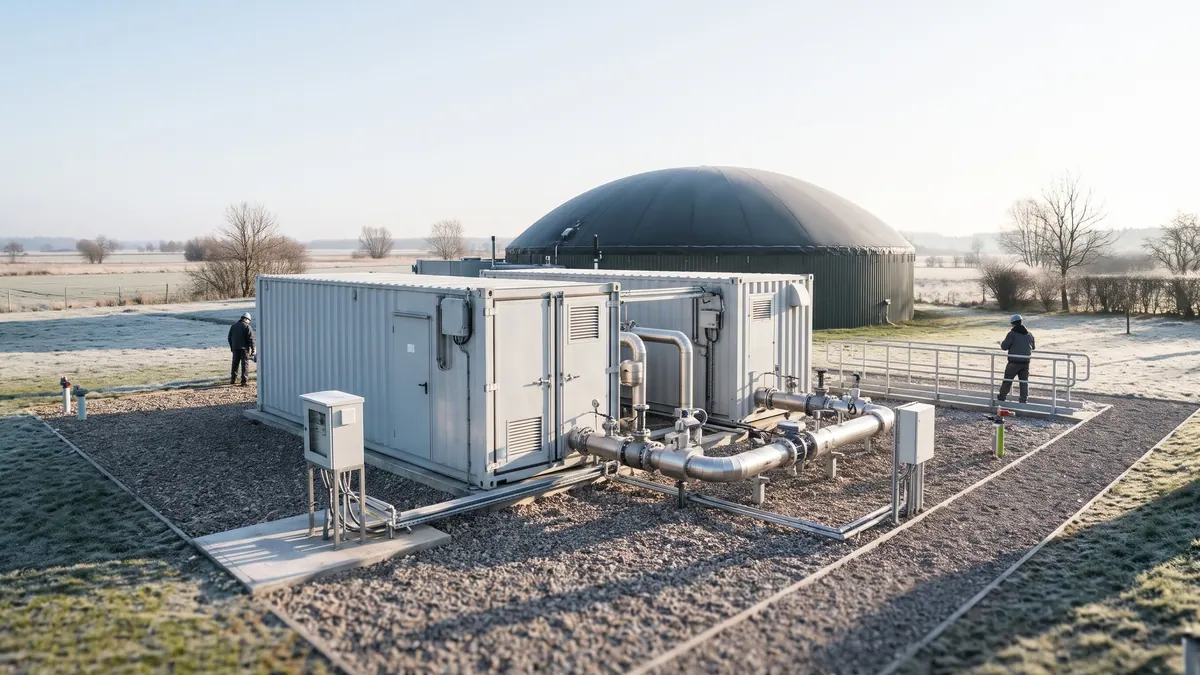
The European Biogas Association (EBA) published a new edition of its Statistical Report on 5 December 2023. It shows that biomethane production in Europe in 2022 rose by 20% to 4.2 billion m³ (from 3.5 billion m³ in 2021), and that total biogas and biomethane production reached 21 billion m³. Denmark remains the leader in terms of biomethane's share in the gas grid – nearly 40%. The data show dynamic growth, but also the distance still to be covered to the EU target of 35 billion m³ by 2030.
What is changing
The EBA report is an annual review of the state of the market. It shows that biomethane is growing faster than biogas used in cogeneration: more and more existing plants are adding upgrading units, and new projects are built as biomethane plants from the outset. The energy crisis following Russia's invasion of Ukraine accelerated investment, because high gas prices improved project profitability and security-of-supply policies gave them priority.
The 20% growth in 2022 was the same as the year before, which means the pace was maintained but not accelerated. Reaching 35 billion m³ in 2030 requires much faster growth, which calls, among other things, for simpler procedures, grid access and stable support.
Significance for the industry in Poland
In European statistics Poland is among the countries with high feedstock potential but very small biomethane production. 2023 brought the first regulations: the Act on Renewable Energy Sources (ustawa o OZE) with a definition of biomethane, a register and a support system up to 1 MW, and a regulation setting the reference price. The EBA report shows that the rules are only the beginning: for the market to take off, grid connections, financing and simplified permitting will be needed.
The experience of Denmark, France and Italy indicates that the key factors are stable tariffs or premiums, clear connection rules and investment funding programmes, often based on EU funds.
What to look out for
Investors and local authorities can use the EBA data to benchmark investment and operating costs and to analyse risks. It is worth checking what the feedstock mix looks like in countries with mature markets: manure, slurry, agricultural residues, food waste and sewage sludge dominate, and the share of energy crops is declining.
Growth drivers
Growth was driven by high gas prices, support programmes in countries such as France, Italy and Denmark, and security-of-supply policy after 2022. Many countries introduced investment subsidies and simplified procedures. Grid connections and local communities' opposition to new installations nevertheless remain constraints.
What next
The next report will show whether 2023 brought an acceleration. In Poland, the measure of progress will be the first applications to the biomethane support system and the first plants injecting gas into the grid.
Sources
Related articles